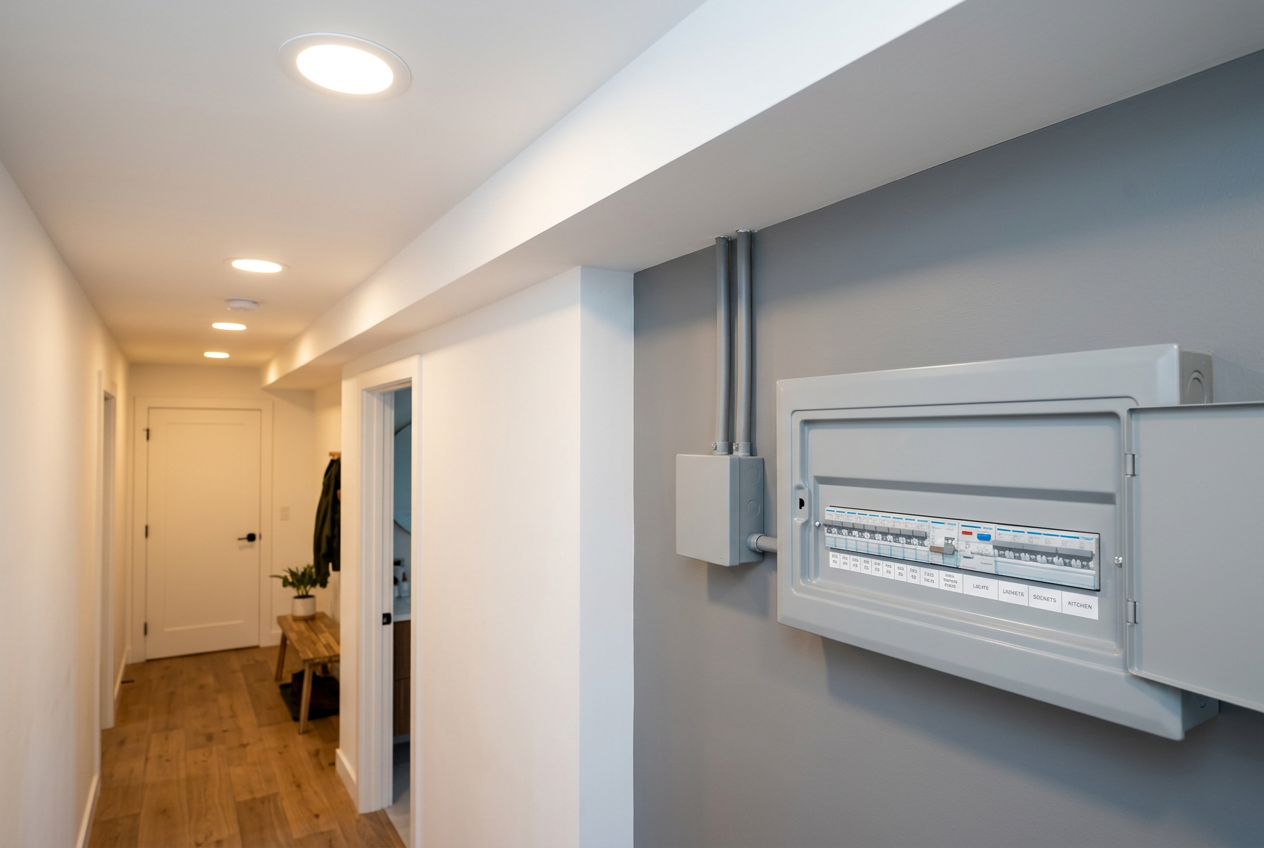
Capping off an unused electrical cable in a wall sounds straightforward, but in New Zealand it is classed as restricted electrical work — meaning it must be carried out (or directly supervised) by a licensed electrician. Doing this work yourself without the right licence is illegal and can create serious fire and electrocution hazards. Here's what you need to know to stay safe and compliant.
Why This Is Restricted Work in New Zealand
Under the Electricity Act 1992 and its regulations, most work on fixed household wiring is restricted electrical work. This includes terminating, joining, or making safe any cable that forms part of your home's wiring system — even if the cable appears to be dead. Only a registered and licensed electrician (or someone working under their direct supervision) may legally carry out this work. You can verify a tradesperson's licence through the Electrical Workers Registration Board (EWRB).
Once the work is complete, your electrician must issue you a Certificate of Compliance (CoC), which is your legal proof the work was done correctly. Always ask for this document.
⚠️ Safety warning: Never assume a cable is dead just because a switch or circuit breaker is off. Cables can be mislabelled, share neutrals with other circuits, or be live for unexpected reasons. Always treat an unknown cable as live until a licensed electrician has confirmed otherwise with proper test equipment.
What Actually Happens When a Cable Is Capped Off
When a licensed electrician caps off an unused cable, they follow a specific process to make it permanently safe:
- Isolate and verify — The circuit is switched off at the switchboard and tested with a voltage tester or multimeter to confirm it is de-energised.
- Disconnect at the source — The cable is disconnected at the switchboard or at the nearest junction point, not just at the wall end. Leaving a live cable connected at the board and simply capping the wall end is dangerous and non-compliant.
- Terminate the conductors — Each individual conductor (active, neutral, and earth) is fitted with an insulated terminal connector or cable end cap rated for the wire gauge. These are sometimes called Wago connectors, Marette connectors, or terminal blocks.
- Secure and label — The capped ends are wrapped or housed so they cannot come into contact with each other or with flammable material. If the cable end is left inside a wall cavity, it must be in an accessible enclosure (such as a junction box with a blanking plate) so it can be inspected in future.
- Issue the CoC — The electrician signs off the work with a Certificate of Compliance.
What Homeowners Can and Cannot Do
| Task | Homeowner allowed? |
|---|---|
| Switching off a circuit breaker | ✅ Yes |
| Removing a light fitting or GPO cover plate | ✅ Yes (with power off) |
| Painting or patching around a wall plate | ✅ Yes |
| Terminating, capping, or joining wiring | ❌ No — restricted work |
| Disconnecting a cable at the switchboard | ❌ No — restricted work |
| Installing a junction box or enclosure for wiring | ❌ No — restricted work |
As a homeowner, you can safely remove a decorative cover plate or light fitting once the circuit is confirmed off — but the moment you touch the wiring itself, you are in restricted work territory.
Does This Require a Building Consent?
Capping off an existing cable is generally not a building consent matter — it is an electrical compliance matter governed by the Electrical (Safety) Regulations. However, if the work is part of a larger renovation that involves structural changes or new wiring, a building consent may be required. Check with your local council if you are unsure. The MBIE Building Performance website has useful guidance on what triggers a consent.
Choosing the Right Materials (Your Electrician Will Handle This)
While you won't be doing the termination yourself, it helps to understand what your electrician will use:
- Insulated end caps or ferrules — slip over individual conductors to prevent contact.
- Wago-style lever connectors — reusable, reliable, and widely used in NZ.
- Junction boxes with blanking plates — required if the cable end is left inside a wall cavity, so it remains accessible for future inspection or removal.
All materials must comply with relevant NZ and Australian/NZ standards. Your electrician will know what's required.
Healthy Homes and Rental Properties
If you are a landlord, any electrical work — including making cables safe — must be completed to a compliant standard. Faulty or unsafe wiring can affect your obligations under the Healthy Homes Standards and could expose you to liability. Always keep your CoC on file.
When to Call a Professional
You should call a licensed electrician any time you need to:
- Cap, terminate, or remove an unused cable
- Disconnect a circuit at the switchboard
- Investigate unknown or unlabelled wiring
- Decommission old wiring after a renovation
- Confirm whether a cable is live or dead
Attempting this work yourself risks electrocution, fire, and significant fines under NZ electrical regulations — not to mention voiding your home insurance. A qualified local electrician can usually complete a simple cable cap-off quickly and affordably. You can find licensed electricians in your area at tradedirectory.co.nz.

 Site Safe
 Licensed Electrical Inspector







