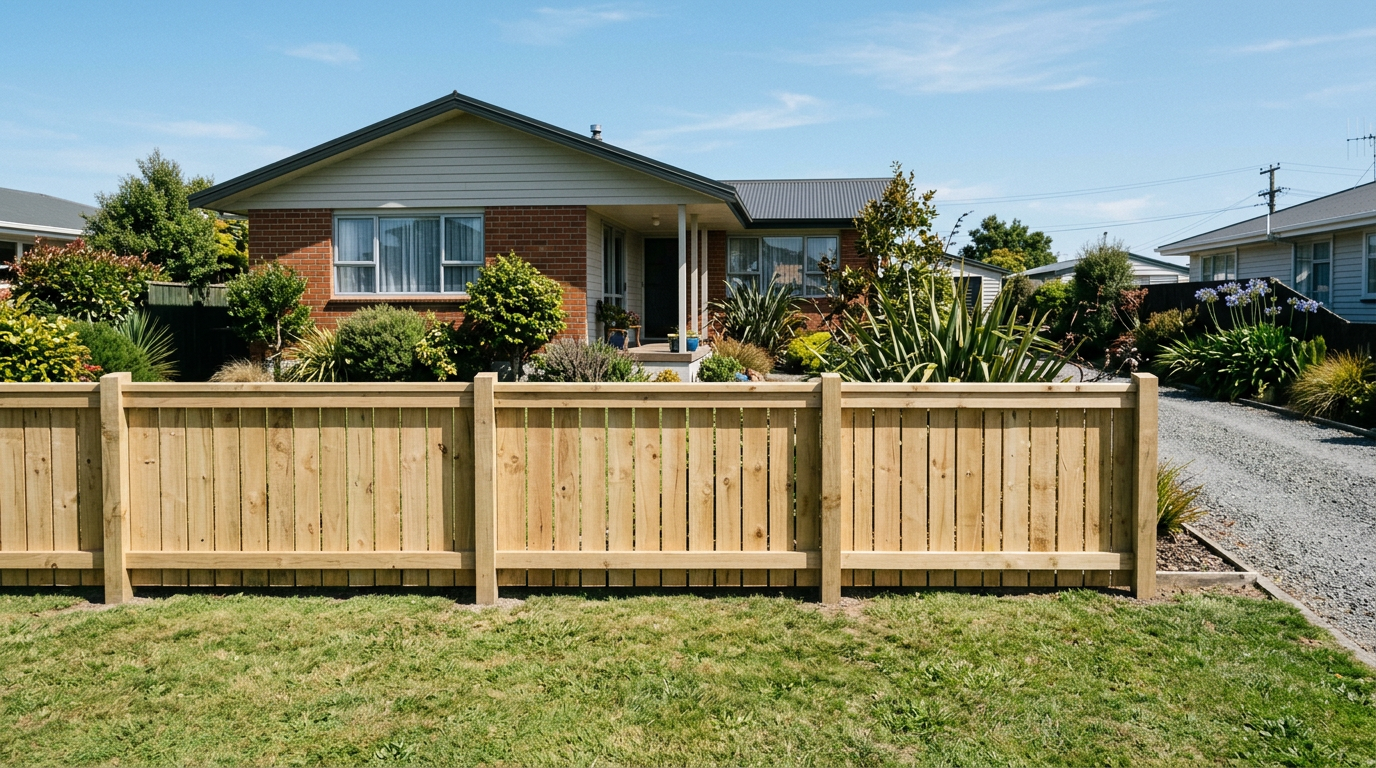
Replacing individual fence palings is a straightforward DIY job most NZ homeowners can tackle in an afternoon. Rather than pulling down an entire fence run, you simply remove the damaged paling, prepare the rails, and nail or screw a new paling in its place. Here's how to do it properly so the repair blends in and lasts.
Assess the Damage First
Before reaching for your hammer, take a good look at what you're dealing with. A single cracked or rotted paling is an easy fix, but if you find soft, spongy rails (the horizontal timbers the palings attach to) or a leaning post, the problem runs deeper. Probe the rails and posts with a screwdriver — if it sinks in easily, the timber is rotten and will need replacing too. Fixing palings to rotten rails is a waste of time and money.
Also check whether your fence sits on or near a boundary. In most NZ councils, a boundary fence is a shared asset under the Fencing Act 1978, which means your neighbour may have a say (and a financial contribution) in significant repairs. A like-for-like paling swap generally won't require a building consent, but always confirm with your local council if you're unsure — some work near boundaries or retaining walls can trigger consent requirements.
Tools and Materials You'll Need
- Flat pry bar or cat's claw — for removing nails without splitting the rail
- Hammer or cordless drill/driver
- Handsaw or circular saw — to cut the new paling to length
- Tape measure and pencil
- Safety glasses and gloves
- Replacement paling(s) — matched to existing size and timber species
- Galvanised or stainless steel nails or screws — essential in NZ's coastal and wet climates to prevent rust staining
- Exterior wood primer and paint or stain — to seal and match the finish
Choosing the Right Timber
Match the replacement paling as closely as possible to the existing fence. Common NZ options include:
| Timber | Notes |
|---|---|
| Treated pine (H3.2) | Most common, affordable, widely available |
| Macrocarpa | Naturally durable, good for rustic styles |
| Cedar | Lightweight, stable, takes stain well |
| Kwila (Merbau) | Hardwearing, suits premium fences |
For ground-contact or near-ground situations, use H3.2 treated timber at minimum — this is the standard required under the NZ Building Code for exterior above-ground use exposed to the weather. Check the MBIE Building Performance site for guidance on timber treatment levels if you're unsure.
You'll find a good range of treated palings at Bunnings, Mitre 10, or PlaceMakers.
Step-by-Step: Removing the Old Paling
- Put on your safety glasses and gloves before starting.
- Slide the flat end of your pry bar between the damaged paling and the rail. Work gently to avoid splitting the rail.
- Lever the paling away from the rail, moving along each fixing point. If nails pull through the paling but stay in the rail, remove them with pliers or a claw hammer.
- Once the paling is free, check the rail surface — sand or plane away any rough spots or old nail burrs.
Fitting the New Paling
- Measure the gap between the top and bottom rails (or top rail and ground clearance). Cut your new paling to length, leaving a 10–15 mm clearance above ground to prevent moisture wicking and rot.
- Hold the new paling in position, checking it's plumb (vertical) with a spirit level.
- Align it with the neighbouring palings — use a scrap piece of timber as a spacer if your fence has gaps between palings.
- Fix with two galvanised 75 mm jolt-head nails or 65 mm decking screws per rail. Screws give a stronger, longer-lasting fix and are easier to remove in future.
- Pre-drill near the ends of the paling to prevent splitting, especially with hardwoods.
Finishing and Weatherproofing
Bare timber left uncoated will grey off and deteriorate quickly in NZ's UV-intense sun and frequent rain. Seal the new paling promptly:
- Prime all cut ends with an exterior wood primer before painting — end grain soaks up moisture fastest.
- Apply a matching exterior paint or timber stain to blend with the existing fence. Resene, Dulux, and Wattyl all offer exterior timber coatings suited to NZ conditions.
- If the existing fence is weathered, you may need to lightly sand and re-coat a few neighbouring palings to get a reasonable colour match.
For advice on the best coating system for your timber type, the BRANZ website has solid, research-backed guidance on exterior timber finishing.
When to Call a Professional
This job is not restricted work under NZ law — no licence is required to replace fence palings. However, it's worth calling a qualified fencer if:
- Multiple rails or posts are rotten — structural repairs are more involved and getting them wrong can mean the fence fails prematurely.
- The fence is on a retaining wall — this may involve engineering considerations and potentially a building consent.
- You're unsure about boundary rules — a professional fencer can advise on the Fencing Act and neighbour obligations.
- The fence is large, tall, or complex — working safely at height or with heavy hardwood panels is best left to the pros.
You can find qualified, local fencing tradespeople on tradedirectory.co.nz to get the job done right.





