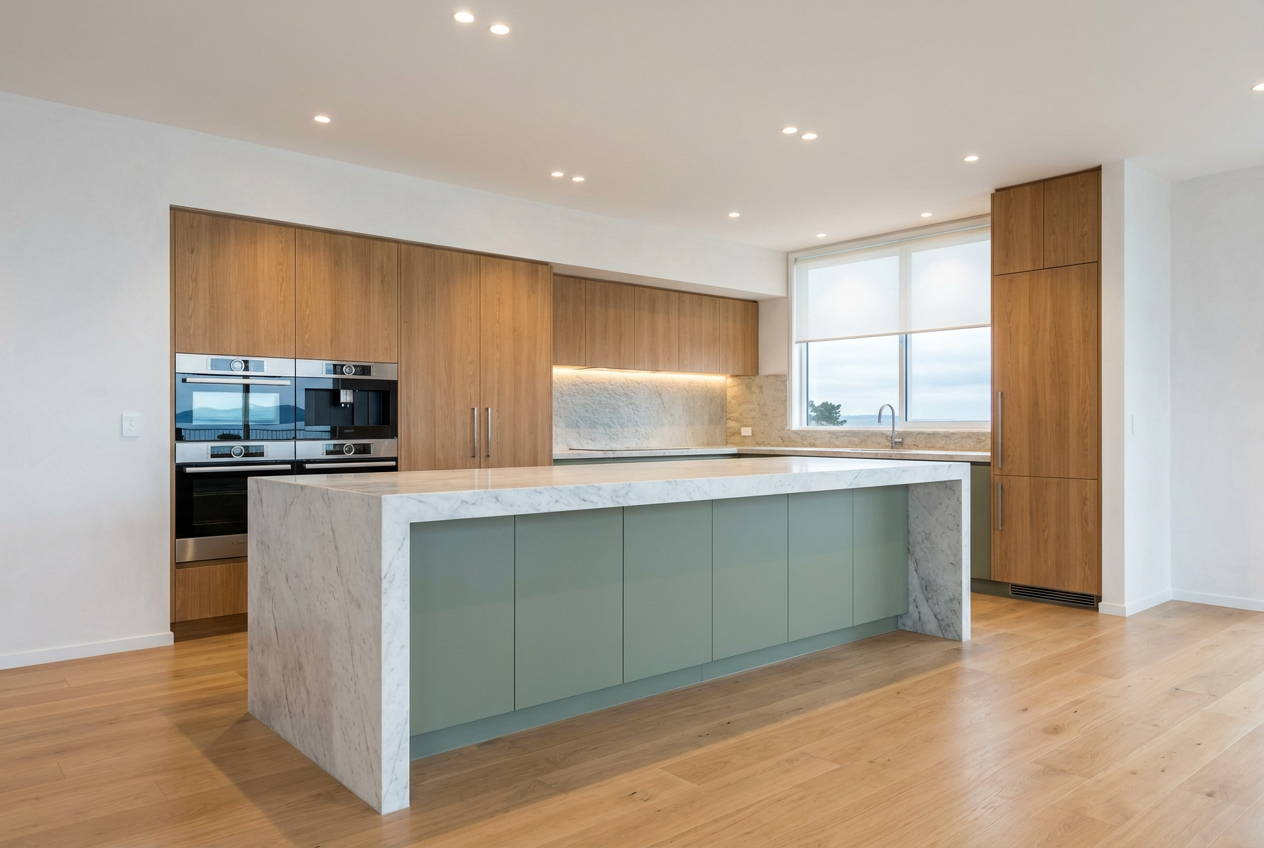
Delaminating melamine — where the plastic coating lifts, bubbles, or peels away from the particleboard substrate — is a common problem in NZ kitchens and laundries, especially in areas exposed to steam or moisture. The good news is that small to medium repairs are well within DIY reach if you act before the substrate swells or crumbles.
Understanding Why Melamine Delaminates
Melamine is a paper-and-resin film bonded to particleboard or MDF under heat and pressure. Once moisture gets under the film — from steam, leaks, or condensation — the bond breaks down. In NZ's humid climates (particularly in Auckland and coastal regions), this is especially common around dishwashers, sinks, and rangehoods.
Key causes include:
- Steam and condensation from cooking or dishwashers
- Water leaks from plumbing or bench seams
- Impact damage that cracks the film and lets moisture in
- Age and UV exposure weakening the original bond
If the particleboard underneath is soft, swollen, or crumbling, the panel will likely need replacing rather than repairing — see the section below on when to call a professional.
Tools and Materials You'll Need
- Contact adhesive (solvent-based or water-based) — look for products from Sika or similar brands available at Bunnings or Mitre 10
- Alternatively, PVA woodworking glue for small edge lifts
- Clean cloths and methylated spirits or acetone (for surface prep)
- A plastic spreader or old credit card
- Clamps, masking tape, or heavy books for clamping pressure
- A roller or brayer (small rubber roller) to press the film flat
- Fine-grit sandpaper (180–240 grit) for light surface prep if needed
- A heat gun or hair dryer (optional, to soften stubborn lifts)
Step-by-Step Repair Process
1. Assess the Damage
Gently lift the delaminated section and check the particleboard underneath. If it's firm and dry, you're good to proceed. If it's soft, dark, or crumbling, stop — that panel needs replacing.
2. Clean Both Surfaces
This is the most important step. Use a cloth dampened with methylated spirits or acetone to thoroughly clean both the underside of the melamine film and the exposed substrate. Remove all dust, grease, and old adhesive residue. Allow to dry completely — at least 15–20 minutes.
3. Apply Contact Adhesive
For larger lifts (more than about 50mm), contact adhesive gives the strongest bond. Apply a thin, even coat to both surfaces — the back of the melamine film and the substrate. Allow each coat to become touch-dry (typically 5–10 minutes, but check your product's instructions). Do not rush this step.
For small edge lifts under 50mm, a thin bead of PVA wood glue applied to one surface can work well.
4. Bond the Surfaces
With contact adhesive, carefully align the melamine film before pressing down — once the two coated surfaces touch, they bond almost instantly and repositioning is very difficult. Work from one end to the other, pressing firmly as you go.
Use a rubber roller or brayer to apply firm, even pressure across the entire repair area, working out any air bubbles toward the edges.
5. Clamp and Cure
Apply firm, even pressure while the adhesive cures. Use clamps with timber offcuts to spread the load, or tape the area tightly with masking tape and weigh it down with books. Leave for the time specified on your adhesive — typically at least 1–2 hours, but overnight is better.
6. Finishing Touches
Once cured, trim any excess film with a sharp utility knife held at a low angle. Wipe away any adhesive squeeze-out with the appropriate solvent before it fully sets.
Preventing Future Delamination
| Risk Area | Prevention Tip |
|---|---|
| Near dishwasher | Ensure door seals are intact; add ventilation gap |
| Under sink | Fix any leaks promptly; use a drip tray |
| Around rangehood | Ensure rangehood vents externally; wipe condensation |
| Shelf edges | Apply melamine edge tape to exposed raw edges |
Good ventilation is your best long-term defence. Energywise has useful guidance on managing moisture in NZ homes.
When to Call a Professional
Call a qualified joiner if:
- The particleboard substrate is swollen, soft, or water-damaged — it needs replacing, not just re-gluing
- Multiple panels are affected, suggesting an ongoing leak or systemic moisture problem
- The cabinet is a custom or high-end unit where a poor repair will be obvious
- You need new melamine panels cut and edged to match existing cabinetry
If the delamination is caused by a plumbing leak, that leak must be fixed first by a licensed plumber — plumbing work in NZ is restricted work under the Plumbers, Gasfitters and Drainlayers Board. Don't attempt to repair the cabinet until the source of moisture is resolved.
A skilled joiner can also source matching melamine board from suppliers like PlaceMakers and fabricate replacement panels that blend seamlessly. You can find qualified local joiners on tradedirectory.co.nz.
Safety Note
Solvent-based contact adhesives are flammable and produce strong fumes. Always work in a well-ventilated space, keep away from open flames and sparks, and wear nitrile gloves. Check the product's Safety Data Sheet (SDS) for full handling instructions. WorkSafe NZ has guidance on safe use of adhesives and solvents at home.