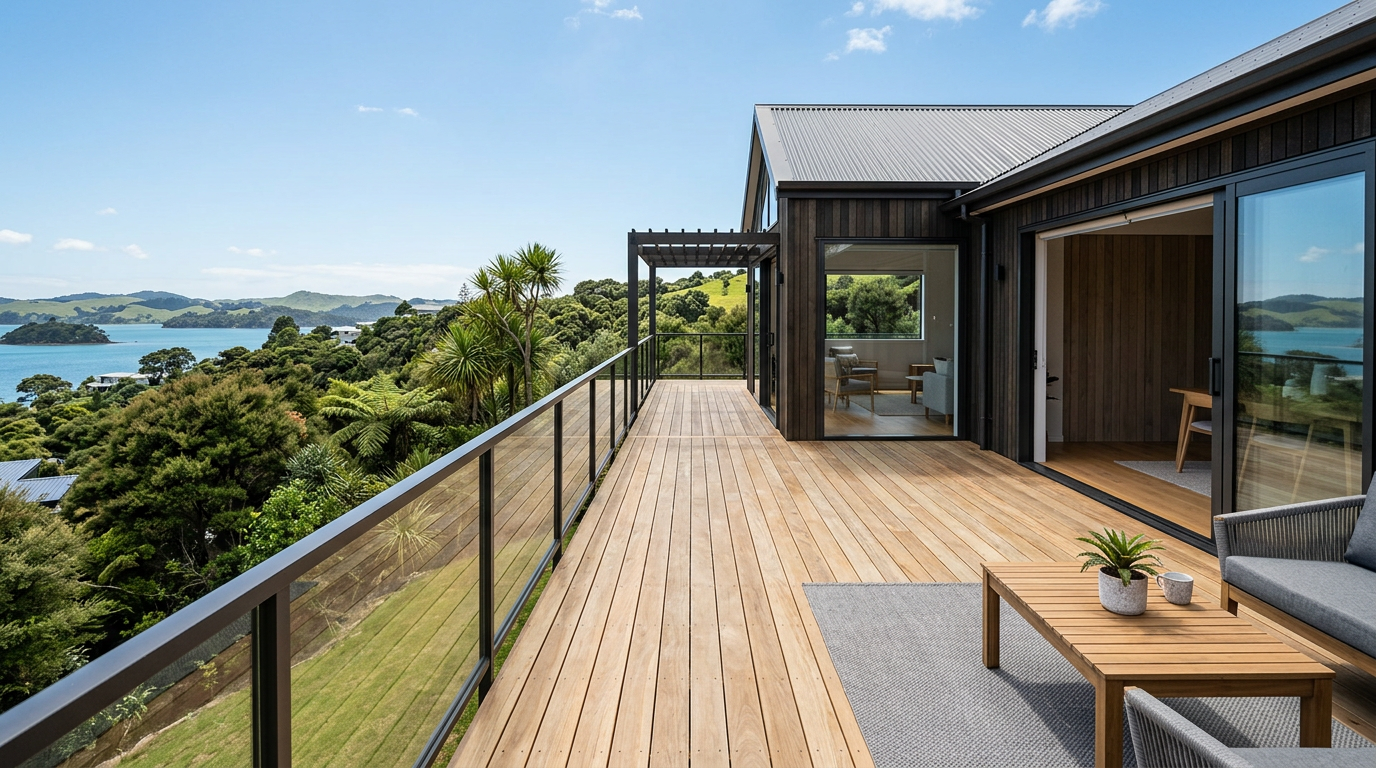
Black mould on timber decks is a very common problem in New Zealand, thanks to our humid climate, shaded sections, and the regular rainfall many regions experience. The good news is that in most cases you can tackle mould stains yourself with the right products and a bit of elbow grease — though badly rotted or structurally compromised timber is a job for a qualified deck builder.
Why Black Mould Grows on Decks
Black mould (and related fungi like mildew and algae) thrive wherever moisture sits on timber surfaces. Common culprits include:
- Poor drainage or low-lying decks with little airflow underneath
- Shade from trees or fences that keeps the deck damp for longer
- Leaf litter and debris trapping moisture against the boards
- Ageing or worn deck coatings that no longer repel water
Left untreated, mould can penetrate deeper into the timber grain, cause staining that's harder to remove, and — over time — accelerate timber decay. Addressing it promptly protects both the look and the structural life of your deck.
Safety First
Before you start, take a few precautions:
- Wear rubber gloves, safety glasses, and old clothing — cleaning solutions can irritate skin and eyes.
- Work in a well-ventilated area and avoid breathing in spray mist.
- Keep children and pets off the deck until it is fully dry.
- Check WorkSafe NZ guidance if you are using any concentrated chemical products.
- Never mix bleach with ammonia-based cleaners — the fumes are toxic.
What You'll Need
Step-by-Step: Removing Black Mould from Timber Decking
1. Clear the Deck
Remove all furniture, pots, and mats. Sweep away loose debris, leaves, and dirt.
2. Pre-wet the Surface
Wet the deck boards with a hose. This helps prevent cleaning solutions from soaking too deeply into dry timber and makes scrubbing easier.
3. Apply a Mould and Mildew Cleaner
Choose a purpose-made deck wash or mould treatment — products are available from most NZ paint and hardware retailers. Options include:
- Sodium hypochlorite (diluted bleach) solutions — effective but can lighten some timbers; always dilute as directed and rinse thoroughly.
- Oxalic acid-based deck cleaners — good for brightening weathered or tannin-stained timber without harsh bleaching.
- Ready-to-use mould and mildew sprays — convenient for smaller areas.
Apply the solution as directed on the label, and allow it to dwell for the recommended time (usually 5–15 minutes) so it can break down the mould.
4. Scrub Thoroughly
Using a stiff-bristle deck brush, scrub along the grain of the timber. Pay extra attention to gaps between boards where mould tends to accumulate. For stubborn stains, a second application may be needed.
5. Rinse Well
Rinse the entire deck thoroughly with a hose. If you have a pressure washer, use it on a low-to-medium setting (generally under 1500 psi) and keep the nozzle moving — holding it too close or too long in one spot can raise the timber grain or cause damage.
6. Allow to Dry Completely
Leave the deck to dry for at least 48 hours (longer in cooler or overcast weather) before applying any coating.
7. Protect with a Quality Coating
Once dry, apply a deck oil, stain, or sealant to protect the timber and help prevent future mould growth. Look for products with built-in mould inhibitors. Brands like Resene, Dulux, and Wattyl all offer suitable deck coatings — check their websites for the right product for your timber type.
Preventing Mould Coming Back
- Trim back overhanging trees and shrubs to improve sunlight and airflow.
- Sweep the deck regularly to remove leaf litter and debris.
- Reapply a protective coating every 1–2 years, or as recommended by the product manufacturer.
- Ensure good drainage so water doesn't pool on or under the deck.
- Consider a mould-inhibiting deck wash as part of your annual maintenance routine.
When to Call a Professional
Some situations go beyond a DIY clean:
- Soft, spongy, or crumbling boards — this indicates timber rot, which may mean boards need replacing. A qualified deck builder can assess whether it's a cosmetic issue or a structural one.
- Widespread mould that keeps returning despite treatment — there may be an underlying moisture or drainage problem that needs professional diagnosis.
- Decks over 1 metre above ground — repairs or alterations to these may require a building consent under the NZ Building Code. Always check with your local council, as Schedule 1 exemptions vary. See MBIE Building Performance for general guidance.
- Structural concerns — any work affecting the structural integrity of a deck may need to be carried out or supervised by a Licensed Building Practitioner (LBP).
For expert help, you can find qualified local deck builders on tradedirectory.co.nz.




 Licensed Building Practitioner (LBP)





