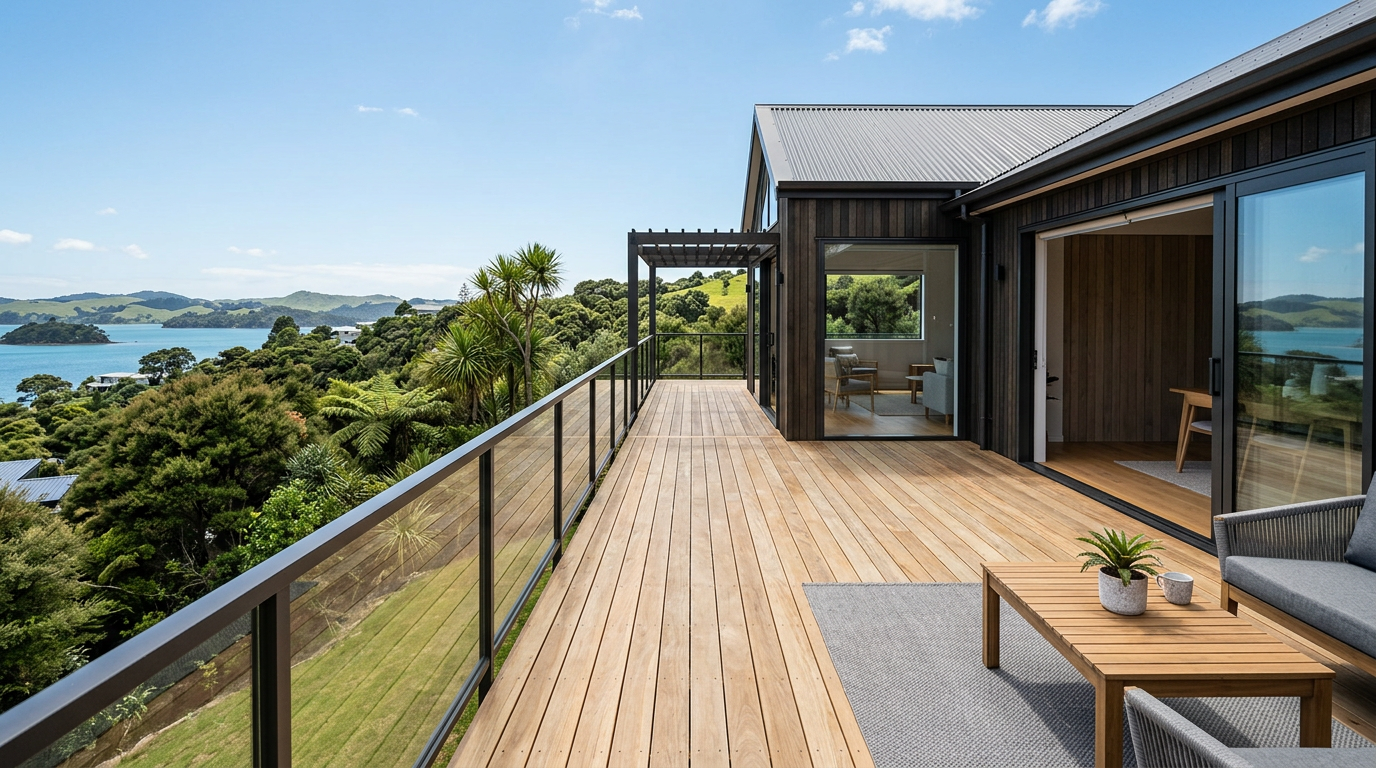
Steel deck framing can be a great choice for durability and strength, but in coastal New Zealand the salt-laden air is one of the harshest environments steel can face. The good news is that with the right specification, surface preparation, and ongoing maintenance, you can protect your steel framing and get decades of reliable service from your deck.
Understanding the Coastal Corrosion Risk
New Zealand's coastline exposes structures to salt spray and chloride-rich air, which dramatically accelerates the corrosion of bare or poorly protected steel. BRANZ classifies corrosion zones across NZ, and coastal areas — generally within 500 metres of the sea, though this can extend further in exposed locations — are rated as C4 or C5 (very high to extreme corrosivity). The further you are from the shore and the more sheltered your site, the lower the risk, but always check with your local council and a qualified structural engineer or deck builder to confirm the corrosion zone that applies to your property.
The NZ Building Code requires that structural elements, including deck framing, are durable for the life of the building — typically a minimum of 50 years for structural components. Getting the corrosion protection right from the start is not just good practice; it's a code requirement.
Choosing the Right Steel Specification
Before thinking about coatings, start with the right base material:
- Hot-dip galvanised (HDG) steel is the most common and cost-effective choice for coastal deck framing. The zinc coating sacrificially protects the steel underneath. For C4/C5 zones, look for a coating thickness of at least 85 microns (Class Z600 or heavier — confirm the applicable standard with your fabricator or structural engineer).
- Duplex systems — hot-dip galvanising plus a paint topcoat — offer significantly better protection in extreme coastal environments and are often recommended for sites right on the waterfront.
- Stainless steel fasteners and fixings (Grade 316) should always be used in coastal zones. Never mix metals without considering galvanic corrosion.
- Avoid standard mild steel without a protective system — it will rust rapidly in coastal conditions.
Always confirm steel specifications with your structural engineer or a qualified deck builder, as the correct spec depends on your specific site.
Surface Preparation: The Most Important Step
No coating system will perform well on poorly prepared steel. Surface preparation is everything. For new steel:
- Ensure all mill scale, rust, grease, and contamination is removed — ideally by abrasive blasting to Sa 2.5 (near-white metal) as defined in Australian/NZ standards.
- If blasting isn't practical on site, mechanical grinding and wire brushing can be used, but the coating performance will be reduced.
- Apply primer as soon as possible after preparation — steel begins to oxidise within hours in humid coastal air.
Coating Systems for Coastal Steel Framing
For a duplex system in a coastal environment, a typical specification might include:
| Layer | Product Type | Purpose |
|---|---|---|
| 1 | Hot-dip galvanising | Primary sacrificial zinc protection |
| 2 | Etch primer or wash primer | Adhesion to galvanised surface |
| 3 | Epoxy intermediate coat | Barrier protection |
| 4 | Polyurethane or epoxy topcoat | UV and weather resistance |
Sika offers industrial coating systems suitable for marine and coastal environments. Always follow the manufacturer's data sheets for film thickness, recoat windows, and application conditions — these are critical in coastal NZ where humidity can affect cure times.
For structural steel that will be partially concealed (inside posts or enclosed sections), consider zinc-rich primers as an additional layer of protection on any cut ends or drilled holes made after galvanising.
Protecting Cut Ends, Welds, and Penetrations
One of the most common causes of premature rust on galvanised steel framing is damage to the zinc coating during fabrication or installation:
- Any cut ends, drilled holes, or welds must be treated immediately with a cold galvanising compound or zinc-rich paint (such as products available from Resene or similar industrial suppliers).
- Welds should be ground smooth and re-coated before the full coating system is applied.
- Where steel sits in or near timber, ensure there is adequate drainage and ventilation — trapped moisture accelerates corrosion significantly.
Ongoing Maintenance
Even the best coating system needs regular attention in a coastal environment:
- Wash down steel framing (and the whole deck) with fresh water at least every three to six months to remove salt deposits — more frequently if you're very close to the sea or after storms.
- Inspect annually for any signs of rust, coating breakdown, or physical damage. Catch small spots early before they spread.
- Touch up any damaged areas promptly using the appropriate zinc-rich primer and topcoat.
- Keep records of your coating system so you can match products when touch-ups are needed.
Building Consent Considerations
Deck construction in NZ may or may not require a building consent, depending on the size, height, and location of the deck. Schedule 1 of the Building Act lists some exemptions, but these have conditions — for example, decks over a certain height above ground generally require consent. Always check with your local council before starting work, as getting this wrong can cause problems when you sell your home. The MBIE Building Performance website has useful guidance on when consent is needed.
When to Call a Professional
Specifying and applying industrial coating systems for coastal steel is a specialist job. A qualified deck builder or structural steel fabricator with coastal experience will know the correct steel grades, coating systems, and application methods for your specific site. If your deck requires a building consent, you may need plans prepared by a Licensed Building Practitioner (LBP) — find out more at LBP. You can find experienced local deck builders on tradedirectory.co.nz who understand the demands of coastal NZ conditions.



 Licensed Building Practitioner (LBP)





