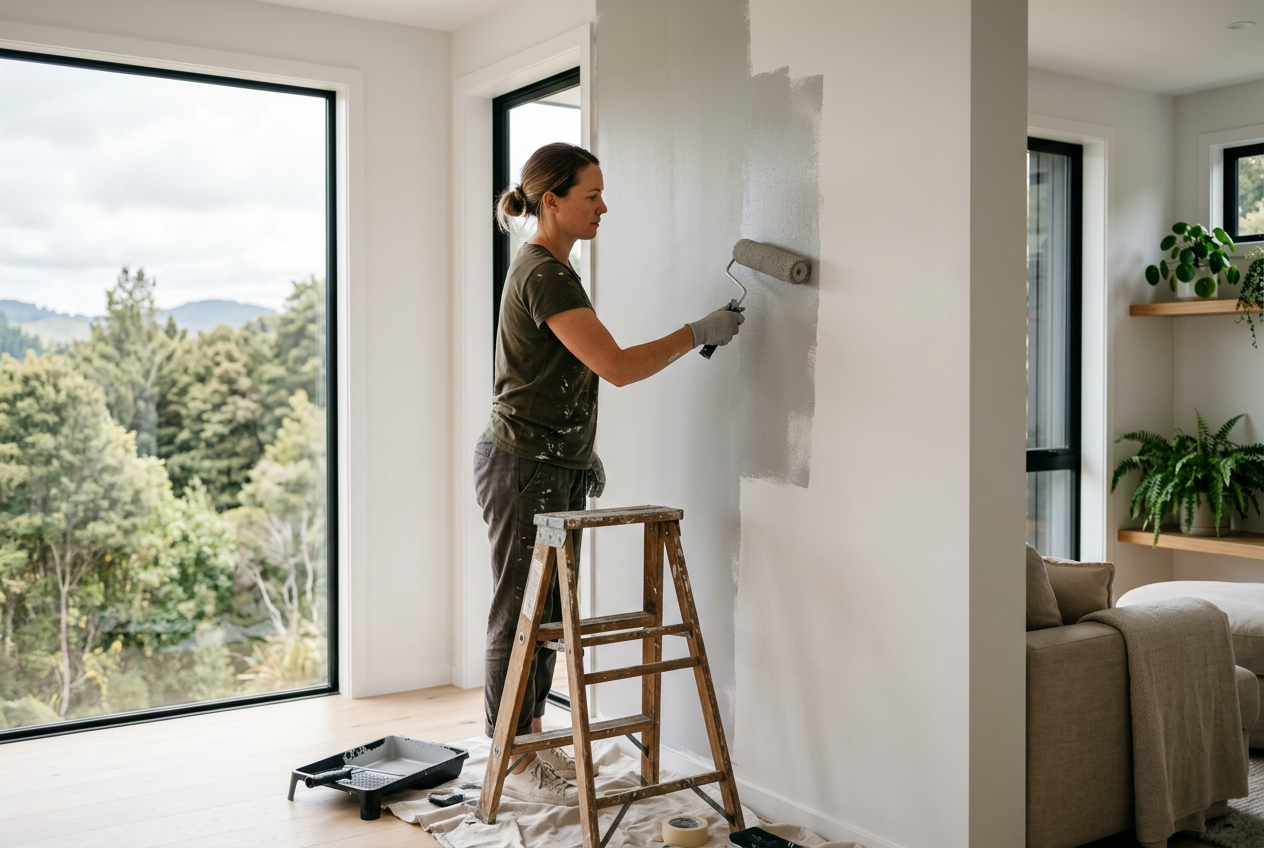
A little preparation before your painter arrives can make a big difference — it protects your belongings, speeds up the job, and can even reduce your overall cost. Most professional painters will do some preparation themselves, but the more you do beforehand, the smoother the whole process will be. Here's a practical guide for NZ homeowners.
Talk to Your Painter First
Before you start shifting furniture or pulling nails from walls, have a quick conversation with your painter about what they expect. Every tradesperson works slightly differently — some include furniture moving in their quote, others don't. Clarifying this upfront avoids misunderstandings and ensures you're not doing unnecessary work. You can find qualified local painters on tradedirectory.co.nz.
Clear the Room as Much as Possible
The single most helpful thing you can do is remove as much from the room as you can before the painter arrives.
- Small furniture such as chairs, side tables, lamps, and decorative items should be moved to another room entirely.
- Larger furniture like sofas, beds, and wardrobes can often be shifted to the centre of the room and covered, but check with your painter first.
- Rugs and mats should be rolled up and stored elsewhere — paint drips and foot traffic can ruin them.
- Curtains and blinds should be taken down where possible. If they can't be removed, tie them back and let your painter know.
- Wall hangings, artwork, and mirrors should all come down. Fill any nail holes yourself if you're comfortable doing so, or leave them for the painter to address as part of surface prep.
Protect What Stays Behind
For anything that can't be moved out of the room, protection is key.
- Drop sheets placed over furniture and flooring are standard practice. Your painter will usually bring their own, but having a few spare cotton or canvas drop sheets on hand is useful. Avoid thin plastic sheeting on floors — it can be slippery and doesn't absorb drips as well.
- Tape and plastic sheeting can be used to wrap items like built-in shelving or appliances that can't be moved.
- Cover light switches, power points, and skirting boards with painter's tape if your painter hasn't already done so — though most professionals will handle this themselves.
Prepare the Surfaces
While surface preparation is largely the painter's job, there are a few things you can do ahead of time:
- Clean walls and surfaces of dust, grease, and grime, especially in kitchens and bathrooms. A painter can't get good adhesion on a dirty surface.
- Remove picture hooks and nails from walls you want painted.
- Note any existing damage — cracks, holes, or peeling paint — and point these out to your painter so they can factor repairs into their plan.
- If you've chosen your own paint colour, have the product ready. NZ brands like Resene, Dulux, and Wattyl all offer colour-matching and tinting services, so confirm your colour choice before the painter starts.
Secure Pets and Make Access Easy
- Pets should be kept in a separate area or out of the house during painting. Paint fumes can be harmful to animals, and an excited dog or curious cat can cause accidents.
- Children should be kept away from the work area, particularly when solvent-based products are in use.
- Ensure the painter has clear access to all areas being painted, including unlocking gates, moving vehicles from driveways, and letting them know the best entry point.
Ventilation and Fumes
Paint fumes — particularly from oil-based or solvent-based products — can be strong. Before the painter arrives, check that windows can be opened in the rooms being painted. Good ventilation is important for the painter's health and comfort, and it helps paint dry correctly. WorkSafe NZ has guidance on managing fumes in enclosed spaces if you have concerns.
Think About Timing
- Move valuables and fragile items well before the painter's start time — don't leave it to the morning they arrive.
- If painting is happening over multiple days, plan where you'll sleep and how you'll access bathrooms or the kitchen if those areas are being done.
- In NZ's more humid regions (like Auckland or the West Coast), painting schedules can be affected by weather. Water-based paints need reasonable drying conditions, so be flexible if your painter needs to adjust timing.
When to Call a Professional
For standard interior or exterior painting, a homeowner can legally do their own painting in New Zealand — it's not restricted work. However, if your painting project involves lead paint (common in homes built before 1980), you should seek advice before disturbing it. WorkSafe NZ has guidance on working safely with lead paint. For large or complex jobs, or if you want a high-quality, lasting result, hiring a qualified painter is always worthwhile. A good painter will also know which products suit NZ conditions — our UV levels, humidity, and coastal salt air all affect paint performance. Find a trusted local painter on tradedirectory.co.nz.

 BCITO Qualified

 Master Painters NZ
 Site Safe