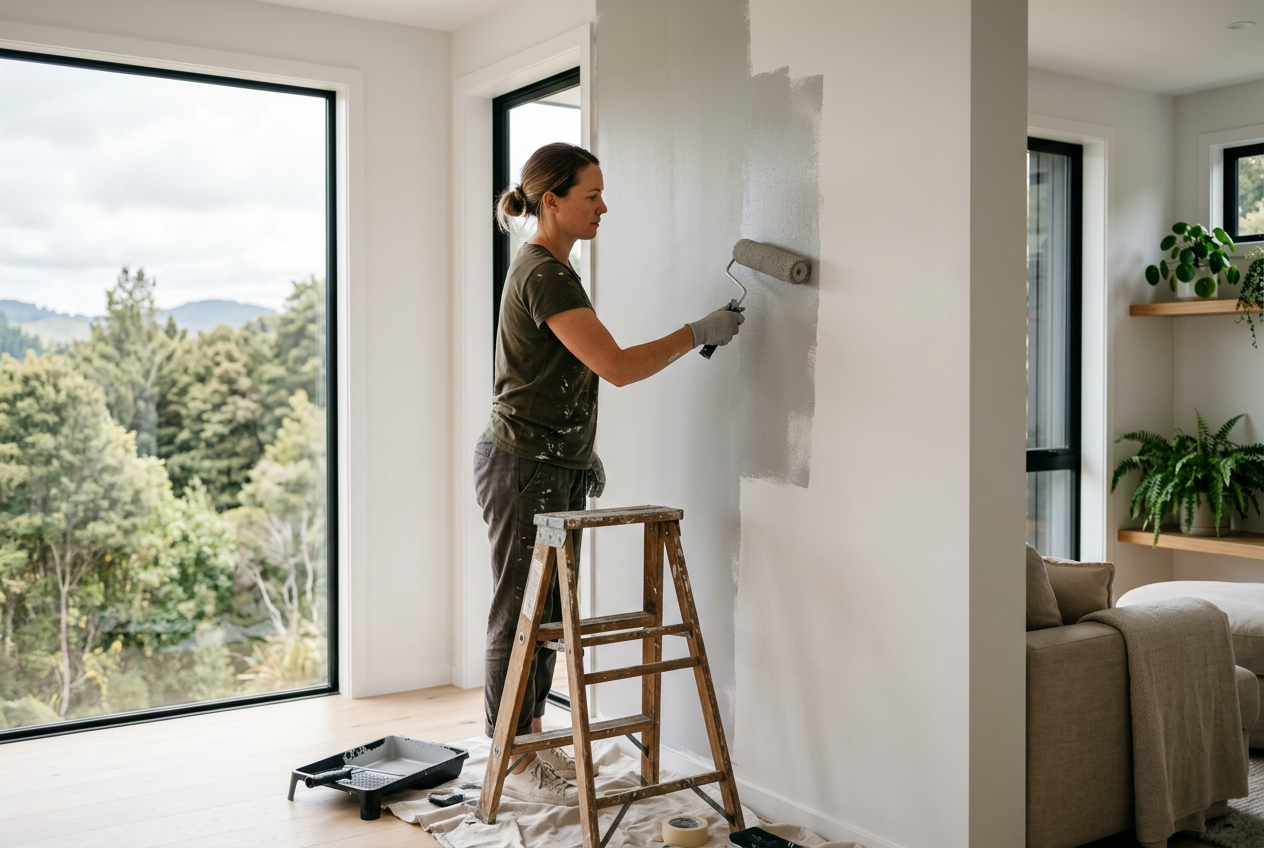
Painting a garage roller door is a satisfying weekend project, but the finish will only last if you put the work into preparation and use the right products. Steel and aluminium roller doors are exposed to UV, rain, and temperature swings — all common in the New Zealand climate — so cutting corners on prep or paint selection is the main reason roller door paint jobs fail prematurely.
Identify Your Door Material First
Most NZ garage roller doors are made from either steel (often Zincalume or pre-painted Colorsteel) or aluminium. Knowing your material matters because the primer and paint you choose must be compatible.
- Steel doors are prone to rust, especially at cut edges, scratches, and around fixings. They need a rust-inhibiting primer.
- Aluminium doors don't rust but have a naturally slick oxide layer that paint struggles to bond to without the right primer.
If you're unsure, hold a magnet to the door — it will stick to steel but not aluminium.
Gather Your Tools and Materials
Before you start, get everything together:
- Degreaser or sugar soap
- Wet-and-dry sandpaper (80–120 grit for heavy rust or peeling, 180–240 grit for scuff-sanding)
- Wire brush or angle grinder with a wire wheel (for heavy rust)
- Rust converter (for steel with active rust)
- Appropriate primer (rust-inhibiting for steel; etch primer for aluminium)
- Topcoat paint suitable for metal exterior surfaces
- Paintbrushes and a short-nap roller (6–10 mm), or a spray gun
- Masking tape and drop sheets
- Safety glasses, gloves, and a P2 dust mask
Step 1 — Clean the Door Thoroughly
Cleaning is the single most important step. Grease, dirt, and chalky old paint will prevent adhesion no matter how good your paint is. Wash the entire door with a degreaser or sugar soap solution, rinse well, and allow it to dry completely. Pay attention to the slats and the gaps between them.
Step 2 — Sand and Treat the Surface
Once dry, sand the door to remove loose or flaking paint and to give the surface a key for the primer to grip.
- For light surface rust, sand back to bare metal and apply a rust converter according to the product instructions.
- For heavy rust, use a wire brush or angle grinder to remove as much rust as possible before treating.
- For aluminium, a light scuff with 180-grit wet-and-dry paper is usually enough to break the oxide layer.
Wipe away all dust with a tack cloth or damp rag and allow the surface to dry.
Step 3 — Apply the Right Primer
Don't skip primer — it's what makes the topcoat stick and protects the metal underneath.
| Door Material | Recommended Primer Type |
|---|---|
| Steel (bare or rusted) | Rust-inhibiting metal primer |
| Colorsteel / pre-painted steel | Adhesion primer or rust-inhibiting primer |
| Aluminium | Etch primer (self-etching) |
Apply primer in thin, even coats and allow full drying time between coats as per the manufacturer's datasheet. Two thin coats are better than one thick coat.
Resene and Dulux both offer metal primers suitable for NZ conditions — check their technical datasheets or ask in-store for the right product for your door type.
Step 4 — Choose a Quality Topcoat
For a garage roller door, you need a hard-wearing exterior metal paint with good UV resistance. Look for:
- Acrylic or waterborne enamel — easier to apply and clean up, good durability
- Solvent-based enamel — very hard finish, excellent durability, but stronger fumes and longer dry times
- Two-pack (2K) epoxy or polyurethane — the most durable option, but requires careful mixing and is best applied by a professional
Light or mid-tone colours tend to last longer on metal in full sun, as very dark colours absorb more heat and can cause paint to expand and contract more aggressively. Wattyl has a range of exterior metal topcoats worth considering.
Step 5 — Apply the Topcoat
Apply at least two topcoats, allowing each to dry fully before the next. Work methodically across the slats, keeping a wet edge to avoid lap marks. A short-nap roller gives a smooth finish on flat slats; use a brush to work paint into the overlapping edges between slats.
Spray application gives the most even finish on a roller door and is worth considering if you have access to a spray gun and can mask off the surrounding area properly. If you're not experienced with spray equipment, a brush and roller will do the job well.
Tips for a Better Finish
- Paint on a dry day with temperatures between 10°C and 25°C — avoid painting in direct hot sun or high humidity
- Keep the door in the closed position while painting so the slats are flat
- Apply thin coats rather than thick ones to avoid runs and sagging
- Allow the full cure time (often 7–14 days) before the paint reaches maximum hardness
When to Call a Professional
If your door has extensive rust, structural damage, or failing factory-applied powder coat, a professional painter will get a far better result. Powder coat in particular is very difficult to paint over without specialist preparation — a qualified painter can advise whether repainting or replacing the door makes more sense.
For spray-applied two-pack coatings, always use a professional — these products require respiratory protection and specialist equipment. You can find qualified local painters on tradedirectory.co.nz.
Safety note: When sanding or wire-brushing old paint, wear a P2 dust mask and safety glasses. Older doors may have lead-based paint — if the door is pre-1980s, consider getting the paint tested before sanding. See WorkSafe NZ for guidance on working safely with lead paint.

 BCITO Qualified

 Master Painters NZ
 Site Safe