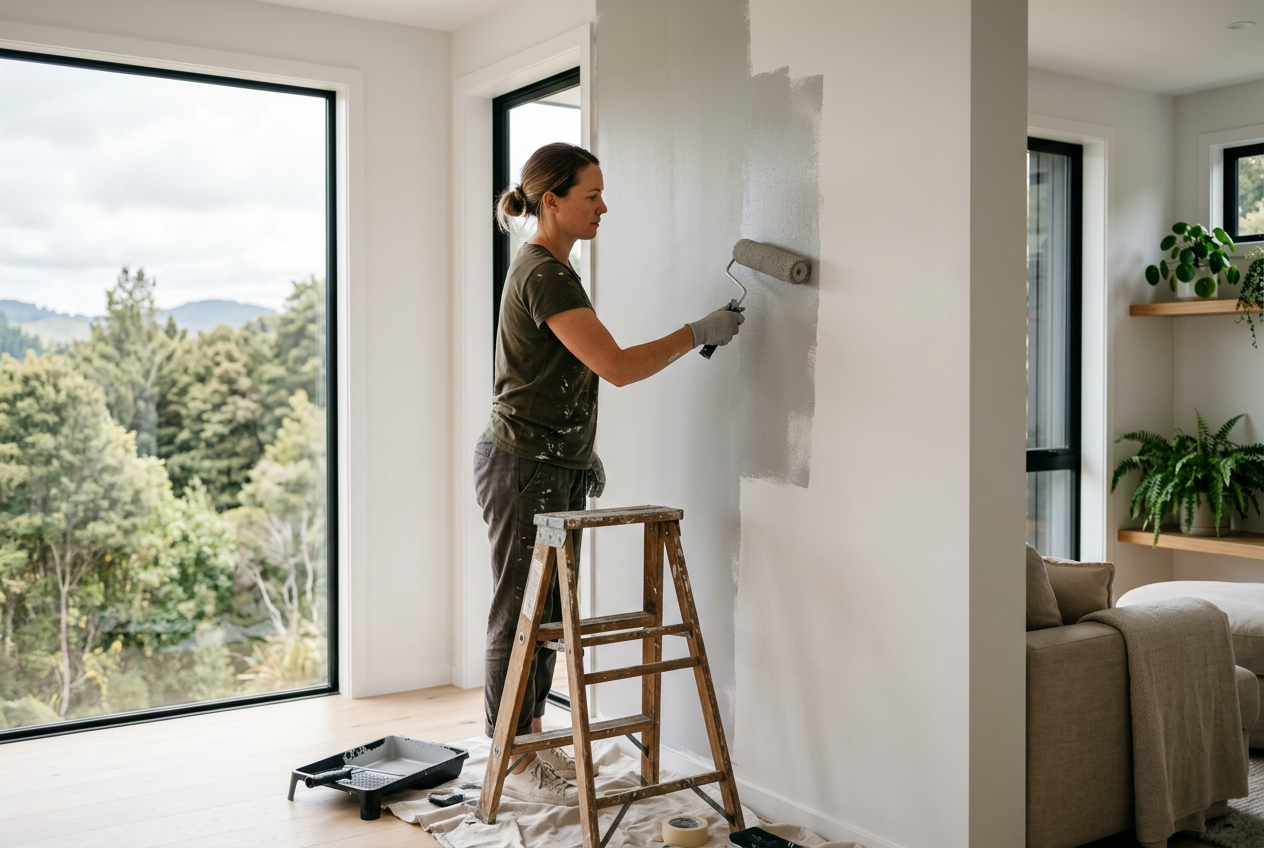
Painting a concrete retaining wall that cops afternoon sun is absolutely doable as a DIY project — but the key to a finish that lasts is thorough preparation and choosing products designed for exterior masonry in harsh conditions. Afternoon sun means your wall will experience significant heat, UV exposure, and thermal movement, so cutting corners on prep or paint selection will lead to peeling and flaking within a season or two.
Understand What You're Working With
Concrete retaining walls face a tough combination of challenges: moisture wicking up from the soil behind them (hydrostatic pressure), UV degradation, temperature swings, and often algae or efflorescence (white salt deposits). Before you even think about paint, you need to assess the wall's condition.
- Is the concrete new or old? New concrete should cure for at least 28 days before painting.
- Are there cracks, spalling, or crumbling sections? These need repair first.
- Is there white powdery efflorescence on the surface? This must be removed or the paint won't bond.
- Is moisture coming through from behind the wall? If so, painting the face alone won't solve the problem — you may need drainage improvements first.
Step 1 – Clean and Prepare the Surface
Good prep is 80% of the job. Skip this and you're wasting your time and money.
- Pressure wash the entire wall to remove dirt, moss, lichen, and loose material. A pressure washer hired from Bunnings or Mitre 10 works well.
- Remove efflorescence by scrubbing with a stiff brush and a diluted masonry cleaner or a weak acid wash (follow product safety instructions carefully — wear gloves and eye protection).
- Fill cracks and holes with a suitable exterior masonry filler or patching compound. Products from Sika or Ardex are well regarded for concrete repair in NZ.
- Allow the wall to dry completely — ideally 48–72 hours of dry weather. Painting onto damp concrete is one of the most common causes of paint failure.
Step 2 – Choose the Right Timing
Because your wall gets afternoon sun, plan your painting schedule carefully:
- Paint in the morning, when the wall is cool and shaded. Painting onto a hot surface causes the paint to dry too fast, leading to poor adhesion and brush marks.
- Avoid painting if rain is forecast within 4–6 hours, or if temperatures are below 10°C or above 35°C.
- Check the wall surface temperature with your hand — if it's too hot to hold your palm against comfortably, wait.
Step 3 – Apply a Masonry Primer
Priming is essential on concrete, especially on a wall that's never been painted or has been stripped back. A good alkali-resistant masonry primer seals the porous surface, improves paint adhesion, and helps block efflorescence from bleeding through.
Resene offers dedicated concrete and masonry primers, as does Dulux and Wattyl. Ask your paint store which primer is compatible with your chosen topcoat — they're not always interchangeable between brands.
Apply primer with a thick-nap roller (18–20mm nap works well on rough concrete) and a brush for edges and tight spots. Allow to dry fully per the manufacturer's instructions.
Step 4 – Apply Your Topcoat
For a sun-exposed exterior concrete retaining wall, you want a 100% acrylic exterior masonry paint with good UV resistance. Key features to look for:
| Feature | Why It Matters |
|---|---|
| 100% acrylic binder | Flexibility to handle thermal movement |
| UV-resistant pigments | Prevents fading in afternoon sun |
| Breathable / moisture-permeable | Allows moisture vapour to escape from behind the wall |
| Mould and algae resistance | Important in NZ's damp climates |
Light to mid-tone colours are a better choice for sun-facing walls — very dark colours absorb more heat and can accelerate paint breakdown and thermal cracking.
Apply two full coats, allowing proper drying time between coats. Don't thin the paint unless the manufacturer specifically recommends it.
Step 5 – Consider a Waterproof or Elastomeric Coating
If your wall has minor cracking or you want extra protection against moisture ingress, consider an elastomeric masonry coating. These flexible, thicker coatings bridge hairline cracks and provide excellent waterproofing. They're available from Resene and Dulux, among others. They cost more but can significantly extend the life of your finish.
Safety Notes
- Wear safety glasses, gloves, and a dust mask when cleaning or sanding concrete.
- If the wall is older and you suspect it may contain asbestos (some older concrete products did), do not sand or grind it — contact a licensed asbestos assessor. Check guidance from WorkSafe NZ.
- Work safely on ladders — never overreach.
When to Call a Professional
Painting a retaining wall is generally DIY-friendly, but call a qualified painter or tradesperson if:
- The wall has significant structural cracking — this may indicate movement that needs an engineer's assessment before any cosmetic work.
- There is persistent moisture coming through the wall face, suggesting drainage issues behind the wall.
- The wall is very large or high and working safely requires scaffolding.
- You want a guaranteed, professional finish with a warranty.
You can find qualified local painters on tradedirectory.co.nz who are familiar with NZ conditions and masonry coatings.

 BCITO Qualified

 Master Painters NZ
 Site Safe