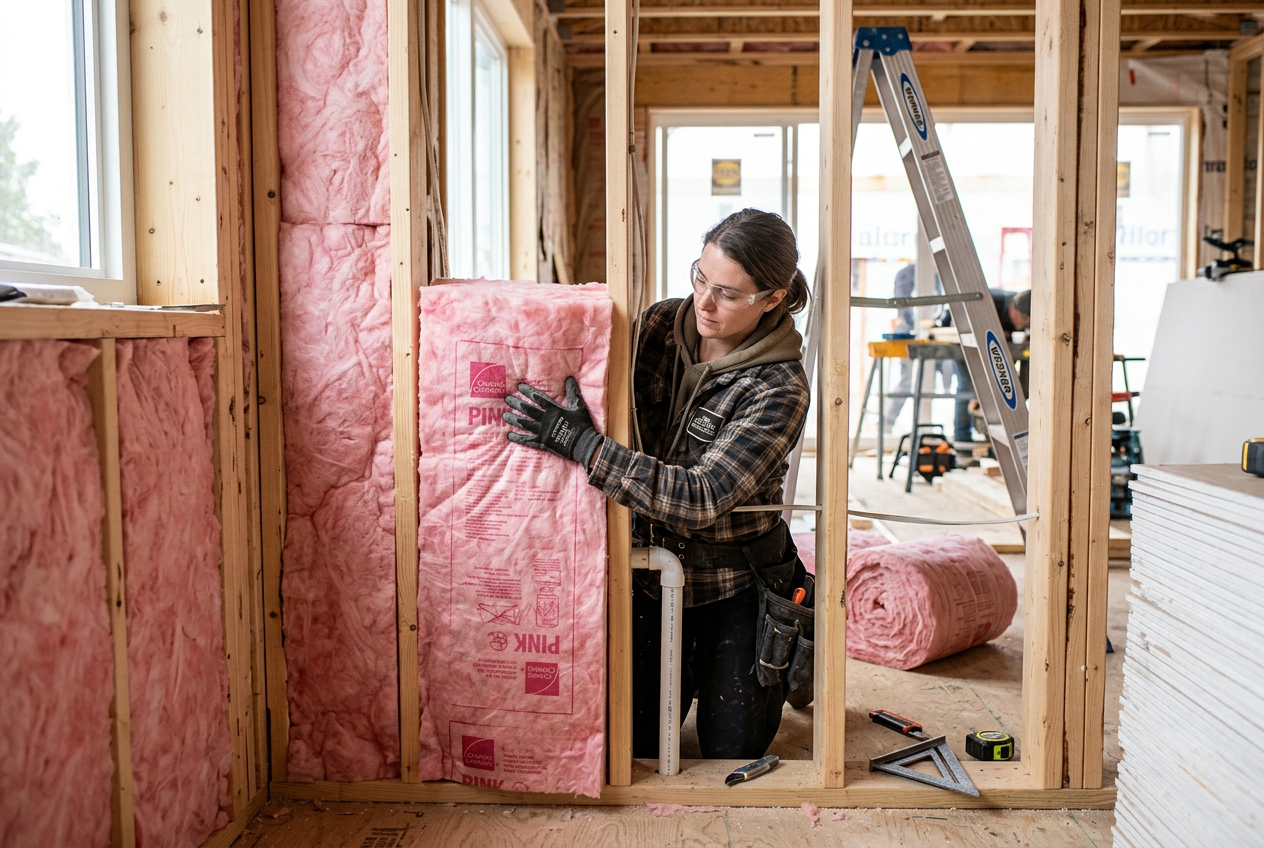
All private rental properties in New Zealand must meet the Healthy Homes Standards, which include specific minimum requirements for ceiling and underfloor insulation. Whether you're a tenant wanting to know your rights or a landlord checking compliance, understanding what's required — and how to verify it — is straightforward once you know what to look for.
What Are the Healthy Homes Insulation Standards?
The Healthy Homes Standards set out minimum insulation levels for rental homes across New Zealand. The key requirements are:
- Ceiling insulation must meet a minimum R-value that depends on your climate zone (see table below).
- Underfloor insulation must also meet a minimum R-value based on climate zone.
- Existing insulation that was installed to the 2016 insulation regulations standard may be acceptable if it's in good condition and covers the right areas.
- Insulation must be installed in accordance with the manufacturer's instructions and must not be damaged, wet, or compressed.
Minimum R-Values by Climate Zone
| Location | Ceiling (min R-value) | Underfloor (min R-value) |
|---|---|---|
| Zone 1 (Northland, Auckland, Coromandel) | R2.9 | R1.3 |
| Zone 2 (Most of North Island, Nelson, Marlborough) | R2.9 | R1.3 |
| Zone 3 (Most of South Island, Central Plateau, Hawke's Bay highlands) | R3.3 | R1.3 |
Note: These are the minimums — higher R-values provide better thermal performance. Always check Tenancy Services for the most current zone boundaries and requirements, as these can be updated.
Who Has to Comply and By When?
All private landlords were required to comply with the Healthy Homes insulation standard by 1 July 2025 (for most tenancies). Social housing providers had earlier deadlines. If you're unsure about your specific tenancy type or deadline, check with Tenancy Services or seek advice from a tenancy advocate.
How to Check If Your Rental Complies
1. Ask for the Healthy Homes Compliance Statement
Landlords are legally required to provide a Healthy Homes compliance statement with any new or renewed tenancy agreement. This statement should detail the current insulation, its R-value, location, and condition. Check this document first.
2. Check the Insulation Yourself (Where Safe)
For ceiling insulation, you may be able to look into the ceiling space via an access hatch if one exists. Look for insulation batts or blown-in insulation covering the ceiling. Check that it's not compressed, wet, or missing in patches.
For underfloor insulation, if your home has a suspended timber floor with a subfloor space, you can sometimes see whether insulation is fitted from outside the house (look for insulation between the floor joists). Do not crawl under the house yourself unless it is safe and dry to do so.
3. Get a Professional Insulation Assessment
If you're unsure, the most reliable option is to have a qualified insulation installer inspect the property. They can access ceiling and subfloor spaces safely, measure existing R-values, and provide a written report. This is especially useful for landlords wanting documented proof of compliance. You can find local insulation installers on tradedirectory.co.nz.
4. Look for Product Labels or Installation Records
Insulation products often have R-value labels on the batts themselves. If the previous installer left documentation or the landlord has records, these can confirm what was installed. BRANZ provides technical guidance on insulation performance that can help you interpret product information.
What If the Insulation Doesn't Meet the Standard?
If you're a tenant and you believe your rental doesn't comply:
- Raise it with your landlord in writing first.
- If the landlord doesn't act, you can apply to the Tenancy Tribunal for a compliance order or financial remedy.
- Contact Tenancy Services for advice on your options.
If you're a landlord who needs to upgrade insulation, you'll need to arrange installation by a competent insulation installer. Installing insulation in ceiling and underfloor spaces is not restricted trade work, but it does need to be done correctly to meet the required R-values and comply with the NZ Building Code. Some ceiling insulation work near electrical wiring requires care — always follow safe work practices and consider using a professional.
Common Insulation Types Used in NZ Rentals
- Pink Batts / glasswool batts — widely used, available from suppliers like Bunnings and Mitre 10
- Polyester batts — a non-irritating alternative
- Blown-in insulation (glasswool or cellulose) — common in older ceiling spaces
- Foil underfloor insulation — note that foil insulation installed after 1 July 2016 must meet specific requirements; check with Tenancy Services for current rules on foil
When to Call a Professional
You should engage a qualified insulation installer if:
- You cannot safely access the ceiling or subfloor space.
- The existing insulation is damaged, wet, mouldy, or incomplete.
- You need a written compliance report for a tenancy agreement or Tenancy Tribunal.
- You're a landlord upgrading insulation to meet the Healthy Homes Standards.
- There is any doubt about R-values or coverage.
Working in ceiling spaces can involve hazards including electrical wiring, limited ventilation, and falls. WorkSafe NZ has guidance on working safely in confined spaces. Always use appropriate PPE (dust mask, gloves, eye protection) if you do any inspection yourself.
A qualified local insulation installer can assess your property, recommend the right products, and provide documentation of compliance. Search for insulation professionals in your area on tradedirectory.co.nz.