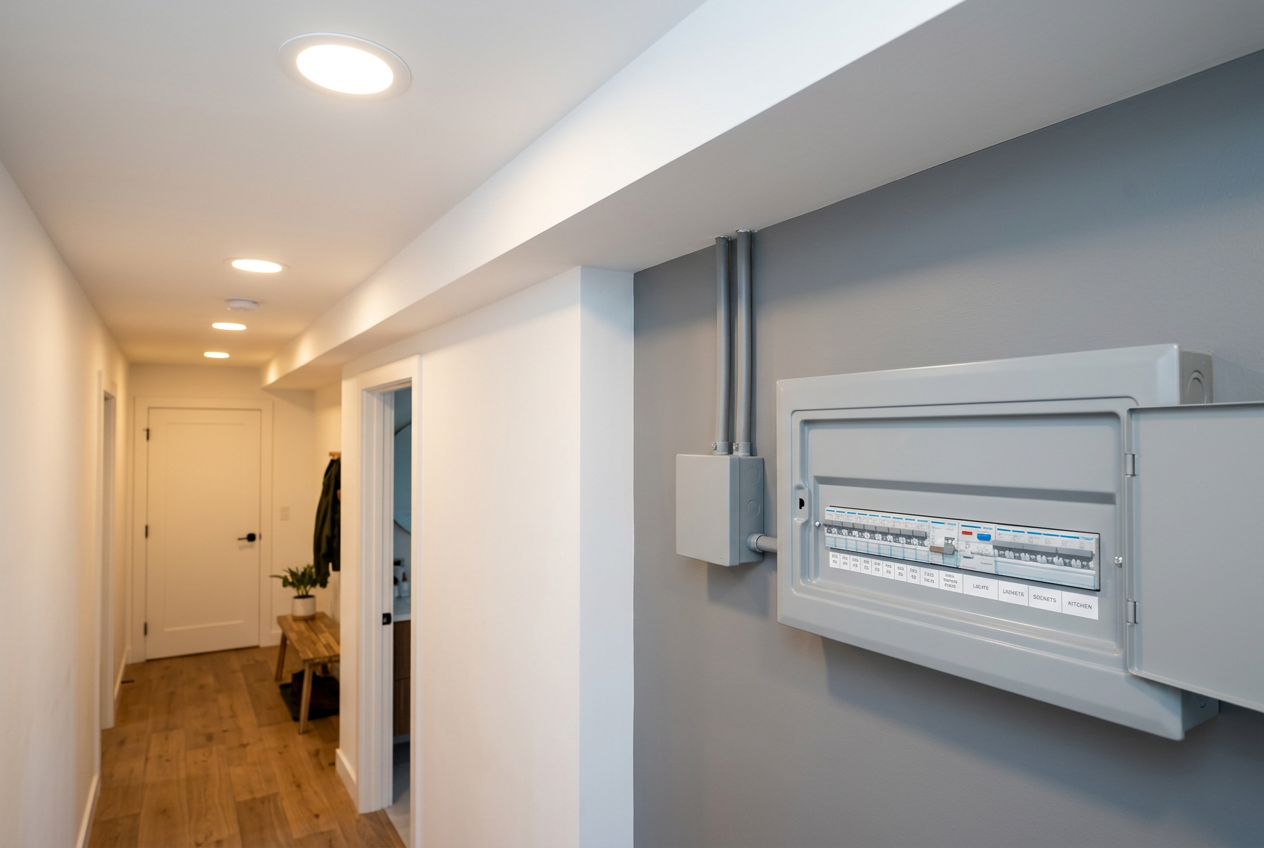
In New Zealand, certain types of electrical work require your electrician to notify the local lines company (also called the network operator or electricity distributor) — the organisation that owns and maintains the power lines and network infrastructure in your area. This isn't just a formality; it's a legal requirement under the Electricity Act 1992 and associated regulations, and it helps keep your home and the wider network safe.
What Is a Lines Company?
Your lines company is different from your electricity retailer (the company you pay your power bill to). The lines company owns the physical network — the poles, wires, and transformers — that delivers electricity to your street and property. Examples include Vector (Auckland), Wellington Electricity, Orion (Canterbury), and PowerNet (Southland/Otago). Your electrician will know who the local lines company is for your area.
What Work Triggers a Notification?
Not all electrical work requires lines company notification. As a general guide, notification is typically required when the work involves:
- New connections to the electricity network (e.g., a new house or building being connected for the first time)
- Upgrading your main switchboard or increasing your supply capacity (e.g., moving from a 60-amp to a 100-amp supply)
- Installing a new sub-mains or significant changes to the point of supply
- Connecting solar panels (photovoltaic systems) or other distributed generation (e.g., home battery storage systems) that will export power back to the grid
- Installing an electric vehicle (EV) charger at higher capacities that may affect the network
- Disconnecting or reconnecting the property from the network
- Relocating the point of supply or the service fuse
Work that is purely internal — such as adding a new power point, replacing a light fitting, or rewiring a room — generally does not require lines company notification, though it still must be done by a registered electrician and may require an Electrical Certificate of Compliance (CoC).
Why Does Notification Matter?
The lines company needs to know about certain work because changes at your property can affect the safety and stability of the wider network. For example, if you're connecting solar panels that export electricity, the network operator needs to ensure the local lines can handle the additional load and that safety protections are in place. Similarly, increasing your supply capacity means the network may need to be upgraded or checked at the street level.
Failure to notify when required can result in unsafe installations, voided warranties, and potential legal liability. The MBIE Building Performance website and the Electrical Workers Registration Board (EWRB) provide guidance on electrician obligations under NZ law.
Who Is Responsible for Notifying the Lines Company?
This is your electrician's responsibility, not yours as the homeowner. A licensed, registered electrician carrying out notifiable work must contact the lines company — usually before starting work or before energising the installation. In practice, a good electrician will:
- Assess whether your job triggers a notification requirement
- Contact the lines company on your behalf
- Obtain any necessary approvals or agreements (e.g., an Electricity Supply Agreement for new connections)
- Ensure the work meets the lines company's technical standards
- Issue you a Certificate of Compliance once the work is complete
If you're unsure whether your electrician has done this, it's perfectly reasonable to ask them directly.
Solar and Distributed Generation: A Special Case
Installing solar panels or a home battery system is one of the most common triggers for lines company notification in NZ today. Before your system can be connected to the grid and export power, your electrician must apply to the lines company for approval. The lines company will assess whether the local network can accommodate the export capacity and may set conditions. This process can take some time, so factor it into your project timeline.
For more information on home energy generation, Energywise has helpful guidance for NZ homeowners.
What About Building Consents?
Lines company notification is separate from building consent. Some electrical work may also require a building consent from your local council, while other work is exempt under Schedule 1 of the Building Act. Always confirm with your local council and your electrician which consents apply to your specific job. The MBIE Building Performance site has a useful overview of when consents are required.
When to Call a Professional
Most electrical work in New Zealand is restricted work and must be carried out by a registered electrician — it is illegal for homeowners to do their own electrical wiring. This is enforced by the Electrical Workers Registration Board (EWRB). The only exceptions are very minor tasks such as replacing a plug or light bulb.
Safety note: Never attempt to work on your switchboard, meter box, or any wiring yourself. Contact with live electrical components can be fatal. Always use a qualified professional.
If your project involves a new connection, solar installation, EV charger, or switchboard upgrade, make sure you hire an experienced, registered electrician who is familiar with lines company requirements in your area. You can find qualified local electricians on tradedirectory.co.nz.

 Site Safe
 Licensed Electrical Inspector







