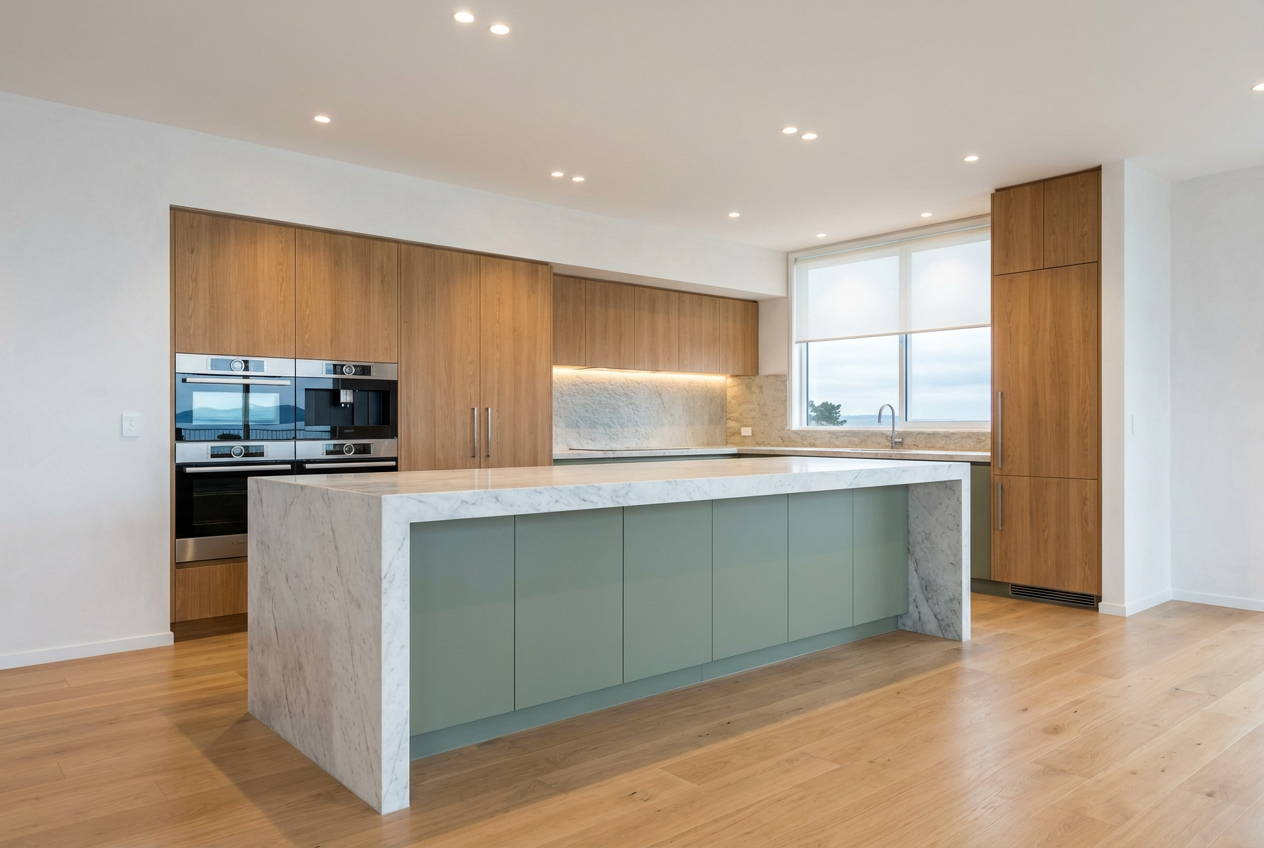
Cabinet making in New Zealand sits in an interesting space — much of the work is exempt from building consent, yet it still needs to meet certain quality and safety expectations. Understanding what standards apply, what questions to ask your cabinet maker, and when consent is required will help you feel confident the job has been done properly.
Does Cabinet Making Require a Building Consent?
Most standard cabinetry — kitchen cabinets, bathroom vanities, wardrobes, and laundry joinery — falls under Schedule 1 of the Building Act 2004, which lists work that is exempt from building consent. This means your cabinet maker can generally install cabinetry without needing council approval.
However, exemptions have limits. If the cabinetry work involves structural changes (such as removing a load-bearing wall to open up a kitchen), plumbing connections (like relocating a sink), or electrical work (such as adding new power points or rangehood wiring), those elements will likely require a building consent and must be carried out by licensed tradespeople. Always confirm with your local council whether consent is needed for your specific project — rules can vary.
You can find detailed guidance on what requires consent at MBIE Building Performance.
What Standards Should Cabinet Work Meet?
Even when consent isn't required, good cabinet making should still comply with the NZ Building Code in relevant areas. Key clauses to be aware of include:
- Clause B1 (Structure): Cabinets must be structurally sound and adequately fixed to walls or floors so they won't collapse or pull away under normal use.
- Clause F2 (Hazardous Building Materials): Materials used should not pose a health risk. This is particularly relevant for older homes where lead paint or asbestos may be present in existing joinery.
- **Any electrical work associated with cabinetry (rangehoods, under-cabinet lighting, appliance circuits) must comply with the Electricity Act and relevant regulations and be done by a registered electrician.
For kitchens and bathrooms, moisture resistance is also important. Cabinets in wet areas should use appropriate substrate materials (such as moisture-resistant MDF or marine-grade ply) and be finished or sealed to resist swelling and mould. BRANZ publishes technical guidance on moisture management in buildings that can be a useful reference.
How to Check the Quality of Your Cabinet Maker's Work
Here are practical things to look for once the job is complete:
Structural Fixing
- Wall cabinets should be fixed into wall studs or solid blocking — not just plasterboard. Give them a firm push to check they feel solid.
- Base cabinets should be level, plumb, and firmly secured to the floor or wall.
Doors and Drawers
- Doors should open and close smoothly without binding, and sit flush or consistent with each other.
- Drawers should run freely on their runners and close fully without rattling.
- Soft-close mechanisms, if specified, should engage consistently.
Finish and Joinery Quality
- Edges should be cleanly finished with no lifting laminate, rough edges, or visible gaps at joins.
- Scribing to walls should be neat, with no large gaps filled with excessive silicone.
- Benchtops should be level, securely fixed, and properly sealed at the wall junction to prevent moisture ingress.
A Simple Quality Checklist
| Item | What to Check |
|---|---|
| Wall cabinets | Fixed to studs, level, no movement |
| Base cabinets | Level, plumb, secured |
| Doors | Flush, smooth operation, consistent gaps |
| Drawers | Full travel, smooth runners |
| Benchtop | Level, sealed at wall, no flex |
| Finish | No lifting edges, clean joins |
| Plumbing/electrical | Done by licensed trades |
Is Your Cabinet Maker Qualified?
In New Zealand, cabinet making is not a restricted trade in the same way that electrical or plumbing work is. There is no legal requirement for a cabinet maker to hold a specific licence to install cabinetry. However, many qualified cabinet makers hold a New Zealand Certificate in Furniture Making and Joinery or similar trade qualification, which is a good sign of professional training.
For work that does touch on restricted trades:
- Electrical work must be done by a registered electrician — check the Electrical Workers Registration Board (EWRB).
- Plumbing connections must be done by a licensed plumber — check the Plumbers, Gasfitters and Drainlayers Board (PGDB).
- If structural work is involved, a Licensed Building Practitioner (LBP) may be required.
When to Call a Professional
You should engage a qualified cabinet maker — and potentially other licensed tradespeople — when:
- You're undertaking a full kitchen or bathroom renovation involving plumbing or electrical changes.
- Structural walls or elements are being altered.
- You're unsure whether building consent is required.
- Existing cabinetry shows signs of failure (sagging wall cabinets, water-damaged substrate, mould behind units).
- You want a producer statement or written assurance that the work meets the Building Code.
A skilled local cabinet maker will be familiar with NZ conditions, materials, and code requirements. You can find qualified cabinet makers in your area on tradedirectory.co.nz.