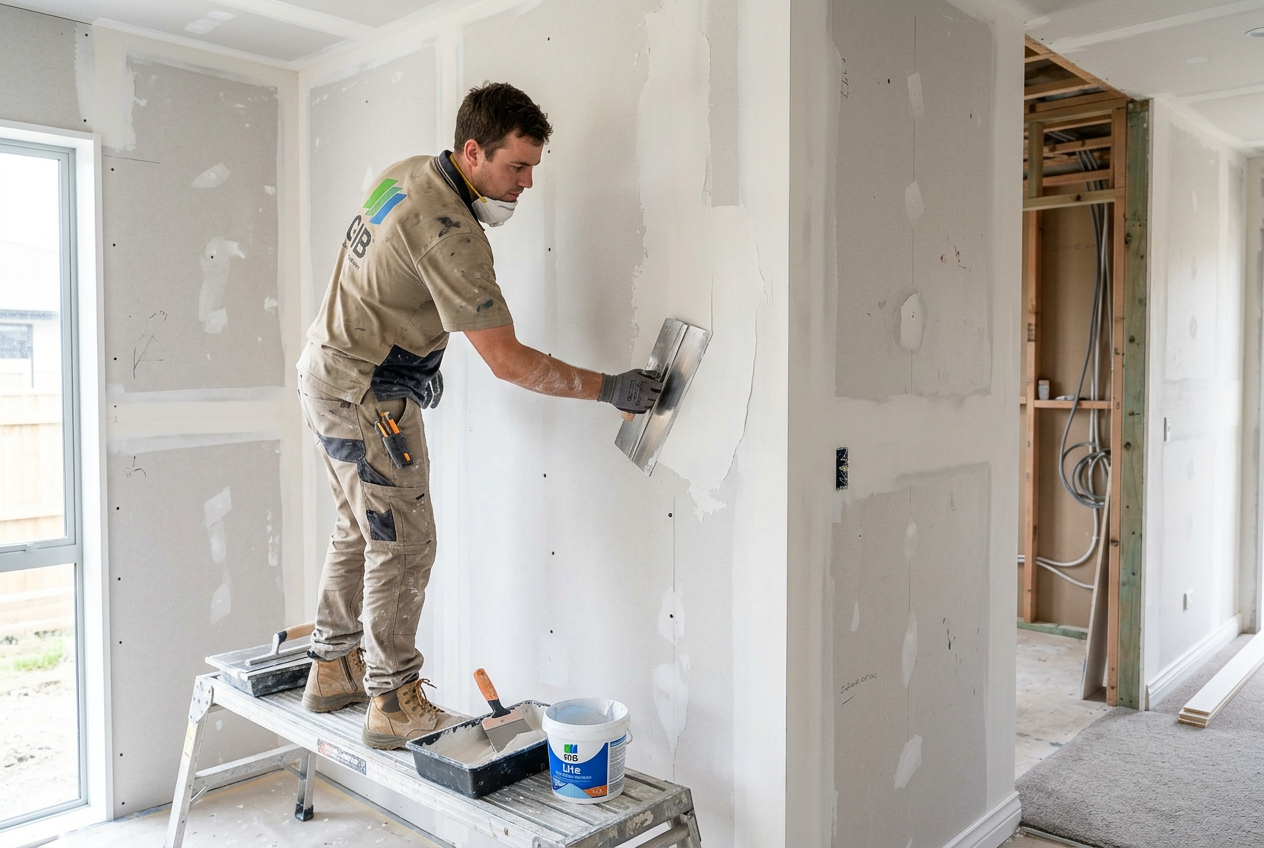
When comparing plasterer quotes in New Zealand, the finish level specified makes a significant difference to both the final look and the cost. Level 4 is the standard finish for most residential walls and ceilings, while Level 5 adds an extra skim coat and is reserved for high-sheen or critical-lighting situations. If your quote doesn't spell out the finish level, it's worth asking — because assuming you're getting one when you're paying for the other is a common source of disappointment.
What Are Plasterboard Finish Levels?
Finish levels are a standardised way of describing how much preparation work goes into a plasterboard surface before it's painted. They run from Level 0 (no finishing at all — think temporary structures) through to Level 5 (the highest quality skim coat finish). In New Zealand residential construction, Levels 3, 4, and 5 are the most relevant.
BRANZ and the plasterboard industry broadly follow the same level definitions used internationally, and GIB — New Zealand's dominant plasterboard brand — publishes guidance on finish levels in their technical literature.
Level 3
All joints and fastener heads are covered with compound and tape, then given two coats of joint compound. Suitable only for areas that will receive heavy texture or be hidden behind cabinetry. Not appropriate for painted walls.
Level 4
Level 4 is the standard finish for most NZ homes. It includes:
- Tape embedded in joint compound
- Two additional coats of joint compound over all joints and angles
- One coat over fastener heads
- Sanded smooth
This is what most plasterers mean when they quote a standard residential job. It's suitable for flat or low-sheen paints and most wall textures.
Level 5
Level 5 takes everything in Level 4 and adds a skim coat — a thin, continuous layer of finishing compound or proprietary topping compound applied over the entire surface. This fills any minor imperfections, tool marks, or surface texture left by the board itself.
Level 5 is recommended when you're using:
- High-gloss or semi-gloss paints
- Paints with low hide (such as deep tints in flat sheens)
- Lighting that rakes across the wall at a low angle (e.g. large windows, downlights close to walls)
- Feature walls where any imperfection will be highly visible
How to Tell Which Level Your Quote Covers
The simplest way is to ask your plasterer directly and request that the finish level be written into the quote. A professional plasterer should have no hesitation specifying this. Here's what to look for:
| What the quote says | Likely finish level |
|---|---|
| "Standard finish" or "tape and stop" | Usually Level 4 |
| "Skim coat finish" or "full skim" | Level 5 |
| "Premium finish" or "critical lighting finish" | Level 5 |
| No mention of finish level | Ask before signing |
If the quote just says "plasterboard stopping" without further detail, assume Level 4 and confirm in writing before work begins.
Why the Difference Matters
Level 5 takes considerably more time and material than Level 4. As a rough guide, expect a Level 5 finish to cost noticeably more than Level 4 — the extra skim coat alone adds labour and compound. The exact difference will depend on the size of the job, the plasterer's rates, and your region.
Choosing the wrong level can be costly. If you paint over a Level 4 finish with a high-gloss paint or install raking downlights, every joint, fastener dimple, and board texture can become visible — sometimes called photographing. Fixing this after painting usually means sanding back and re-skimming, which is far more disruptive than getting it right the first time.
What the NZ Building Code Says
The NZ Building Code doesn't prescribe specific plasterboard finish levels — that's a quality and specification matter rather than a compliance one. However, your plasterer's work must still meet the performance requirements of the code, and using GIB-approved systems and following manufacturer specifications is the standard way to demonstrate compliance. Always check with your local council if your project requires a building consent.
Choosing the Right Level for Your Project
- New build or renovation with standard paint: Level 4 is almost always sufficient.
- Feature walls, high-gloss paint, or raking light: Specify Level 5 in writing.
- Bathrooms and wet areas: Waterproof board and appropriate stopping compounds matter more than finish level here — discuss with your plasterer.
- Ceilings with downlights: Consider Level 5, as ceiling imperfections are often more visible under artificial light.
For paint selection that suits your chosen finish level, Resene, Dulux, and Wattyl all publish guidance on which paint sheens are appropriate for different surface preparations.
When to Call a Professional
Plastering is a skilled trade. Achieving a flat, consistent Level 4 finish — let alone a Level 5 skim coat — takes years of practice. DIY attempts often result in visible ridges, uneven joints, and wasted material. For any significant area of plasterboard finishing, hiring a qualified plasterer is strongly recommended.
You can find experienced local plasterers on tradedirectory.co.nz. When you contact them, ask specifically: "Can you confirm in the quote whether this is a Level 4 or Level 5 finish?" A good tradesperson will appreciate the question.
Plastering is not restricted licensed work in the same way as electrical or plumbing, but for work that requires a building consent, your plasterer's work may need to be carried out or supervised by a Licensed Building Practitioner (LBP). Check with your council if you're unsure.

 Master Painters NZ member