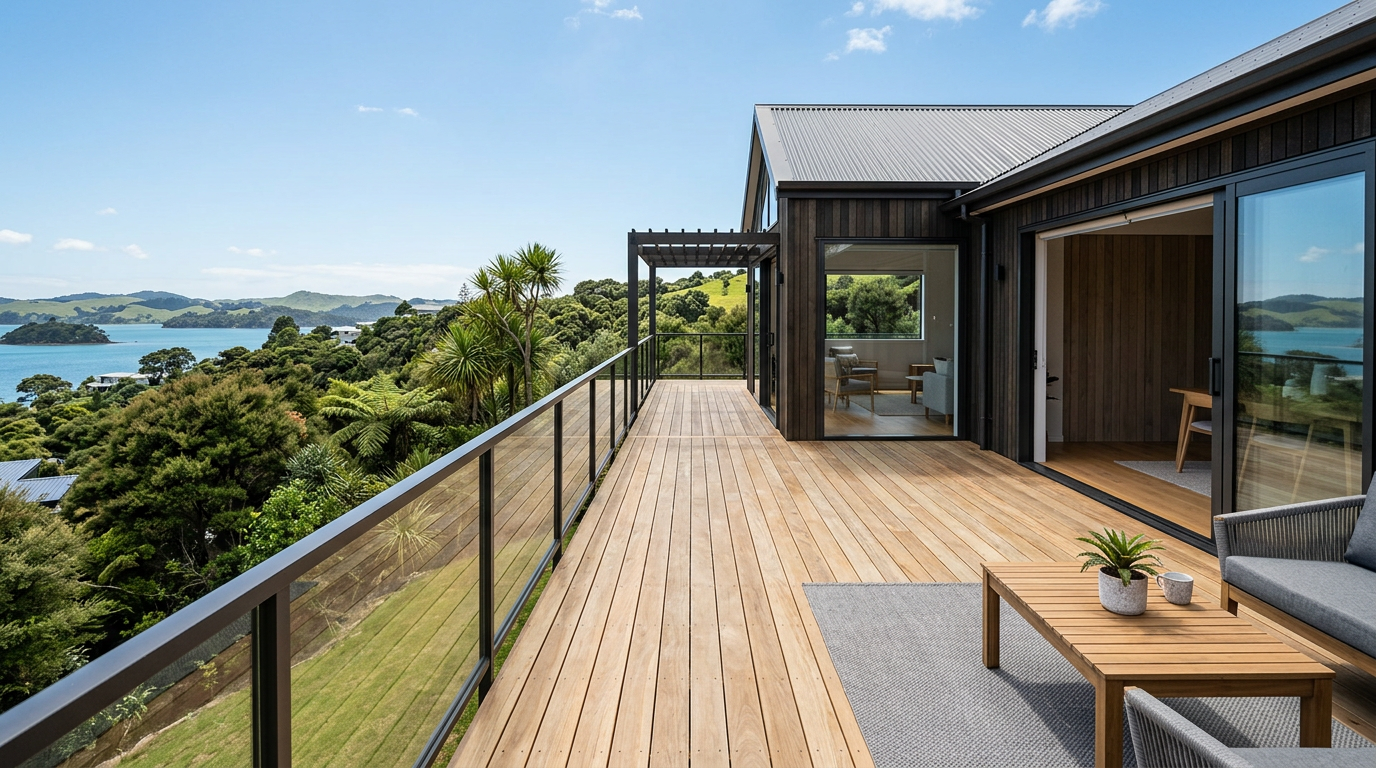
Wobbly balustrade posts are more than just annoying — they're a genuine safety hazard, especially on elevated decks. The good news is that with the right fixing method, quality hardware, and a bit of maintenance know-how, you can keep your posts rock-solid for years to come.
Why Do Balustrade Posts Wobble?
Understanding the cause is the first step to a lasting fix. The most common culprits are:
- Inadequate fixing at the base — posts bolted through a single deck board with no blocking or backing plate will flex under load
- Timber shrinkage and movement — as timber dries and seasons, fixings can loosen
- Corrosion of fixings — in coastal or wet environments, standard steel bolts rust and lose clamping force
- Rot at the post base — moisture trapped around the post base degrades the timber, reducing structural integrity
- Undersized posts or inadequate spacing — posts that are too small or too far apart are inherently more flexible
NZ Building Code Requirements You Need to Know
In New Zealand, deck balustrades must comply with NZS 3604:2011 (Timber-framed buildings) and the NZ Building Code, particularly Clause F4 (Safety from Falling) — note that the relevant clause may be referenced differently depending on the edition of the Building Code in force; confirm the current clause with MBIE or your local council. Key requirements include:
- Balustrades are generally required on decks 1 metre or more above the ground
- The minimum balustrade height is 1 metre (or 1.2 m in some situations — check with your local council)
- Posts and balustrades must withstand specified horizontal loads — specified horizontal loads — confirm the applicable load requirements with your engineer or council, as these depend on the specific situation and applicable standards
- Any structural changes to a deck balustrade may require a building consent — always confirm with your local council before starting work, as Schedule 1 exemptions have specific conditions
For guidance on consent requirements, visit MBIE Building Performance.
Best-Practice Post Fixing Methods
The fixing method is everything when it comes to post stability. Here are the main approaches used by professional deck builders:
1. Through-Bolting with Blocking
The most common and reliable method for posts fixed to the side of a joist or bearer:
- Use M12 galvanised or stainless steel bolts (stainless is strongly recommended in coastal areas)
- Install solid timber blocking between joists directly behind the post to spread the load
- Use large flat washers on both sides to prevent pull-through
- Tighten firmly, but don't over-torque and crush the timber
2. Proprietary Post Bases and Brackets
Purpose-made post base connectors (such as those available from Mitre 10 or PlaceMakers) offer a strong, consistent fixing point. These are particularly good for posts fixed to the top of a deck frame. Look for:
- Hot-dipped galvanised or stainless steel brackets rated for outdoor use
- Products that elevate the post base slightly to allow drainage and reduce rot risk
- Brackets with a minimum fixing depth and bolt pattern specified by the manufacturer
3. Notched Posts Over the Rim Joist
For a very solid result, some builders notch the post so it wraps over the outside of the rim joist and is bolted through. This creates a mechanical interlock that resists racking far better than a flat-face fix alone.
Fixing a Wobbly Post — Step by Step
If your posts are already installed and starting to wobble, here's how to assess and remedy the situation:
- Check for rot first — probe the post base and surrounding decking with a screwdriver. Soft or spongy timber needs replacing, not just re-bolting.
- Inspect existing fixings — look for rust, loose nuts, or cracked washers. Replace corroded hardware with A4 stainless steel equivalents.
- Add blocking — if there's no backing behind the post, open up the decking nearby and install solid timber blocking between joists.
- Re-tighten or replace bolts — if the timber is sound, re-tighten existing bolts. If the holes have elongated, move to a larger washer or re-drill at a slightly different position.
- Consider adding a second bolt — a single bolt allows rotation; two bolts at different heights resist movement far better.
- Seal the post base — once re-fixed, apply a quality exterior timber sealant or paint to protect the end grain and base from moisture ingress. Resene and Wattyl both offer suitable exterior timber coatings.
Hardware and Material Tips
| Factor | Recommendation |
|---|---|
| Coastal/wet areas | A4 stainless steel bolts and brackets |
| Inland/sheltered | Hot-dipped galvanised (HDG) minimum |
| Post timber | H3.2 treated minimum for above-ground outdoor use |
| Decking around base | Allow drainage gaps; avoid trapping moisture |
| Sealant | Apply to all cut ends before installation |
Always check that your timber treatment level meets the requirements in NZS 3604 for your specific application and exposure zone.
Ongoing Maintenance to Prevent Future Wobble
- Inspect fixings annually — give each post a firm push and check for movement
- Re-tighten bolts after the first full summer/winter cycle, as timber movement is greatest in the first year
- Keep the post base clear — don't let leaf litter or soil build up around post bases
- Repaint or re-seal every few years to protect timber from moisture
- Check for insect damage — borer can hollow out posts from the inside; look for small exit holes and fine powder
For more information on healthy and safe building practices, BRANZ is an excellent NZ resource.
When to Call a Professional
If your deck is 1 metre or more above ground, the balustrade is a critical safety element and errors can have serious consequences. Call a qualified deck builder or Licensed Building Practitioner if:
- Posts or the surrounding structure show signs of rot or structural damage
- You're unsure whether your balustrade meets NZ Building Code requirements
- The deck requires a building consent for the repair or modification
- You're not confident working at height or with structural fixings
You can find qualified, local deck builders on tradedirectory.co.nz. Look for tradespeople who are Licensed Building Practitioners (LBP), which gives you added assurance of their competency for structural work.




 Licensed Building Practitioner (LBP)





