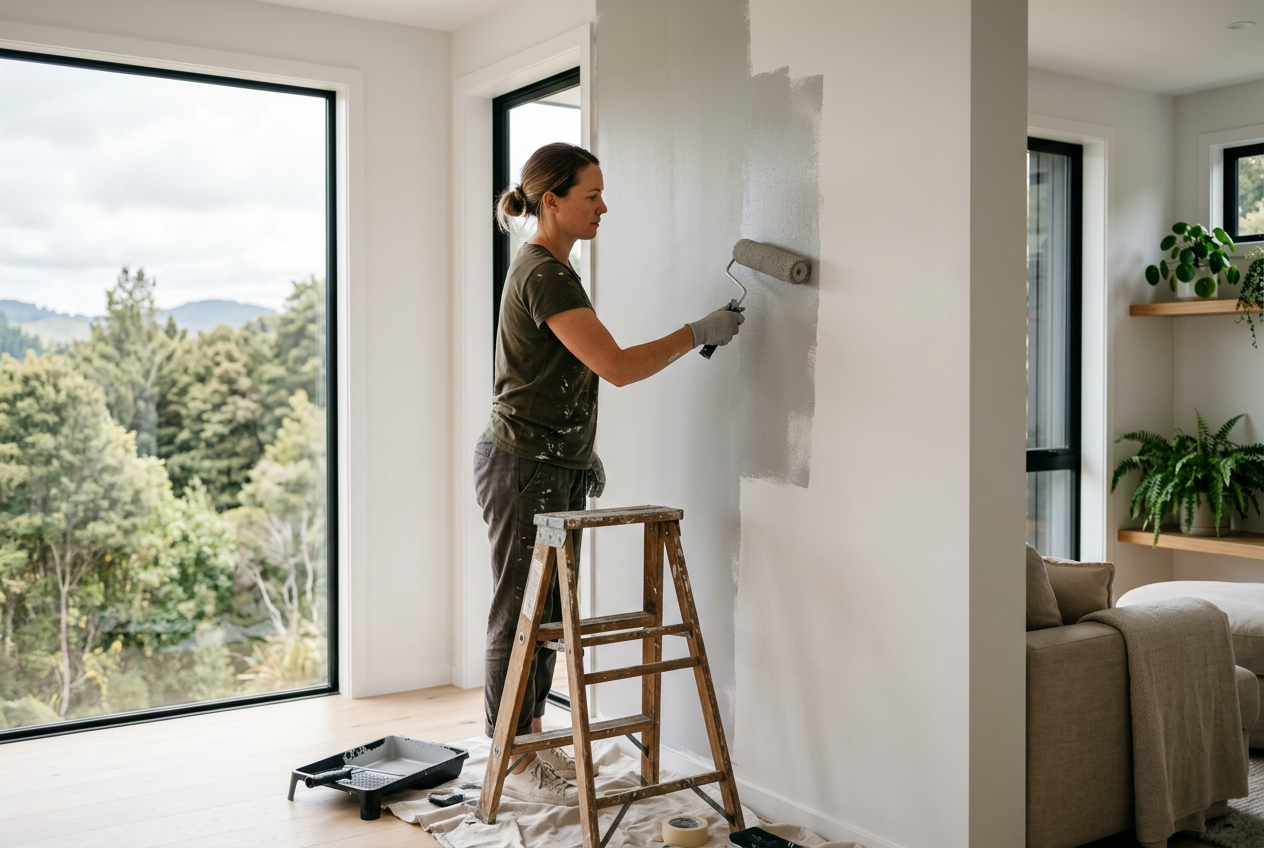
Mould on painted walls and ceilings is one of the most common complaints from NZ homeowners — and for good reason. Our climate, particularly in regions like Auckland, Wellington, and the West Coast, creates warm, humid conditions that mould absolutely loves. Left untreated, mould spreads quickly, damages paint and plasterboard, and can affect the health of your household. The good news is that surface mould is often something you can tackle yourself with the right approach.
Why Mould Grows on Painted Surfaces
Mould is a fungus that thrives wherever there is moisture, warmth, and a food source — and painted walls tick all those boxes. Common causes include:
- Poor ventilation in bathrooms, kitchens, and bedrooms
- Condensation forming on cold walls and ceilings, especially in poorly insulated homes
- Roof or plumbing leaks introducing moisture into wall cavities
- Inadequate extraction fans that don't vent to outside
- Drying laundry indoors without opening windows
Under the Healthy Homes Standards, rental properties must have adequate ventilation and extraction — so if you're a landlord, addressing mould is not just good practice, it's a legal obligation.
Identifying the Type and Severity of Mould
Before you reach for the bleach, it pays to understand what you're dealing with.
Surface mould vs deep mould
| Type | Appearance | Location | DIY-able? |
|---|---|---|---|
| Surface mould | Black, green, or grey spots on paint | Bathroom ceilings, corners | Usually yes |
| Embedded mould | Staining that returns quickly after cleaning | Behind paint, in plasterboard | Often no |
| Structural mould | Large colonies, musty smell throughout | Wall cavities, framing | Call a professional |
If the mould covers an area larger than roughly a square metre, keeps returning within weeks of cleaning, or is accompanied by a persistent musty smell even after treatment, there is likely moisture trapped within the wall or ceiling structure. This needs professional assessment.
What You'll Need
- Rubber gloves, safety glasses, and an N95 or P2 respirator mask
- Spray bottle
- Microfibre cloths or disposable rags
- Mould-killing solution (see below)
- Sugar soap
- Mould-resistant paint or primer
Safety note: Mould spores can cause respiratory irritation and allergic reactions. Always wear a mask and gloves, open windows for ventilation, and keep children and pets out of the room while you work.
Step-by-Step: How to Remove Mould from Painted Walls and Ceilings
Step 1 – Choose your cleaning solution
You have a few effective options:
- Diluted bleach solution: Mix one part household bleach with four parts water. Effective on non-porous painted surfaces but can lighten some paint colours.
- White vinegar (undiluted): A gentler option that kills many mould species. Better for coloured or feature walls.
- Commercial mould remover: Products such as Selleys Rapid Mould Killer or similar products available at Bunnings or Mitre 10 are formulated for painted surfaces and often include a surfactant to help the solution penetrate.
Step 2 – Apply and dwell
Spray your chosen solution generously onto the affected area. Allow it to sit for at least 10–15 minutes — this dwell time is critical for killing the mould rather than just wiping it around.
Step 3 – Scrub and wipe
Using a cloth or soft brush, scrub the area in a circular motion. Wipe away the residue with a clean damp cloth. Repeat if staining remains.
Step 4 – Clean the whole surface
Once the mould is gone, wash the entire wall or ceiling panel with sugar soap solution. This removes grease, grime, and any remaining spores, and gives the paint a clean surface to bond to.
Step 5 – Allow to dry completely
This is crucial. The surface must be bone dry before you repaint — at least 24–48 hours in good ventilation. Painting over a damp surface is one of the most common reasons mould returns quickly.
Step 6 – Apply a mould-resistant primer and paint
Once dry, apply a quality mould-inhibiting primer, then topcoat with a mould-resistant paint. Resene offers their X-200 Waterborne Sealer and the Resene SpaceCote range with mould inhibitors. Dulux and Wattyl also offer bathroom and kitchen paints with built-in mould resistance. These products make a real difference in high-moisture areas.
What Homeowners Can Safely Do Themselves
- Clean and treat surface mould on painted walls and ceilings
- Improve ventilation by opening windows and using portable dehumidifiers
- Replace mould-damaged paint with mould-resistant products
- Install or upgrade bathroom extractor fans (the physical installation of a new fan circuit is restricted electrical work — see below)
When to Call a Professional
Some situations are beyond a DIY clean-up:
- Mould covering large areas or recurring rapidly — this usually signals a moisture source inside the wall or ceiling that needs investigation
- Roof leaks or plumbing leaks — fixing these involves licensed tradespeople. Plumbing work is restricted work under the Plumbers, Gasfitters and Drainlayers Board and must be carried out by a registered plumber
- Electrical work — wiring a new extraction fan or modifying circuits is restricted electrical work and must be done by a registered electrician under the Electrical Workers Registration Board
- Significant plasterboard damage — mould-saturated GIB board often needs to be cut out and replaced. GIB recommends replacing rather than trying to dry out heavily affected board
- Health concerns — if household members are experiencing respiratory symptoms, seek medical advice and get a professional mould assessment
A qualified painter can assess the extent of the problem, apply the correct preparation and mould-resistant coatings, and give you a result that lasts. You can find experienced local painters on tradedirectory.co.nz.
How to Prevent Mould Coming Back
- Ventilate every day — open windows for at least 15 minutes morning and evening
- Run extraction fans during and for 15–20 minutes after showers and cooking
- Use a dehumidifier in bedrooms and living areas during winter
- Insulate walls and ceilings to reduce cold surfaces where condensation forms — BRANZ has excellent guidance on moisture control in NZ homes
- Wipe down condensation on windows and cold walls regularly
- Don't dry laundry indoors without ventilation
- Check for leaks around roofing, gutters, and plumbing regularly

 BCITO Qualified

 Master Painters NZ
 Site Safe