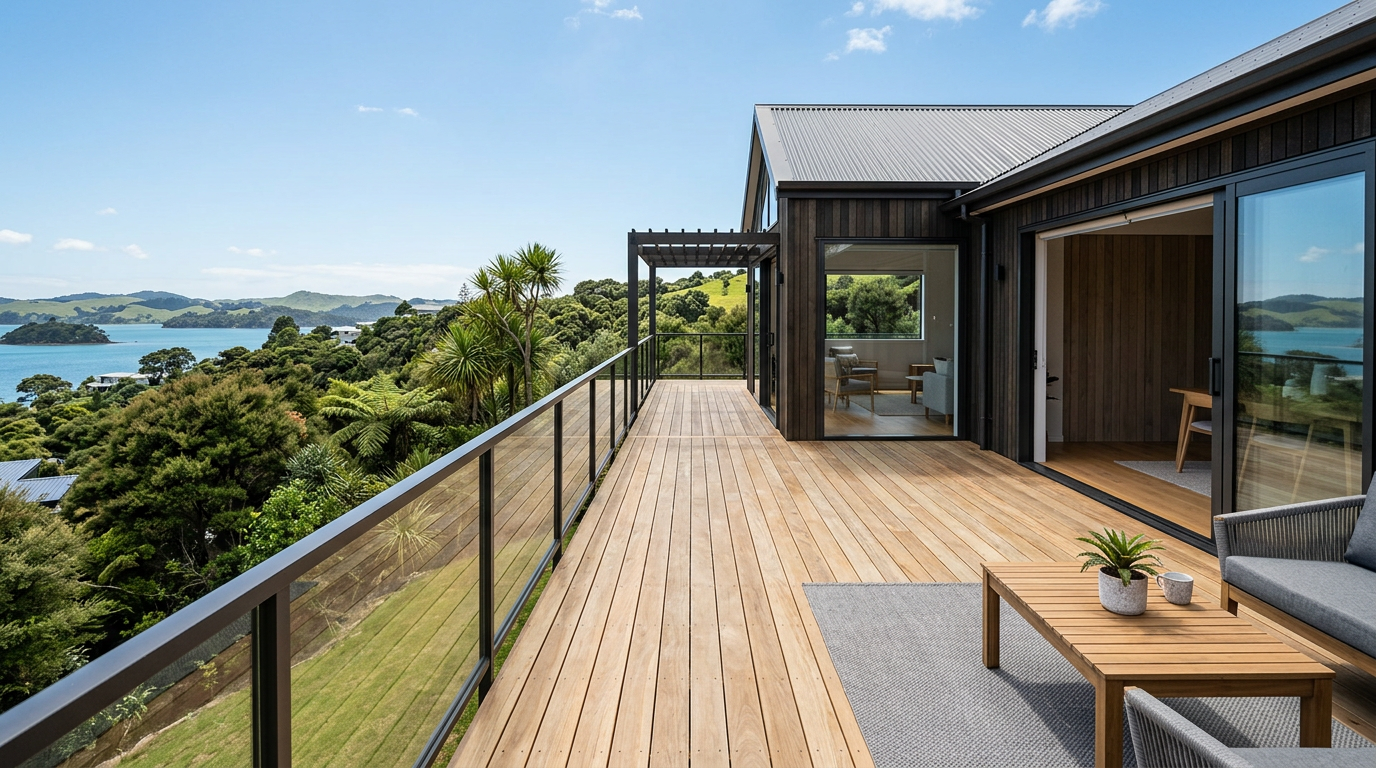
Rotted deck posts are one of the most common deck problems in New Zealand, especially in wetter regions or where posts sit close to the ground. The good news is that in many cases you can stabilise or replace a single post without dismantling the entire deck frame — but you need to assess the damage carefully and work safely before you start.
Assess the Damage First
Before reaching for a saw, probe the post thoroughly with a screwdriver or bradawl. Push firmly into the timber at ground level and up to about 300 mm above. If the tool sinks in easily, the timber fibres have broken down. Key questions to ask:
- Is the rot localised to the base of the post, or has it spread into the beam or bearer above?
- Is the post structural (carrying load from the deck frame) or decorative?
- Are there signs of rot in the surrounding framing, joists, or bearers?
If rot has spread into the beam or more than one post is affected, a full structural repair by a qualified tradesperson is likely needed. For a single post with rot confined to the lower section, a DIY repair may be feasible.
Safety note: Never work under an unsupported deck. Always use acrow props or temporary posts to carry the load before removing or cutting any structural post.
Check Whether You Need a Building Consent
In New Zealand, structural deck repairs can require a building consent depending on the scope of work. Schedule 1 of the Building Act 2004 lists certain exemptions — like-for-like repairs using the same materials and methods may qualify — but this is not automatic. Always check with your local council before starting structural work. You can find general guidance at MBIE Building Performance.
Decks over 1.5 m above ground level are more likely to require consent for structural changes — check with your local council.
Method 1 — Post Base Bracket Replacement
This is the most common repair for a post that has rotted at the base where it meets the footing.
What you'll need
- Acrow prop or temporary support post
- Reciprocating saw or handsaw
- Hammer drill and masonry bit
- Post base bracket (e.g. a galvanised adjustable post base — available at Bunnings or Mitre 10)
- H5-treated timber post (for in-ground or near-ground contact)
- Galvanised or stainless steel fixings
Steps
- Prop the deck — place an acrow prop under the bearer or beam near the affected post to take the load.
- Cut out the rotted post — cut cleanly above the rot line, leaving sound timber. If the rot extends to within 100 mm of the bearer, the whole post likely needs replacing.
- Remove the old base — break out the old concrete footing if needed, or clean up the existing pad.
- Install a new post base bracket — bolt a galvanised adjustable post base to the concrete pad. This lifts the new post off the ground, preventing future moisture contact.
- Cut and fit a new H5 post — use H5 preservative-treated timber for any post within 200 mm of the ground or in contact with concrete. Slot it into the bracket and fix with the specified nails or bolts.
- Remove the prop and check the deck is level and stable.
Method 2 — Sister Post (Splicing)
If the footing and lower section of the post are sound but the upper portion is damaged, you can sister a new piece of timber alongside the existing post.
- Prop the deck as above.
- Cut away all visibly rotted timber.
- Treat the cut ends of the remaining timber with an end-grain preservative (check with your timber supplier for a suitable H5-compatible product).
- Bolt a new H5 post section alongside the existing sound timber using M12 galvanised bolts, with a minimum of two bolt rows.
- Ensure the new section bears properly on the footing or a new post base bracket.
This method is best confirmed with a Licensed Building Practitioner (LBP) to ensure it meets NZS 3604 requirements for timber-framed construction.
Choosing the Right Timber Treatment
NZ's climate means timber treatment is non-negotiable for outdoor structural use. Use the correct hazard class:
| Location | Minimum Hazard Class |
|---|---|
| Above ground, sheltered | H3.1 |
| Above ground, exposed | H3.2 |
| In-ground or near-ground contact | H5 |
Always check the BRANZ guidelines or your timber supplier for the correct specification.
Preventing Future Rot
- Use post base brackets to keep timber off concrete and soil.
- Ensure stormwater and surface drainage directs water away from posts.
- Apply a quality timber decking oil or stain to all exposed surfaces — brands like Resene and Wattyl offer suitable exterior timber coatings.
- Inspect posts annually, especially after winter.
When to Call a Professional
Call a qualified deck builder or Licensed Building Practitioner if:
- More than one post is affected
- Rot has spread into bearers, beams, or joists
- The deck is elevated or over a certain height above ground
- You are unsure about the structural integrity of the repair
- Your council requires consent and inspections
A professional can also ensure the repair complies with the NZ Building Code and NZS 3604. You can find experienced local deck builders on tradedirectory.co.nz.




 Licensed Building Practitioner (LBP)





