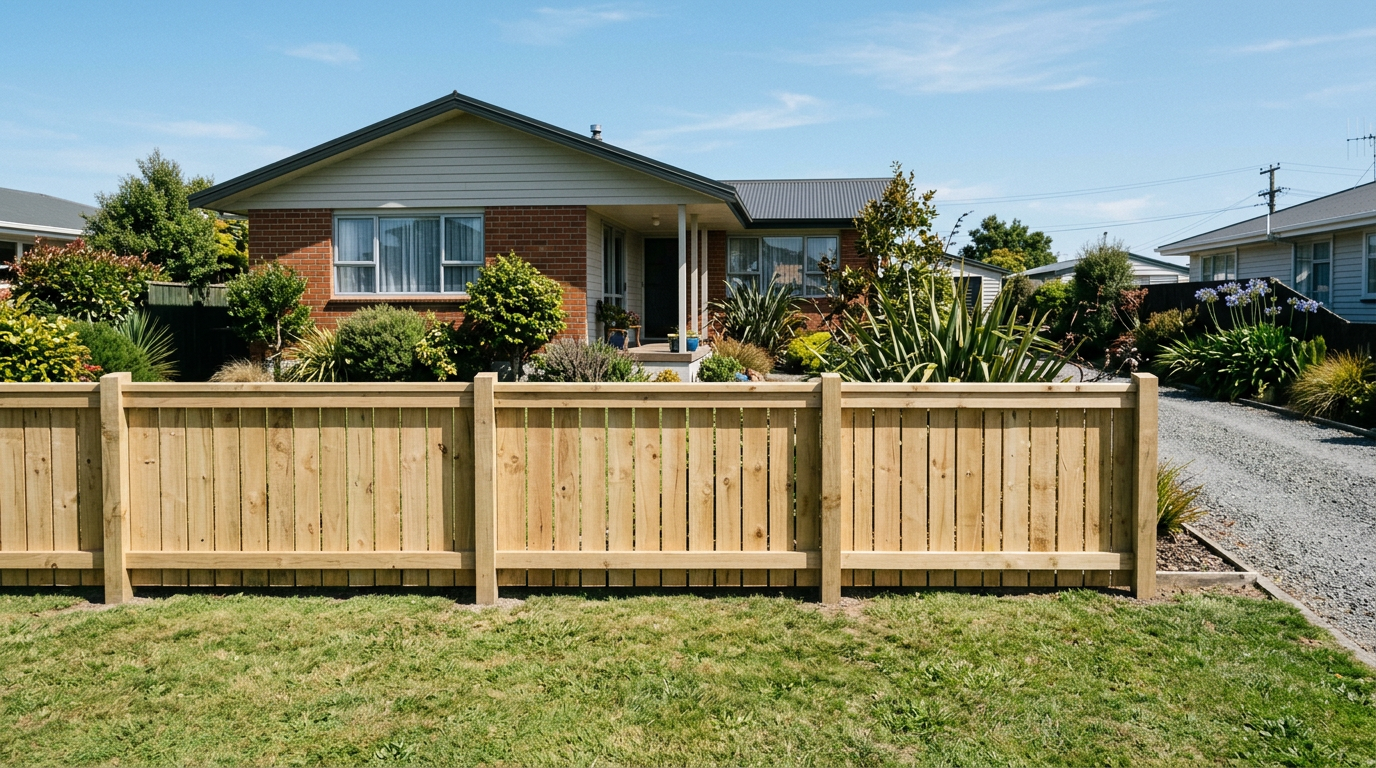
A fence rail that has snapped in the middle is a common problem in New Zealand, especially after strong winds, heavy rain, or simply years of weathering. The good news is that this is a manageable DIY repair for most homeowners — you just need the right materials, a few basic tools, and a bit of know-how.
Assess the Damage First
Before reaching for the toolbox, take a close look at the break and the surrounding timber:
- Is it a clean snap or is the timber rotten? A clean break on otherwise sound timber is straightforward to fix. If the wood is soft, crumbly, or discoloured around the break, rot is the likely culprit and you may need to replace more than just that one rail.
- Check the posts and other rails. A snapped rail can sometimes indicate a post has shifted or the fence has been overloaded. Make sure the posts are still plumb and solid in the ground.
- How many rails are affected? If multiple rails have failed, it may be worth replacing the whole fence section rather than patching each one.
What You'll Need
| Item | Notes |
|---|---|
| Replacement timber rail | Match the existing size — commonly 100×50 mm or 75×50 mm H3.2 treated pine |
| Galvanised joist hanger or splice plate | For a mid-span splice repair |
| Galvanised nails or screws | Use hot-dipped galvanised or stainless steel to prevent rust |
| Saw (hand saw or circular saw) | To cut the new timber to length |
| Drill/driver | For screws |
| Tape measure and pencil | For marking cuts |
| Wood preservative end-grain sealer | To treat any cut ends |
For timber, look for H3.2 treated pine for above-ground outdoor use — this is the minimum treatment level recommended for fence rails exposed to the weather in New Zealand. You'll find suitable timber at Bunnings, Mitre 10, or PlaceMakers.
Option 1: Splice Repair (Keep the Existing Rail)
If the break is clean and the rest of the rail is sound, a splice repair can save you pulling the whole rail out.
- Cut back the broken ends so each side has a clean, square face. Remove any splintered or rotten material.
- Cut a length of matching timber — at least 600 mm long — to act as a scarf or backing piece.
- Position the splice piece so it overlaps equally on both sides of the break, sitting tight against the underside (or side) of the existing rail.
- Fix it firmly with galvanised screws through the splice piece and into the existing rail on both sides — at least three screws per side.
- Seal all cut ends with a timber preservative or end-grain sealer to prevent moisture ingress.
This method works well when the break is roughly mid-span. If the break is very close to a post, a full rail replacement is usually cleaner.
Option 2: Full Rail Replacement
For badly rotted or heavily damaged rails, replacement is the better long-term fix.
- Remove the broken rail by unscrewing or prising it away from the posts. Take care not to damage the palings or pickets attached to it.
- Measure the span between posts carefully — measure twice, cut once.
- Cut your new rail to length and treat the cut ends with end-grain sealer before installation.
- Fix the new rail to the posts using galvanised joist hangers, rail brackets, or by face-fixing with screws or nails. Check that the rail is level before fixing both ends.
- Reattach any palings or pickets that were removed or loosened during the repair.
Timber Treatment Note
Always treat cut ends of H3.2 timber with a suitable preservative — cutting through the treated shell exposes untreated wood to moisture. BRANZ has good guidance on timber durability and treatment levels for outdoor use.
Matching Your Existing Fence
Try to match the timber species, size, and profile of your existing rails as closely as possible. If your fence is older, the timber may have weathered to a grey tone — a coat of timber stain or paint from Resene or Dulux can help blend the repair in once the new timber has dried out (allow at least a few weeks for new treated pine to dry before painting).
Do You Need a Building Consent?
Repairing or replacing a like-for-like fence rail is generally maintenance work and does not require a building consent. However, if you are making significant changes to the fence structure, height, or location — particularly near a boundary or if it is a pool fence — you should check with your local council. Pool fencing in New Zealand is regulated under the Building Act and must comply with MBIE Building Performance requirements. Never compromise a pool fence — get it inspected by a professional if in doubt.
When to Call a Professional
Consider calling a qualified fencer if:
- Multiple rails or posts have failed, suggesting a structural problem
- The fence is a pool safety fence — repairs must meet NZ Building Code requirements
- The posts are leaning, rotted at ground level, or need re-setting in concrete
- You're not confident working with power tools or at height
- The fence is on a retaining structure or boundary dispute is involved
A skilled local fencer can assess the whole fence and advise whether a repair or full replacement is the smarter investment. You can find qualified fencers in your area on tradedirectory.co.nz.





