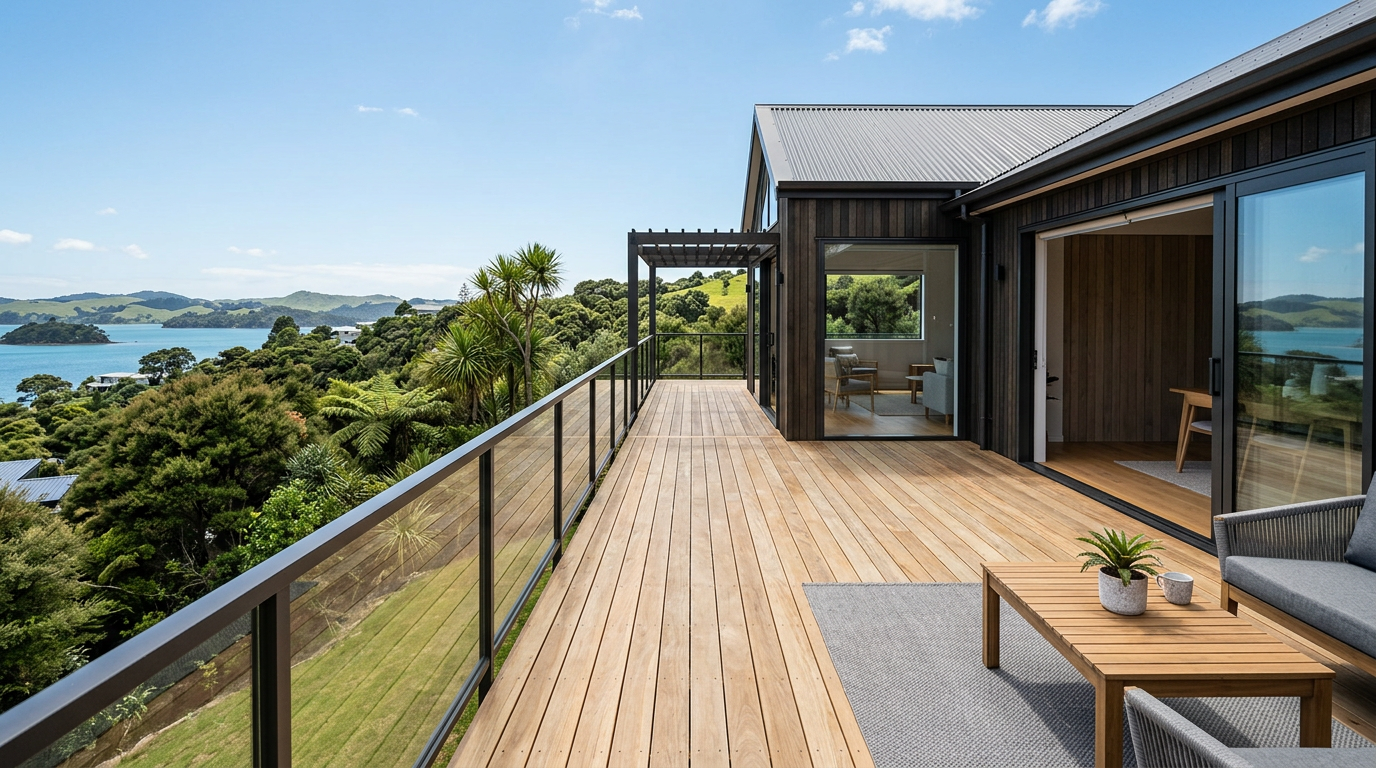
A deck board that has split along the grain is a common problem in New Zealand, where our variable climate — hot summers, wet winters, and UV-intense sunshine — puts timber under real stress. The good news is that many splits can be repaired without replacing the whole board, as long as the damage isn't too deep or structurally compromising.
Assess the Damage First
Before reaching for the glue, take a close look at the split. Ask yourself:
- How deep is it? A surface crack that hasn't penetrated more than a third of the board's thickness is usually repairable.
- How long is the split? Short splits (under 300 mm) are good candidates for gluing. Longer splits may indicate the board is failing.
- Is the board still structurally sound? Press down on the board. If it flexes excessively, feels spongy, or shows signs of rot, repair won't be enough — replacement is the safer option.
- Is there rot present? Discolouration, soft fibres, or a musty smell suggest decay. Rotted timber should always be replaced, not patched.
If in doubt, have a qualified deck builder inspect it. You can find experienced local professionals on tradedirectory.co.nz.
Tools and Materials You'll Need
- Exterior-grade wood glue or a two-part epoxy wood filler
- Clamps (bar clamps or ratchet straps for wider boards)
- Putty knife or mixing stick
- Sandpaper (80-grit and 120-grit)
- Exterior timber stain, oil, or decking paint to finish
- Safety glasses and gloves
For product options, stores like Bunnings and Mitre 10 carry a good range of exterior wood adhesives and epoxy fillers suitable for outdoor use.
Method 1: Gluing a Clean Split
This works best when the split is clean, relatively narrow, and the two sides of the board are still well aligned.
- Clean the split thoroughly. Use a thin tool to remove any dirt, debris, or loose fibres from inside the crack. Allow the timber to dry completely — don't attempt this repair on wet wood.
- Apply exterior-grade wood glue. Work the glue into the split using a putty knife or a thin piece of card. Make sure the adhesive penetrates the full depth of the crack.
- Clamp the board closed. Apply clamps across the width of the board to press the split together. Use scrap timber offcuts under the clamp jaws to avoid marking the deck surface.
- Wipe away excess glue before it sets.
- Allow full cure time as per the manufacturer's instructions — typically 24 hours before foot traffic.
- Sand smooth once cured, then refinish with a compatible exterior timber oil or stain to protect the repair.
Method 2: Filling a Wider Split
If the split is too wide to clamp closed, a two-part epoxy wood filler is a better choice. These products are designed for exterior use and can be sanded and painted or stained once cured.
- Clean and dry the split as above.
- Mix the epoxy filler according to the manufacturer's instructions.
- Press the filler firmly into the crack, slightly overfilling it.
- Allow to cure fully, then sand flush with the board surface.
- Apply a UV-resistant exterior finish to blend the repair and protect the timber.
Products from Sika and Ardex include exterior-grade repair compounds worth considering, though always check the product is rated for outdoor timber use.
Method 3: Replacing the Board
If the split is severe, the board is rotted, or the repair doesn't hold, full board replacement is the right call. This is straightforward DIY work for most homeowners:
- Remove the screws or nails fixing the damaged board.
- Lever the board up carefully to avoid damaging adjacent boards or the joists beneath.
- Inspect the joists while you have access — look for rot, corrosion on fixings, or structural issues.
- Cut a new board to length from matching timber. Common NZ decking timbers include treated pine (H3.2 minimum for above-ground outdoor use per NZ Building Code requirements), kwila, and hardwoods.
- Fix the new board using stainless steel or hot-dipped galvanised screws — these resist corrosion in our coastal and wet conditions.
- Pre-drill near board ends to prevent future splitting.
- Finish with a quality exterior timber oil or stain from brands like Resene or Wattyl to protect against UV and moisture.
Preventing Splits in Future
- Pre-drill all fixing holes, especially near the ends of boards, to reduce splitting stress.
- Keep timber well oiled or stained — dry, unprotected timber splits far more readily.
- Allow for expansion gaps between boards (typically 3–6 mm) so timber can move with seasonal moisture changes.
- Check your deck annually for early signs of cracking, lifting fixings, or moisture ingress.
BRANZ provides excellent guidance on timber maintenance and durability in NZ conditions.
Do You Need a Building Consent?
Repairing or replacing individual deck boards on an existing deck is generally exempt from building consent under Schedule 1 of the Building Act, as it is like-for-like maintenance. However, if you are making structural changes — altering joists, posts, or the overall deck layout — you may need consent. Always confirm with your local council before starting any work that goes beyond straightforward board replacement. See MBIE Building Performance for guidance on consent exemptions.
When to Call a Professional
Call a qualified deck builder if:
- Multiple boards are split or rotting, suggesting a systemic moisture or structural problem
- The joists or framing beneath look damaged or decayed
- The deck is elevated (over 1.5 m) and safety is a concern
- You're unsure whether the deck meets current NZ Building Code standards
- The split has caused a trip hazard that needs urgent attention
A licensed building practitioner (LBP) can carry out restricted building work and provide a record of work for your property files. Find a trusted local deck builder on tradedirectory.co.nz.
Safety note: Always wear safety glasses and gloves when working with epoxy fillers and power tools. If your deck is elevated, use appropriate fall protection.




 Licensed Building Practitioner (LBP)