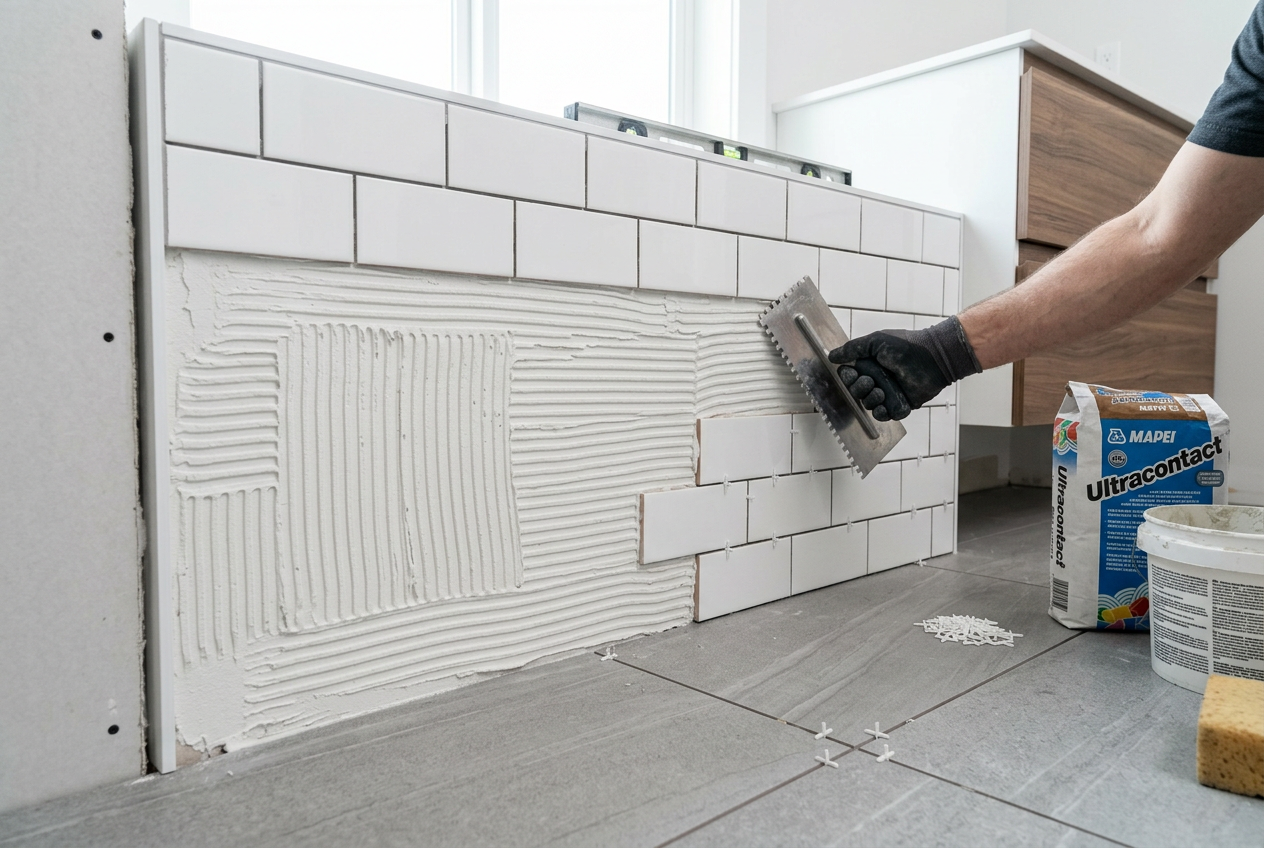
Cutting a thin sliver of tile — anything less than about 15–20 mm wide — is one of the trickiest cuts in tiling. A standard snap cutter will almost certainly crack it, but with the right approach you can get a clean, chip-free edge every time. The key is using a wet saw rather than relying on the snap method.
Why Thin Slivers Are So Difficult
When you score and snap a tile, you need enough material on both sides of the score line to apply even downward pressure. With a very narrow sliver, there simply isn't enough tile to press against, so the piece shatters unpredictably. Porcelain and rectified tiles are especially unforgiving because they're dense and brittle. Ceramic tiles are slightly more forgiving, but thin cuts are still risky without the right tool.
The Best Tool for the Job: A Wet Tile Saw
A wet tile saw (also called a tile wet saw or bridge saw) is the go-to tool for thin slivers. The continuous water-cooled diamond blade cuts rather than snaps, giving you far more control. Here's how to use one safely:
- Mark your cut line clearly with a pencil or felt-tip pen on the tile face.
- Set the fence on the wet saw to your required width and double-check the measurement.
- Feed the tile slowly and steadily — don't rush. Let the blade do the work.
- Support the sliver as it exits the blade so it doesn't drop and chip.
- Smooth the edge with a rubbing stone or diamond hand pad if needed.
Wet saws can be hired from most tool hire companies around NZ, or purchased from Bunnings or Mitre 10 if you have a larger project.
Using an Angle Grinder as an Alternative
If you don't have access to a wet saw, a 4-inch angle grinder fitted with a dry diamond blade can work for short cuts. Use these precautions:
- Clamp the tile firmly to a stable workbench.
- Score along the cut line several times with light passes before cutting through fully.
- Wear eye protection, hearing protection, and a P2 dust mask — tile dust contains silica, which is a serious health hazard. Check WorkSafe NZ guidelines on working safely with silica dust.
- Work outdoors or in a well-ventilated area.
An angle grinder gives less precision than a wet saw, so it's better suited to cuts that will be hidden under trim or skirting.
Helpful Techniques to Reduce Breakage
Score Multiple Times
If you only have a snap cutter and the sliver is borderline (say, 18–20 mm), score the line firmly two or three times before attempting to snap. This deepens the groove and gives a slightly better chance of a clean break.
Use Tile Nippers for Curves or Very Narrow Pieces
Tile nippers (available at PlaceMakers and most tile suppliers) let you nibble away small amounts of tile. They're not precise, but for cuts hidden behind fittings or under silicone they can be a practical option. Work gradually — take small bites rather than trying to remove the whole sliver at once.
Tape the Tile Face
Applying a strip of masking tape along the cut line before scoring or sawing can help reduce chipping on the tile face, especially with glazed ceramics.
Cut Slightly Wide, Then Grind Back
With a wet saw, cut the sliver 1–2 mm wider than needed, then use a diamond hand pad or rubbing stone to grind back to the exact dimension. This gives you a cleaner, more controlled final edge.
Tile Type Matters
| Tile Type | Difficulty of Thin Cuts | Recommended Tool |
|---|---|---|
| Glazed ceramic | Moderate | Wet saw or careful snap cutter |
| Porcelain (rectified) | High | Wet saw only |
| Natural stone | High | Wet saw only |
| Glass mosaic | Very high | Wet saw with fine blade |
| Encaustic/cement | Moderate | Wet saw |
Safety First
Always wear safety glasses, gloves, and a dust mask when cutting tiles. Silica dust from cutting ceramic and stone tiles is a known health risk with long-term exposure. If you're cutting large quantities, consider a wet saw with water suppression to keep dust down, in line with WorkSafe NZ guidance.
When to Call a Professional
Tiling is not restricted work under NZ law, so homeowners can tile their own homes. However, if you're tiling a wet area (bathroom, shower, laundry) the installation must still comply with NZ Building Code clause E3 (internal moisture) and relevant standards. Poor waterproofing behind tiles in wet areas is one of the most common and costly defects in NZ homes.
If you're unsure about waterproofing membranes, substrate preparation, or you're dealing with a large area of complex cuts, it's well worth bringing in a qualified tiler. A professional will have a quality wet saw, the experience to handle tricky cuts efficiently, and the knowledge to ensure your tiling meets code. You can find experienced local tilers on tradedirectory.co.nz.

 Site Safe
 SiteWise


 BCITO Qualified





