Automatic fire sprinkler systems are one of the most effective tools for protecting lives and property from fire. They activate quickly, suppress or control a fire before it spreads, and can make a critical difference to the outcome of a fire event. Here's a plain-English guide to how they work and what ongoing maintenance NZ buildings require.
How a Fire Sprinkler System Works
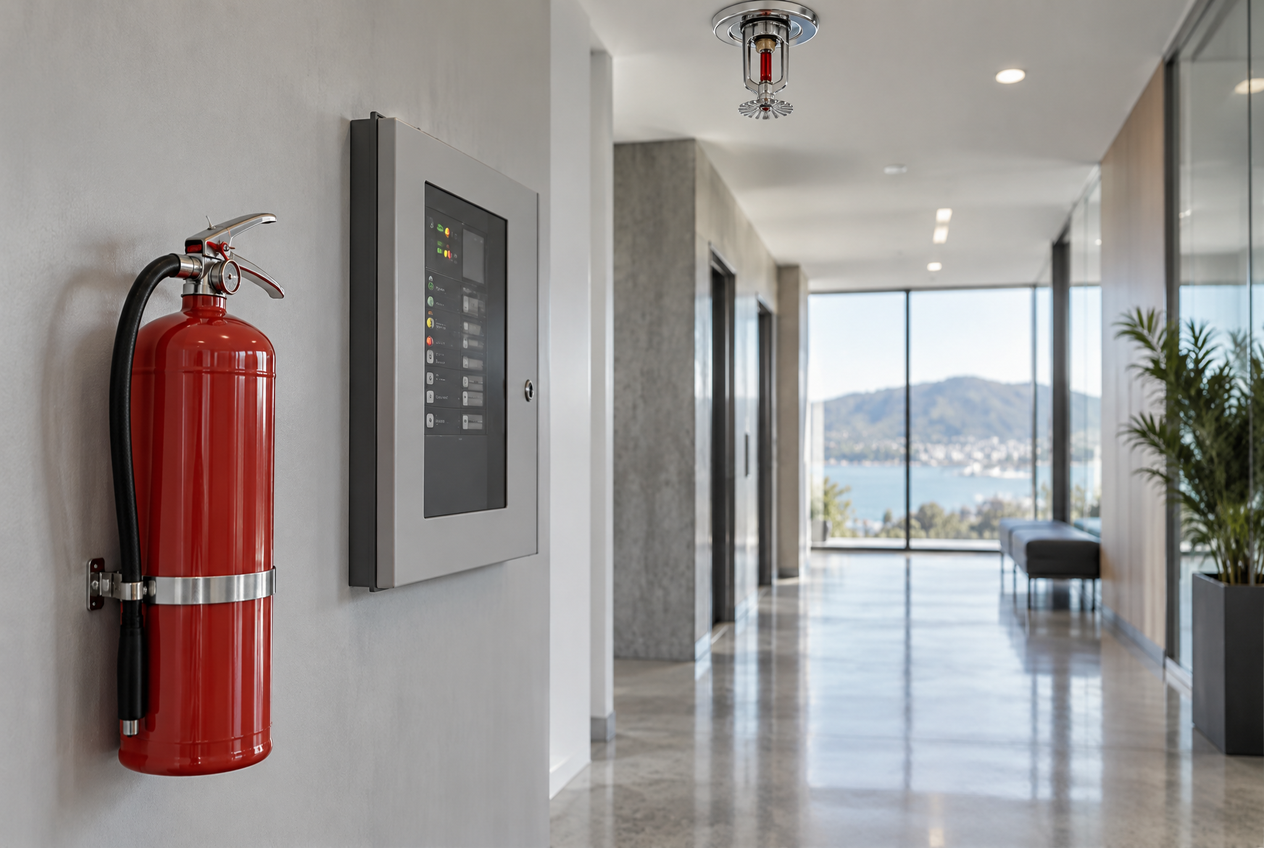
A typical wet-pipe sprinkler system keeps water under pressure in a network of pipes throughout a building. Each sprinkler head contains a small heat-sensitive element — usually a glass bulb filled with glycerin-based liquid — that is designed to shatter at a specific temperature (commonly around 68°C for standard-response heads, though this varies by application).
When a fire causes the air temperature near a sprinkler head to rise enough, that individual head activates and releases water directly onto the fire below. A common misconception is that all heads go off at once — in reality, only the heads closest to the fire activate, which limits water damage to the rest of the building.
Other system types you may encounter include:
- Dry-pipe systems — pipes are filled with pressurised air or nitrogen rather than water, used in areas prone to freezing (such as unheated warehouses or car parks).
- Deluge systems — all heads open simultaneously when triggered, used in high-hazard areas.
- Pre-action systems — require two triggers before water is released, often used in data centres or museums where accidental discharge would be costly.
The NZ Regulatory Framework
In New Zealand, automatic fire sprinkler systems in commercial and multi-unit residential buildings are typically a specified system under the Building Act 2004. This means they must be listed on the building's compliance schedule and inspected and maintained by a suitably qualified person.
Building owners of most commercial and public buildings must provide an annual Building Warrant of Fitness (BWOF) to their local council, confirming that all specified systems — including sprinklers — have been properly maintained and are performing as required. This is administered by your territorial authority (local council), with guidance available from MBIE Building Performance.
The relevant NZ Standard for automatic fire sprinkler systems is NZS 4541. This standard sets out design, installation and maintenance requirements. Always confirm specific requirements with a licensed fire protection specialist or Standards NZ.
Building Code Clause C covers protection from fire, and sprinkler systems often form part of a building's fire safety strategy under that clause.
Who Can Inspect and Certify Sprinkler Systems?
Inspection, maintenance and certification of specified systems must be carried out by a suitably qualified person. For BWOF purposes, an Independent Qualified Person (IQP) — registered with your local council — must inspect the system and sign the relevant Form 12A certificates. Building owners cannot sign off their own specified systems.
For installation and significant maintenance work, you should engage a licensed fire protection specialist with demonstrated competency in sprinkler systems. You can find qualified local professionals on tradedirectory.co.nz.
What Maintenance Does a Sprinkler System Need?
Regular maintenance is essential to ensure the system will work when it's needed most. The specific tasks and frequencies required are set out in NZS 4541 and your building's compliance schedule — always follow those requirements rather than general guidance alone. Typical maintenance activities include:
| Maintenance Task | Typical Frequency |
|---|---|
| Visual inspection of sprinkler heads and pipework | Regularly (e.g. monthly or quarterly) |
| Test of flow switches and alarms | Periodically |
| Inspection of control valves and water supply | Periodically |
| Full system inspection and IQP sign-off | Annually (for BWOF) |
| Replacement of any damaged or corroded heads | As identified |
Key maintenance points to be aware of:
- Never paint over sprinkler heads — paint can block the heat-sensitive element and prevent activation.
- Never hang anything from sprinkler pipes or heads — this can damage the system and affect performance.
- Report any leaks or visible corrosion to a fire protection specialist promptly.
- Sprinkler heads that have been activated must be replaced, not reset — they are single-use devices.
- If you carry out building alterations, check with your fire protection specialist and council whether the sprinkler system needs to be modified or re-certified.
Residential Sprinkler Systems
While sprinkler systems are most common in commercial buildings, they are increasingly being installed in new residential builds and retirement villages. If you have a residential sprinkler system, maintenance requirements will depend on your system type and any conditions attached to your building consent. Check with your installer or a fire protection specialist for the correct maintenance schedule.
For residential fire safety more broadly — including smoke alarm requirements for rental properties — refer to Tenancy Services and Fire and Emergency New Zealand (FENZ) for current rules.
When to Call a Professional
You should engage a licensed fire protection specialist for:
- Installation of any new or modified sprinkler system
- Annual inspections and IQP certification for BWOF compliance
- Any repairs to pipework, valves, or sprinkler heads
- Investigating alarms, leaks, or system faults
- Advice before carrying out building alterations that may affect the system
Do not attempt to repair or modify a sprinkler system yourself — incorrect work can render the system non-compliant or ineffective in a real fire. Find a qualified fire protection specialist in your area on tradedirectory.co.nz.