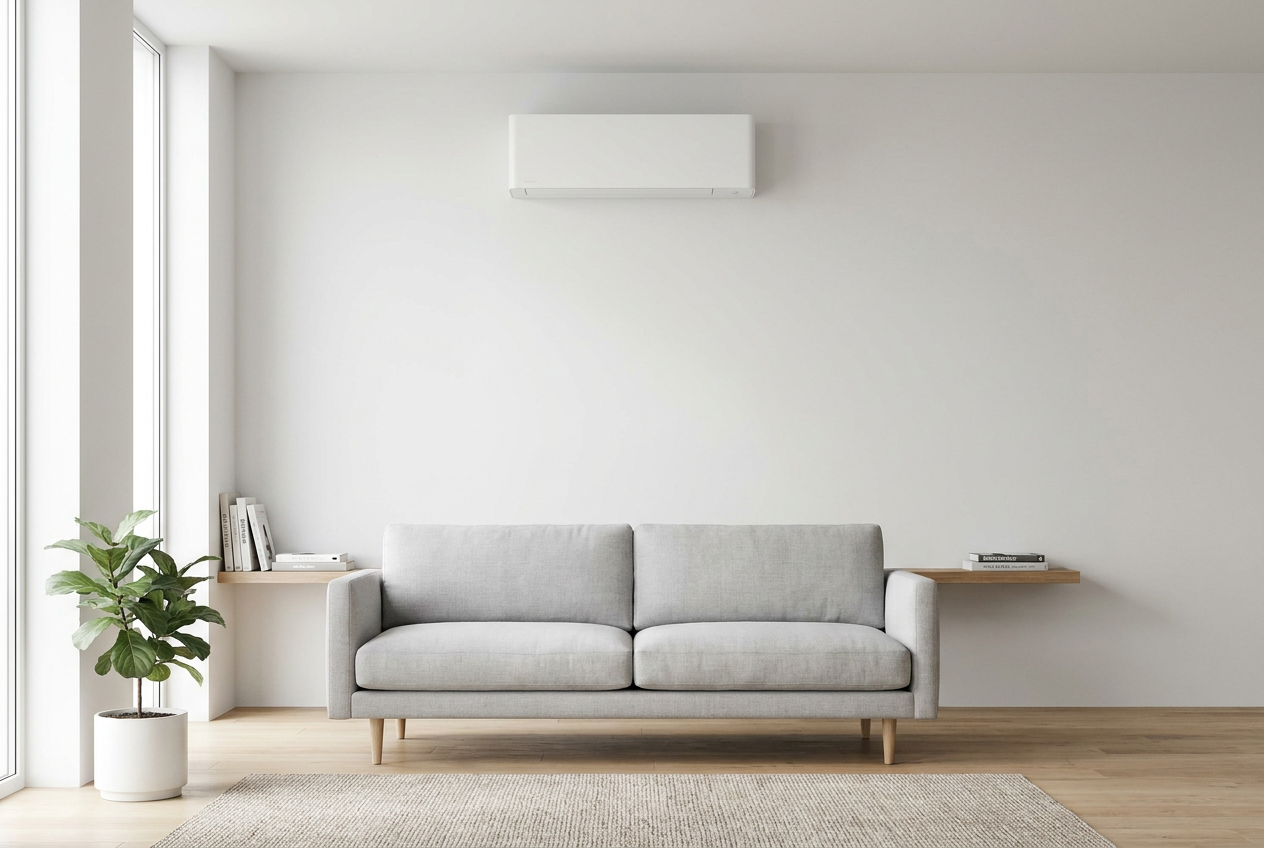
Choosing how to heat your home is one of the most important decisions you'll make as a New Zealand homeowner. Both heat pumps and wood burners are popular choices — but they suit very different homes, lifestyles, and budgets. Here's an honest, practical comparison to help you make the right call.
Overview: heat pumps
A heat pump is an electrically powered system that moves heat from outside air into your home (and can reverse in summer to cool). Modern inverter-driven heat pumps are remarkably efficient — for every unit of electricity consumed, a quality unit can deliver three or more units of heat. They're clean, thermostat-controlled, and require no fuel storage or fire-lighting.
Heat pumps are the heating method most strongly recommended by Energywise for New Zealand homes, particularly in regions with mild to moderate winters. Installation must be carried out by a registered electrician (for the electrical connection) and a certified refrigeration/heat pump installer, as refrigerant handling is restricted work under NZ law.
Overview: wood burners
A wood burner (or wood fire) burns seasoned firewood to produce radiant and convective heat. Done well, there's nothing quite like the warmth and ambience of a real fire. Modern clean-burn wood burners are far more efficient than open fireplaces and produce significantly less particulate pollution.
However, wood burners are subject to increasingly strict regional council rules around air quality — particularly in Canterbury, Otago, and other areas prone to winter inversions. Installation must comply with the NZ Building Code and requires a building consent in most cases. The installation itself (flue, hearth, clearances) should be done by a qualified tradesperson and signed off by your local council.
Head-to-head comparison
| Criteria | Heat Pump | Wood Burner |
|---|---|---|
| Upfront cost (guide only) | Moderate–high (unit + install) | Moderate–high (unit + flue + consent) |
| Running cost | Low–moderate (electricity) | Low if you source cheap wood; higher if buying delivered loads |
| Heat output control | Precise thermostat control | Manual; takes time to build up and cool down |
| Warmth & comfort | Consistent, even heat | Intense radiant heat near the fire; less even distribution |
| Air quality (indoor) | Excellent — no combustion indoors | Risk of smoke if poorly operated or wood is wet |
| Air quality (outdoor) | No emissions | Particulate emissions; restricted in some NZ regions |
| Cooling in summer | Yes (most models) | No |
| Ambience | Minimal | High — real flame, cosy feel |
| Maintenance | Annual service recommended | Annual flue sweep essential; ash removal ongoing |
| Power dependency | Needs electricity (useless in outage) | Works without power |
| DIY-friendly? | No — restricted electrical/refrigerant work | Partial — consent required; install by qualified tradesperson |
| NZ regulatory hurdles | Low–moderate | Moderate–high (consent, regional air quality rules) |
| Suitability for NZ climate | Excellent nationwide | Good in rural/colder areas; restricted in some urban zones |
Cost considerations
Both options involve meaningful upfront investment, so it pays to think beyond the sticker price.
- Heat pump: Supply and installation costs vary by brand, capacity, and home layout. As a rough guide, a standard single-room heat pump installed can range from around $2,000 to $4,500+, with multi-room or ducted systems considerably more. Running costs depend on your electricity tariff and how hard the unit works.
- Wood burner: A quality clean-burn unit, flue system, hearth, and building consent can add up to a similar or higher upfront cost. Ongoing costs depend heavily on your firewood supply — those with rural land or access to free wood can heat very cheaply, while buying delivered, seasoned firewood in an urban area can be surprisingly expensive.
For long-term running cost comparisons, BRANZ and Energywise both publish useful guidance on home heating efficiency in the NZ context.
Air quality and regional restrictions
This is a critical factor many homeowners overlook. New Zealand's National Environmental Standards for Air Quality restrict the installation of new wood burners in many urban airsheds — particularly in Christchurch, Timaru, Alexandra, and parts of the Waikato. Some councils require that any new wood burner installed meets strict emissions standards (typically under 1.5g/kg of particulate matter).
Before purchasing a wood burner, check with your regional council. In some areas, you simply may not be permitted to install one. Heat pumps face no such restrictions.
Indoor air quality is also worth considering, especially under the Healthy Homes Standards for rental properties, which specify heating requirements. Heat pumps are generally the easiest way to meet these standards.
Installation and licensing: what's restricted work?
Heat pump installation involves two types of restricted work:
- Electrical connection — must be carried out by a registered electrician under the Electrical Workers Registration Board (EWRB) rules. Homeowners cannot legally do this themselves.
- Refrigerant handling — must be done by a certified refrigeration technician. Tampering with refrigerant is illegal without the appropriate certification.
Wood burner installation requires a building consent from your local council in most situations. The physical installation — particularly the flue penetration through the ceiling or wall, clearances to combustibles, and hearth construction — should be carried out by an experienced tradesperson and inspected before sign-off. Using a Licensed Building Practitioner (LBP) is strongly recommended.
⚠️ Safety note: Never attempt to connect a heat pump to your switchboard yourself, and never install a flue through a ceiling or roof without proper consent and inspection. Both carry serious risks of electrocution, fire, and carbon monoxide exposure.
Our recommendation
There's no single right answer — it depends on your situation. Here's practical guidance for common NZ scenarios:
- Urban home, any region: A heat pump is almost always the better choice. It's cleaner, easier to control, may double as a summer cooler, and avoids the growing tangle of air quality restrictions on wood burners.
- Rural home with access to free or cheap firewood: A wood burner (or both!) makes strong economic sense. The ambience and power-independence are genuine advantages in a rural setting.
- Rental property: A heat pump is the practical choice for meeting Healthy Homes heating requirements with minimal tenant maintenance.
- Cold South Island winters (e.g. Southland, Central Otago): Consider a high-capacity heat pump rated for low ambient temperatures, or a combination of both systems for resilience.
- Tight upfront budget, rural location: A secondhand clean-burn wood burner (installed properly with consent) can be a cost-effective entry point.
For most New Zealand homeowners today, a quality heat pump is the most practical, efficient, and future-proof choice — but a wood burner remains a genuinely good option for the right property and lifestyle.
To get the best result, have your home assessed by a qualified heat pump installer or heating specialist. You can find experienced, vetted local tradespeople at tradedirectory.co.nz.



 ISO 9001






