Picking the right insulation for your home is one of the most impactful decisions you can make for warmth, energy bills, and long-term comfort. In New Zealand, three bulk insulation types dominate the residential market: glasswool, polyester, and natural wool. Each has genuine strengths and real trade-offs, and the best choice depends on your climate zone, budget, health considerations, and whether you're doing it yourself or hiring a pro.
Why Insulation Choice Matters in New Zealand
New Zealand's climate ranges from the subtropical north to the cold, damp south — and our older housing stock is notoriously under-insulated. The MBIE Building Performance requirements under the NZ Building Code (including H1 Energy Efficiency) set minimum R-values for ceiling, underfloor, and wall insulation depending on your climate zone. If you're a landlord, the Healthy Homes Standards also mandate minimum insulation levels that must be met by specific deadlines. Getting the right product installed correctly is essential — not just for comfort, but for compliance.
BRANZ research consistently shows that well-installed bulk insulation is one of the most cost-effective home improvements a New Zealander can make, reducing heating energy use significantly and improving indoor air quality.
Glasswool Insulation: Overview
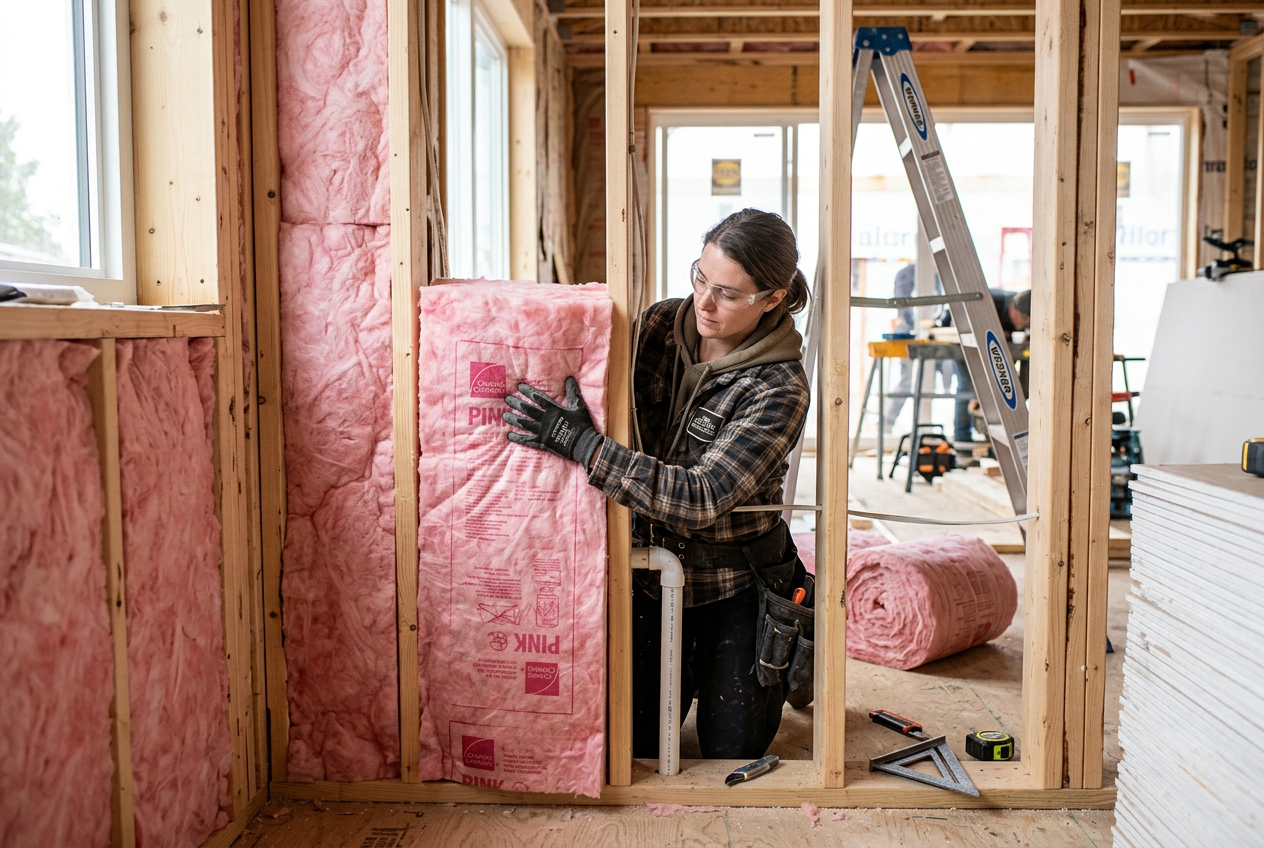
Glasswool (sometimes called fibreglass batts) is made from recycled glass spun into fine fibres and is by far the most widely used insulation type in NZ. Brands like Pink Batts (Fletcher Insulation) and Knauf are stocked at Bunnings and Mitre 10 nationwide.
- Available in a wide range of R-values (R1.8 through to R6.6 and beyond for ceilings)
- Lightweight and easy to cut with a utility knife
- Non-combustible — an advantage in bushfire-prone or high-risk areas
- Fibres can irritate skin, eyes, and lungs during installation; a P2 mask, gloves, and long sleeves are essential
- Can lose some performance if compressed or if moisture is allowed to accumulate
- Generally the most affordable bulk insulation option
Polyester Insulation: Overview
Polyester batts are made from recycled PET plastic (similar to drink bottles) and have grown in popularity as a safer, more DIY-friendly alternative to glasswool. Brands such as Autex Greenstuf are widely available at PlaceMakers and major hardware stores.
- Soft, non-irritating fibres — no special PPE required for handling
- Excellent choice for households with asthma or respiratory sensitivities
- Good moisture resistance; fibres don't absorb water and dry out relatively well
- Slightly higher cost than glasswool for equivalent R-values
- Combustible — check product specifications and NZ Building Code compliance for your application
- Very easy to cut and handle, making it popular for DIY ceiling and underfloor work
Natural Wool Insulation: Overview
Wool insulation uses New Zealand's most iconic fibre, often blended with polyester for stability. Brands such as Woolcool and local wool batt manufacturers offer a genuinely sustainable option.
- Naturally regulates humidity — wool can absorb and release moisture vapour without losing significant R-value
- Biodegradable and made from a renewable NZ resource
- Naturally fire-resistant (chars rather than melts) and treated to resist pests
- Typically the most expensive of the three options
- Heavier than glasswool or polyester, which can make ceiling installation more physical
- Performance can degrade if wool becomes saturated (e.g. from a roof leak), so addressing moisture sources first is critical
- A feel-good environmental choice, but the R-value per dollar is lower than glasswool
Head-to-Head Comparison
| Criteria | Glasswool | Polyester | Natural Wool |
|---|---|---|---|
| Typical R-value range | R1.8–R6.6+ | R1.8–R5.0+ | R2.0–R4.0+ |
| Relative cost (guide only) | $ (lowest) | $$ (mid) | $$$ (highest) |
| Moisture resistance | Moderate | Good | Good (absorbs vapour, not liquid) |
| Skin/respiratory irritation | Yes — PPE needed | No — safe to handle | No — safe to handle |
| Fire performance | Non-combustible | Combustible | Naturally fire-resistant |
| Environmental credentials | Recycled glass content | Recycled PET plastic | Renewable, biodegradable |
| DIY ease | Moderate (PPE required) | Easy | Moderate (heavier) |
| NZ climate suitability | All zones | All zones | All zones (watch moisture) |
| Durability | 50+ years if dry | 50+ years | Long-lasting if kept dry |
| Availability in NZ | Excellent | Excellent | Good (some regional variation) |
Cost Considerations
As a rough guide only, glasswool batts are generally the most affordable per square metre, polyester sits in the middle, and wool commands a premium. However, total installed cost depends heavily on the area to be insulated, access difficulty (underfloor vs ceiling), and whether you hire a professional. Labour often exceeds material cost, so choosing a slightly pricier product that installs faster can sometimes save money overall.
For ceiling insulation in a standard three-bedroom home, the difference between glasswool and polyester may be a few hundred dollars in materials — worth weighing against the handling comfort and time savings. Wool's premium is more significant and is best justified on environmental or health grounds rather than pure performance value.
Always get at least two quotes from qualified insulation installers — you can find local professionals on tradedirectory.co.nz.
DIY vs Hiring a Professional
Ceiling top-up and underfloor insulation are generally not restricted work under the NZ Building Code, meaning a competent homeowner can install bulk batts themselves. However, wall insulation in an existing home typically requires opening wall linings, which may involve Licensed Building Practitioners for certain work.
Safety note: Working in roof spaces carries real risks — ceiling joists, insulation dust, heat, and limited visibility. If your ceiling space is tight or you have any respiratory conditions, hiring a professional is strongly recommended. Underfloor work in damp, confined crawl spaces also carries risks; assess conditions carefully before proceeding.
For any work involving electrical wiring in the ceiling space, do not disturb or cover wiring without consulting a registered electrician — this is restricted electrical work under the EWRB.
Our Recommendation
For most NZ homeowners on a budget: Glasswool remains the best value-for-money option, especially for large ceiling areas. Wear proper PPE and take your time — it performs excellently when installed correctly.
For DIYers, families with young children, or anyone with respiratory sensitivities: Polyester is worth the extra cost. It's genuinely easier and safer to handle, and the performance is comparable.
For environmentally motivated homeowners or those in moderate climates: Natural wool is a premium, feel-good choice with real humidity-management benefits. Just ensure your roof and subfloor are dry before installing — wool and persistent moisture don't mix well.
For cold, damp southern regions (Otago, Southland, Canterbury): Prioritise achieving the highest R-value your budget allows, regardless of material. Meeting or exceeding H1 Energy Efficiency requirements is non-negotiable for comfort and compliance.
When in doubt, get a professional assessment. A good insulation installer will assess your home's specific needs, climate zone, and existing insulation before recommending a product — and they'll install it to the standard required by the NZ Building Code.