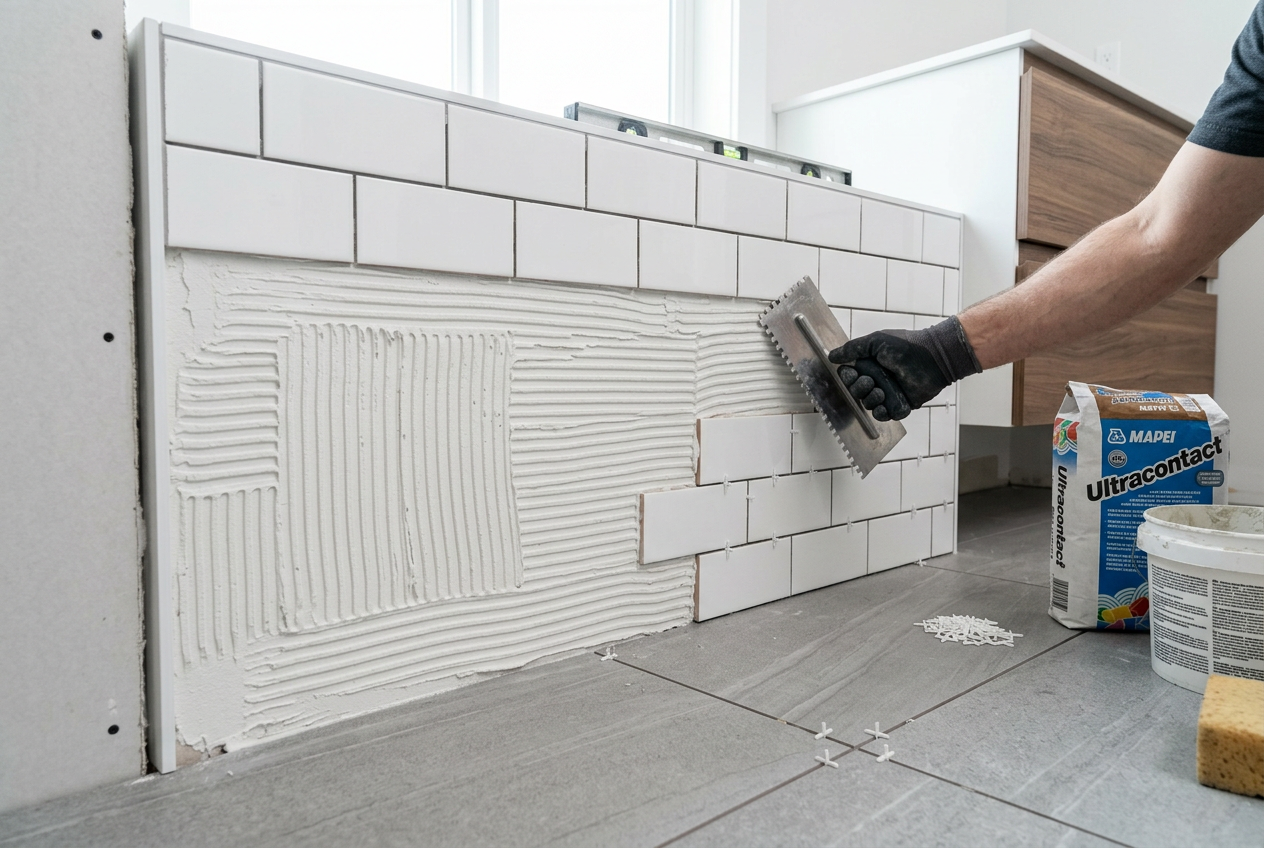
Grout might seem like a minor detail, but choosing the wrong type can mean stained joints, crumbling lines, or a bathroom that looks tired within a few years. Whether you're retiling a kitchen splashback, a wet-area shower, or a commercial kitchen floor, the choice between epoxy grout and cement-based grout matters more than most homeowners realise. Here's a practical, balanced breakdown to help you decide.
What Is Cement-Based Grout?
Cement-based grout is the traditional, most widely used option in NZ homes. It's made from Portland cement mixed with fine aggregates and pigments, and it comes in two main forms:
- Unsanded grout – for narrow joints (under about 3 mm), typically used with wall tiles and delicate surfaces like polished porcelain.
- Sanded grout – for wider joints (3 mm and above), commonly used on floor tiles and larger-format tiles.
Cement grout is mixed with water (or a liquid additive), applied with a float, and cured over time. It's widely available at Bunnings, Mitre 10, and PlaceMakers, and most experienced tilers can work with it quickly and efficiently.
The main drawback is that cement grout is porous. Without sealing, it readily absorbs moisture, cooking oils, soap scum, and mould — which is a real issue in NZ's humid coastal and high-rainfall regions.
What Is Epoxy Grout?
Epoxy grout is a two- or three-part system made from epoxy resins and a hardener (sometimes with a filler powder). When mixed and applied, it cures into a hard, dense, non-porous surface that is highly resistant to staining, chemicals, and moisture.
Brands like Mapei and Ardex offer quality epoxy grout products available through tile suppliers and trade merchants in NZ. Sika also supplies epoxy-based products for specialist applications.
Epoxy grout is significantly harder to work with than cement grout. It has a shorter working time, can be sticky and difficult to clean off tile faces, and requires careful temperature management — something to keep in mind in NZ's cooler South Island winters or hot Northland summers. It's also considerably more expensive.
Head-to-Head Comparison
| Criteria | Cement-Based Grout | Epoxy Grout |
|---|---|---|
| Cost (rough guide) | Lower – budget-friendly | Higher – often 3–5× the cost of cement grout |
| Durability | Moderate – can crack or crumble over time | Excellent – very hard and long-lasting |
| Stain resistance | Poor (porous; must be sealed) | Excellent (non-porous; no sealing needed) |
| Moisture resistance | Moderate (sealed) / Poor (unsealed) | Excellent – ideal for wet areas |
| Chemical resistance | Low | High – suits commercial kitchens, labs |
| Appearance | Wide colour range; can look natural | Wide colour range; slight sheen when cured |
| Ease of DIY | Good – forgiving and widely understood | Difficult – fast set, sticky, unforgiving |
| Maintenance | Requires periodic resealing | Minimal – wipe clean |
| NZ climate suitability | Adequate if sealed; watch for mould in humid areas | Excellent for coastal, humid, or high-use areas |
| Flexibility | Low – can crack with movement | Low – also rigid; not a substitute for silicone |
Cost Considerations
As a rough guide only, cement-based grout is one of the more affordable tiling consumables, while epoxy grout can cost several times more per kilogram. For a standard bathroom, the material cost difference may be modest — but for large floor areas or commercial projects, it adds up quickly.
Labour costs also increase with epoxy, as it takes more skill and time to apply correctly. If you're hiring a tiler, expect them to charge more for epoxy work. You can find qualified local tilers on tradedirectory.co.nz who can give you an accurate quote for your specific job.
Don't forget to factor in the ongoing cost of sealing cement grout — a quality penetrating sealer applied every one to two years is essential in wet areas, and that cost adds up over time.
Where to Use Each: NZ-Specific Guidance
Use cement-based grout for:
- Dry areas – living room feature walls, hallway floors, fireplace surrounds
- Low-traffic areas – laundry splashbacks, bedroom feature tiles
- Budget-conscious projects – where regular maintenance is acceptable
- DIY projects – it's far more forgiving for homeowners having a go themselves
Use epoxy grout for:
- Showers and wet areas – NZ's Building Code clause E3 requires wet areas to be properly waterproofed and easy to clean; epoxy grout supports this
- Kitchen benchtops and splashbacks – resists cooking oils and food stains
- Commercial kitchens and food prep areas – required in many commercial settings for hygiene
- Swimming pools and outdoor areas – handles constant moisture and UV exposure
- Coastal NZ homes – salt air and high humidity make stain-resistant, non-porous grout a smart long-term choice
BRANZ research consistently highlights moisture management as one of the most critical factors in NZ building performance — and grout choice plays a real role in wet-area longevity.
A Note on Silicone — The Third Option
Neither epoxy nor cement grout should be used at movement joints — the corners where walls meet floors, or where tiles meet a bath or shower tray. These joints must be filled with flexible silicone sealant to accommodate movement and prevent cracking. This is a common mistake in DIY tiling. Check MBIE Building Performance guidance for wet-area requirements.
Our Recommendation
For most NZ homeowners tiling a bathroom or shower, epoxy grout is worth the extra investment — particularly in the shower recess itself. The long-term reduction in mould, staining, and resealing effort pays off, and it better suits NZ's humid conditions. Hire an experienced tiler for epoxy work; it's not beginner-friendly.
For dry areas, feature walls, or budget renovations, cement-based grout is perfectly adequate — just commit to sealing it properly and resealing every year or two.
For commercial kitchens or pools, epoxy is often the only sensible choice and may be required to meet health and building regulations.
When in doubt, talk to a qualified tiler. A good tradesperson will assess your specific substrate, tile type, joint width, and use case before recommending a product. Find experienced local tilers on tradedirectory.co.nz.

 Site Safe
 SiteWise


 BCITO Qualified





