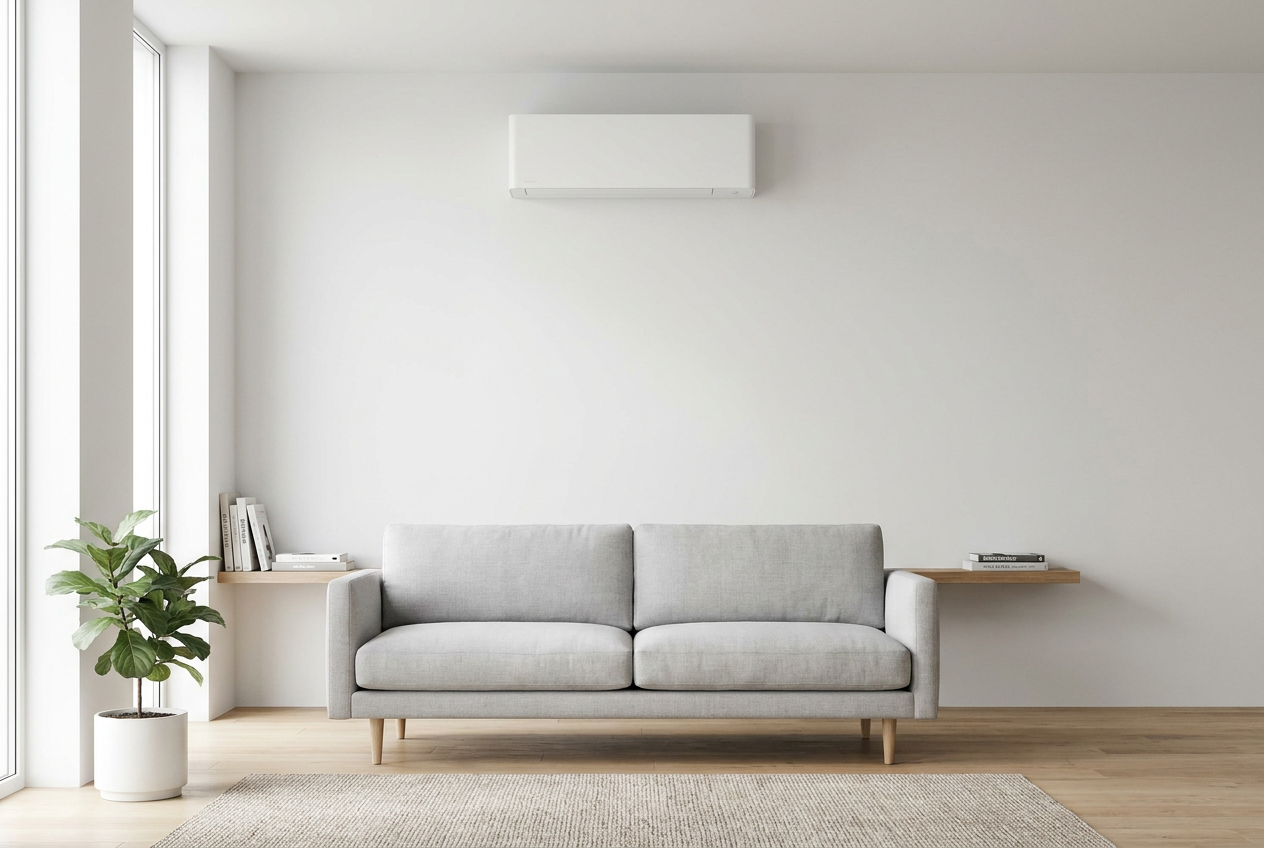
Choosing a heat pump is one of the most impactful decisions you can make for your home's comfort and energy bills. Two of the most popular options in New Zealand are ducted heat pumps and high-wall heat pumps — and while both do the same fundamental job, they suit very different homes, budgets, and lifestyles. Here's what you need to know before you commit.
What Is a High-Wall Heat Pump?
A high-wall heat pump (sometimes called a split-system or wall-mounted unit) is the most common type found in NZ homes. The indoor unit mounts high on a wall, typically in a living area or bedroom, and connects via refrigerant lines to an outdoor compressor unit. They're relatively straightforward to install and are well-suited to heating or cooling a single room or open-plan space.
Brands commonly available in NZ include Mitsubishi Electric, Daikin, Fujitsu, Panasonic, and Hitachi — all widely stocked through suppliers and installers nationwide.
Pros:
- Lower upfront cost
- Faster installation (usually one day)
- Highly efficient for the zone they serve
- Easy to control room by room
- Suitable for most NZ homes, including rentals
Cons:
- Visible on the wall — not everyone loves the look
- Only heats/cools the room or open-plan area it's installed in
- Multiple units needed for whole-home coverage, which adds up
- Airflow can feel direct or draughty if poorly positioned
What Is a Ducted Heat Pump?
A ducted heat pump uses a central unit (usually in the ceiling cavity or underfloor) connected to a network of ducts and vents throughout the home. One system can heat and cool every room, with a single outdoor compressor. The result is a discreet, whole-home solution with no visible wall units.
Pros:
- Whole-home heating and cooling from one system
- Virtually invisible — only small ceiling or floor vents are visible
- Consistent temperature throughout the house
- Can add value to a home
- Zoning options available on modern systems
Cons:
- Significantly higher upfront cost
- Requires ceiling or underfloor space for ducting — not always possible in existing homes
- Installation is more disruptive and takes longer
- Duct maintenance (cleaning, sealing) is important for efficiency
- If the system fails, the whole house is affected
Head-to-Head Comparison
| Feature | High-Wall Heat Pump | Ducted Heat Pump |
|---|---|---|
| Upfront cost (guide only) | Lower — roughly $2,000–$4,500 installed per unit | Higher — roughly $8,000–$20,000+ installed for whole home |
| Coverage | Single room / open-plan area | Whole home |
| Aesthetics | Visible wall unit | Discreet ceiling/floor vents |
| Installation disruption | Minimal (1 day) | Moderate to significant (1–3 days) |
| Suitability for existing homes | Excellent | Depends on ceiling/underfloor access |
| Suitability for new builds | Good | Ideal — easiest to install during construction |
| Zoning / room control | Excellent (each unit is independent) | Good (with zoning add-ons; costs more) |
| Energy efficiency | Very high for the zone served | High overall, but duct losses can reduce efficiency |
| Maintenance | Filter cleaning every few months | Filter + duct inspection annually |
| DIY-friendly? | No — restricted electrical and refrigerant work | No — restricted electrical and refrigerant work |
| NZ rental compliance | Meets Healthy Homes heating standard if correctly sized | Can meet standard; sizing assessment required |
Cost Considerations
Prices vary considerably depending on your home's size, insulation levels, brand, and your location. As a rough guide only:
- A single high-wall unit installed typically ranges from around $2,000 to $4,500, depending on capacity and brand.
- A whole-home ducted system can range from around $8,000 to well over $20,000 for larger or more complex homes.
- Running costs depend heavily on your home's insulation, local climate, and how you use the system. BRANZ research consistently shows that a well-insulated home dramatically reduces heating energy use regardless of system type.
- The Energywise website has useful guidance on comparing running costs and understanding energy star ratings.
If you're heating multiple rooms with high-wall units, costs can add up quickly — at that point, a ducted system may offer better value over the long term.
NZ Climate and Building Code Considerations
New Zealand's climate varies enormously — from the cold, frosty winters of Otago and Canterbury to the humid, mild conditions of Northland. Both system types are available in models rated for low-temperature operation (some down to -15°C), which matters in alpine and southern regions.
Under the NZ Building Code (specifically clause G4 for ventilation and the Healthy Homes Standards), rental properties must have a fixed heating device capable of heating the main living area to at least 18°C. Both system types can meet this requirement when correctly sized — but sizing must be done properly. Your installer should carry out a heat loss calculation based on your specific home.
For new builds, ducted systems are worth discussing with your builder early — retrofitting ducting into an existing home is far more complex and costly than installing it during construction. MBIE Building Performance has guidance on compliance requirements for heating installations.
What Work Is Restricted — and Who Can Do It?
This is important: all heat pump installation work is restricted in New Zealand. Connecting refrigerant lines and handling refrigerants requires a licensed refrigeration and air conditioning technician. Electrical connections must be carried out by a registered electrician under the Electrical Workers Registration Board (EWRB) rules.
As a homeowner, you can prepare the site, clear access, and discuss placement — but you cannot legally connect the electrical supply or handle refrigerants yourself. Always use a qualified, licensed installer. Unlicensed work can void your warranty, create insurance issues, and pose serious safety risks.
Our Recommendation
Choose a high-wall heat pump if:
- You need to heat one or two rooms efficiently
- You're on a tighter budget
- You're in a rental property or older home without ceiling cavity access
- You want a fast, low-disruption installation
- You're a landlord needing to meet the Healthy Homes heating standard
Choose a ducted heat pump if:
- You want whole-home comfort with a clean, discreet look
- You're building a new home or doing a major renovation
- You have adequate ceiling or underfloor space
- You're prepared to invest more upfront for long-term convenience
- Aesthetics are a priority
For most NZ homeowners in existing homes, a high-wall unit is the practical, cost-effective starting point. If you're building new or renovating extensively, it's well worth getting quotes for a ducted system while the walls and ceilings are open.
Whatever you choose, get at least two or three quotes from qualified local installers. A good installer will assess your home's insulation, layout, and climate zone before recommending a system — not just sell you the biggest unit on the shelf. You can find licensed heat pump installers in your area on tradedirectory.co.nz.



 ISO 9001






