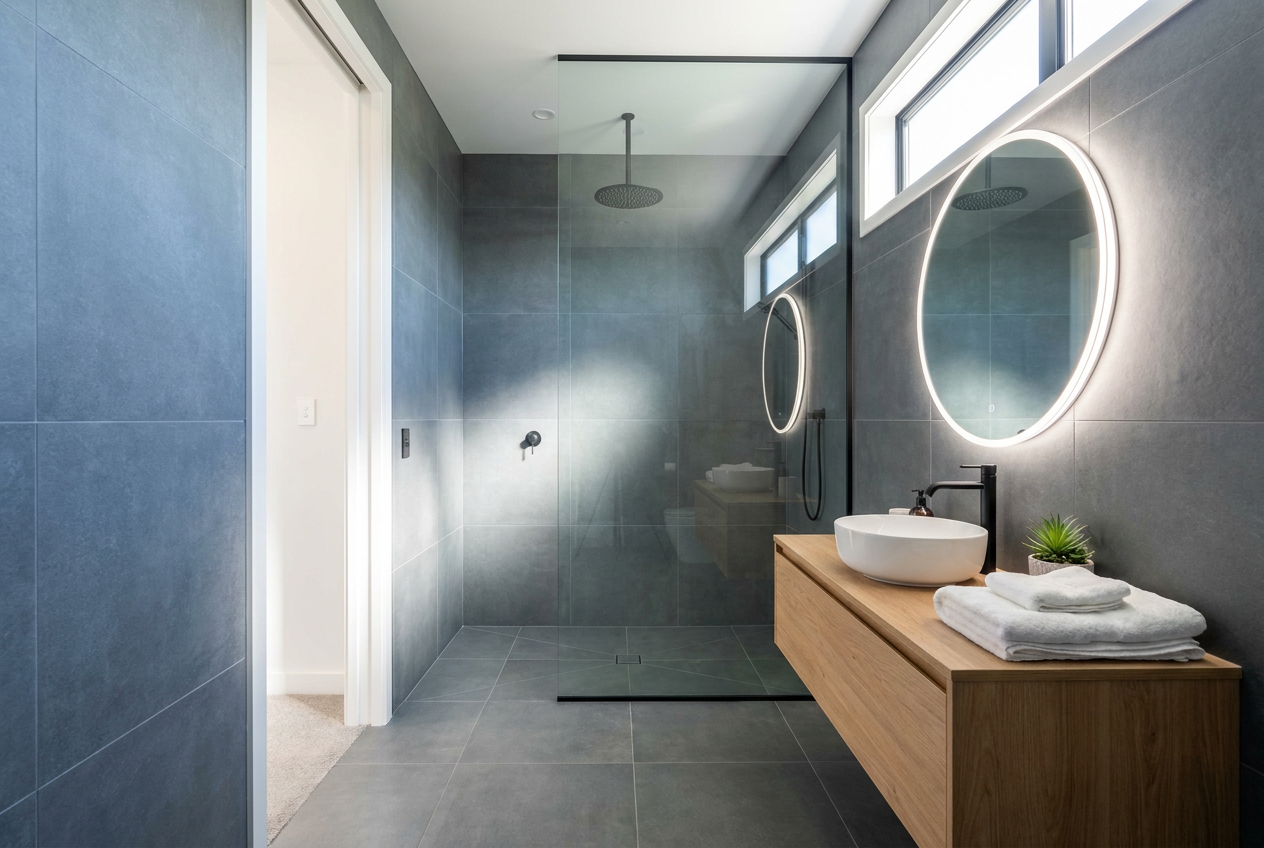
In most cases, replacing or reapplying waterproofing membrane in an existing bathroom does not require a building consent in New Zealand — it typically falls under Schedule 1 exempt work. However, the rules depend on the scope of your project, and getting it wrong can lead to costly moisture damage or compliance issues down the track.
What the NZ Building Code Says About Bathroom Waterproofing
Bathroom waterproofing is governed by NZ Building Code Clause E3 (Internal Moisture). This clause requires that wet areas — including shower enclosures, bath surrounds, and floors — are waterproofed to prevent moisture from penetrating walls, floors, and the building structure.
The MBIE Building Performance website is the best place to check current requirements and acceptable solutions for internal moisture control. MBIE publishes Acceptable Solutions (such as E3/AS1) that describe how waterproofing must be applied to comply with the Building Code.
When Is Waterproofing Exempt from Building Consent?
Under Schedule 1 of the Building Act 2004, certain repair and maintenance work is exempt from requiring a building consent. Replacing like-for-like waterproofing membrane in an existing bathroom — for example, reapplying a wet-area membrane under tiles during a retile — is generally considered exempt maintenance work, provided:
- The work is repair or maintenance of an existing system (not a new bathroom or significant alteration)
- The building's structure is not being altered
- The work still complies with the NZ Building Code, including Clause E3
- No plumbing or drainage is being relocated (that work has its own licensing requirements)
Even when consent is not required, the work must still meet the Building Code. This is an important distinction — exempt does not mean unregulated.
Always confirm with your local council before starting work. Schedule 1 exemptions can be interpreted differently by different councils, and your specific situation may have factors that change the picture.
When a Building Consent IS Required
You will likely need a building consent if your bathroom project involves:
- Installing a new bathroom where one didn't exist before
- Relocating plumbing fixtures such as a shower, toilet, or basin
- Structural alterations — for example, removing a wall to expand the bathroom
- Significant alterations to the wet area that go beyond like-for-like replacement
- Work in a multi-unit or commercial building where different rules may apply
If your project is larger than a straightforward retile or membrane replacement, talk to your council's building department or a Licensed Building Practitioner (LBP) before you start.
Does the Waterproofing Work Need to Be Done by a Licensed Person?
Waterproofing membrane application itself is not restricted work under NZ law — meaning a homeowner can legally apply waterproofing membrane in their own bathroom. However, this doesn't mean it's always a good idea.
Poor waterproofing is one of the leading causes of hidden moisture damage in NZ homes. BRANZ research consistently identifies wet area failures as a major source of building defects. Getting it wrong can mean:
- Mould and rot behind tiles
- Structural timber damage
- Expensive remediation work
- Issues with your home insurance
If your project involves plumbing work — moving pipes, installing new fixtures, or connecting to the drainage system — that is restricted work under the Plumbers, Gasfitters and Drainlayers Act. It must be carried out by a licensed tradesperson registered with the Plumbers, Gasfitters and Drainlayers Board (PGDB).
What Good Waterproofing Looks Like
Whether you DIY or hire a professional, bathroom waterproofing should follow the manufacturer's specifications and the Building Code's Acceptable Solutions. Key elements include:
- Correct membrane product — purpose-made wet-area membranes such as those from Ardex, Mapei, or Sika
- Correct coverage and thickness — applied to the full required area, not just corners
- Proper detailing at junctions — floor-to-wall junctions, penetrations (pipes, drains), and internal corners are the most common failure points
- Adequate cure time before tiling
- Correct tile adhesive and grout compatible with the membrane system
Always read the product technical data sheet and follow it closely.
When to Call a Professional
Hire a qualified waterproofer or tiler if:
- You're unsure whether your project needs consent
- The existing waterproofing has failed and there is evidence of moisture damage in the structure
- You're working in a multi-storey home where a leak could damage the floor below
- The bathroom is in a rental property (check the Tenancy Services website for current rental property requirements — see Tenancy Services)
- You simply want the job done right the first time
A professional waterproofer will know the correct products, application methods, and how to detail tricky junctions properly. You can find qualified local waterproofers and tilers on tradedirectory.co.nz.

 Site Safe


 SiteWise


 Licensed Building Practitioner (LBP)




