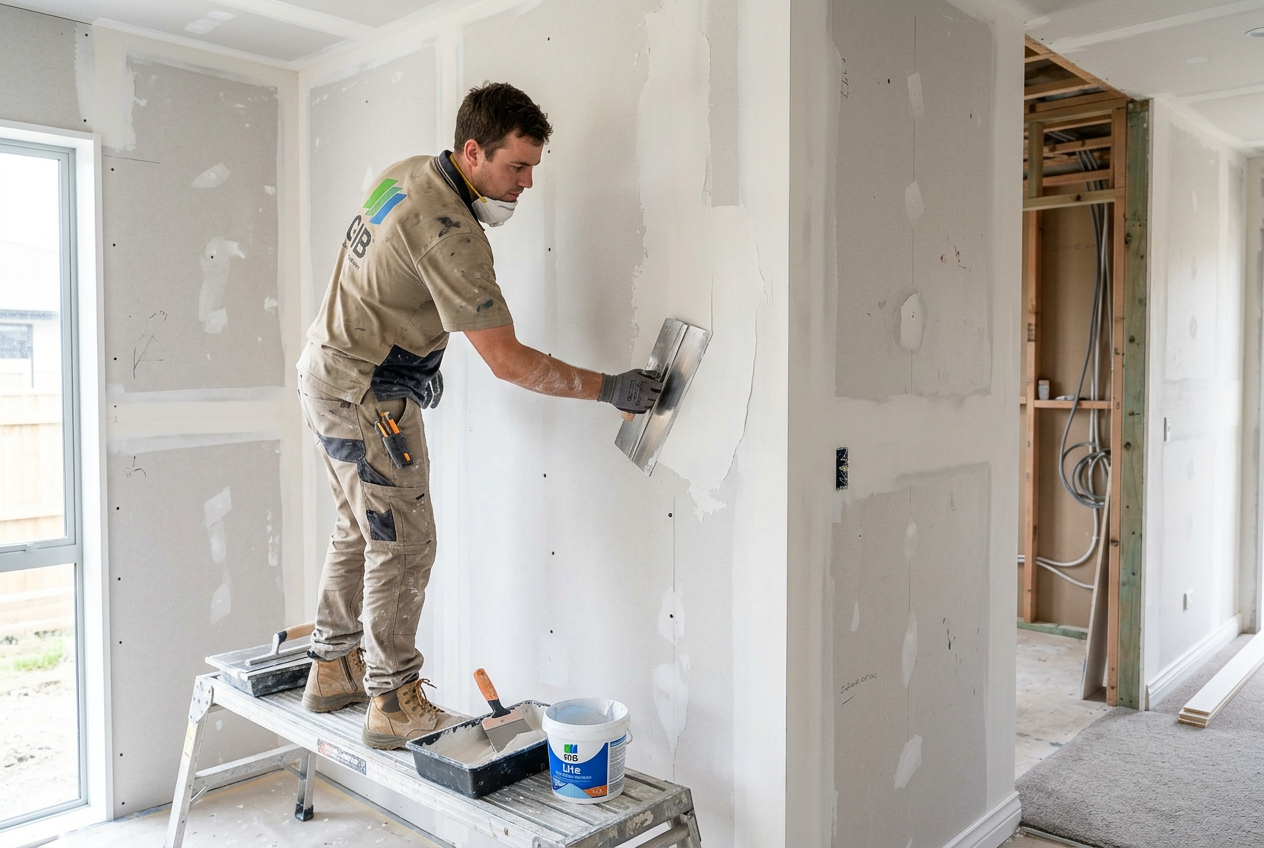
Rendering exterior walls in New Zealand doesn't always require a building consent — but it's not a blanket exemption either. Whether consent is needed depends on what you're rendering over, the extent of the work, and how it affects your home's weathertightness. Getting this wrong can cause costly problems down the track, so it pays to understand the rules before you start.
What the NZ Building Code Says
All building work in New Zealand must comply with the NZ Building Code, even if that work doesn't require a formal consent. For exterior rendering, the most relevant clauses are E2 (External Moisture), which governs weathertightness, and B2 (Durability), which sets minimum lifespan requirements for building elements. You can find detailed guidance on these clauses through MBIE Building Performance.
Rendering is a cladding system, and cladding directly affects how well your home keeps out water. That's why councils and the Building Code take it seriously.
When a Building Consent Is NOT Required
Under Schedule 1 of the Building Act 2004, certain building work is exempt from requiring a consent. Rendering may fall under these exemptions in some situations, such as:
- Like-for-like repair or maintenance — patching or recoating an existing render system with the same or equivalent product, where the underlying structure isn't being altered
- Minor cosmetic work — applying a texture coat or paint over an existing sound render surface
- Small areas of repair — fixing localised cracking or damage without changing the cladding system
However, these exemptions are not automatic. Even exempt work must still comply with the Building Code. BRANZ provides excellent technical guidance on render systems and weathertightness that can help you understand what's involved.
When a Building Consent IS Required
You will generally need a building consent when rendering involves:
- Replacing or significantly changing the cladding system — for example, removing existing cladding and applying a new render system over a different substrate
- Rendering over a previously unrendered surface — particularly if this changes how moisture is managed around the building
- Remediation work on a leaky home — recladding or re-rendering as part of weathertightness repairs almost always requires consent
- Structural changes — if any framing, building wrap, or flashings are being altered or replaced as part of the job
- New builds or additions — any rendering on new construction or extensions requires consent as part of the overall project
If your home was built during the leaky building era (roughly 1990–2004), be especially cautious. Many homes from this period have underlying moisture damage, and re-rendering without proper investigation and consented remediation can trap moisture and make things significantly worse.
The Importance of Checking with Your Council
Schedule 1 exemptions can be interpreted differently by different councils, and some councils have additional requirements. Always confirm with your local council before starting any rendering work, even if you believe it's exempt. This is the single most important step you can take to protect yourself legally and financially.
You can also check MBIE Building Performance for guidance on Schedule 1 exemptions and what counts as exempt building work.
Render Systems and Compliance
Not all render products and systems are equal. In New Zealand, render systems used as cladding typically need to be CodeMark certified or have a specific engineering or technical appraisal to demonstrate compliance with E2. Products from manufacturers like James Hardie come with tested systems that include specific installation requirements — deviating from these can void compliance.
Common render types used in NZ include:
| Render Type | Common Use | Notes |
|---|---|---|
| Cement-based render | Masonry, concrete block | Traditional, durable |
| Acrylic render | Timber-framed homes | Flexible, crack-resistant |
| Polymer-modified render | Over insulation (EIFS) | Requires correct detailing |
| Fibre-reinforced render | High-movement substrates | Added impact resistance |
Products from suppliers such as Sika and Ardex are widely used in NZ rendering, and their technical datasheets will specify whether the system has been assessed for compliance.
DIY Rendering — What Homeowners Can Do
Rendering is not restricted building work in the same way that electrical or plumbing work is — there is no licensing requirement that legally prevents a homeowner from doing their own rendering. However, this doesn't mean it's straightforward. Poor rendering technique, incorrect product selection, or inadequate detailing around windows, doors, and penetrations can lead to serious weathertightness failures.
For small patch repairs on an existing render system, a competent DIYer may manage the work. For anything more substantial, the risks of getting it wrong — both structurally and legally — are significant.
When to Call a Professional
You should engage a qualified renderer or plasterer for any of the following:
- Full or partial re-rendering of exterior walls
- Any work that may require a building consent
- Rendering on homes with a history of moisture issues
- Work involving EIFS (exterior insulation and finish systems)
- Detailing around windows, doors, penetrations, and flashings
A professional renderer will understand the NZ Building Code requirements, know which systems are compliant, and can help you determine whether consent is needed. You can find qualified local renderers on tradedirectory.co.nz. For consented work, you may also need to engage a Licensed Building Practitioner (LBP), as certain restricted building work must be carried out or supervised by an LBP.

 Licensed Building Practitioner (LBP)