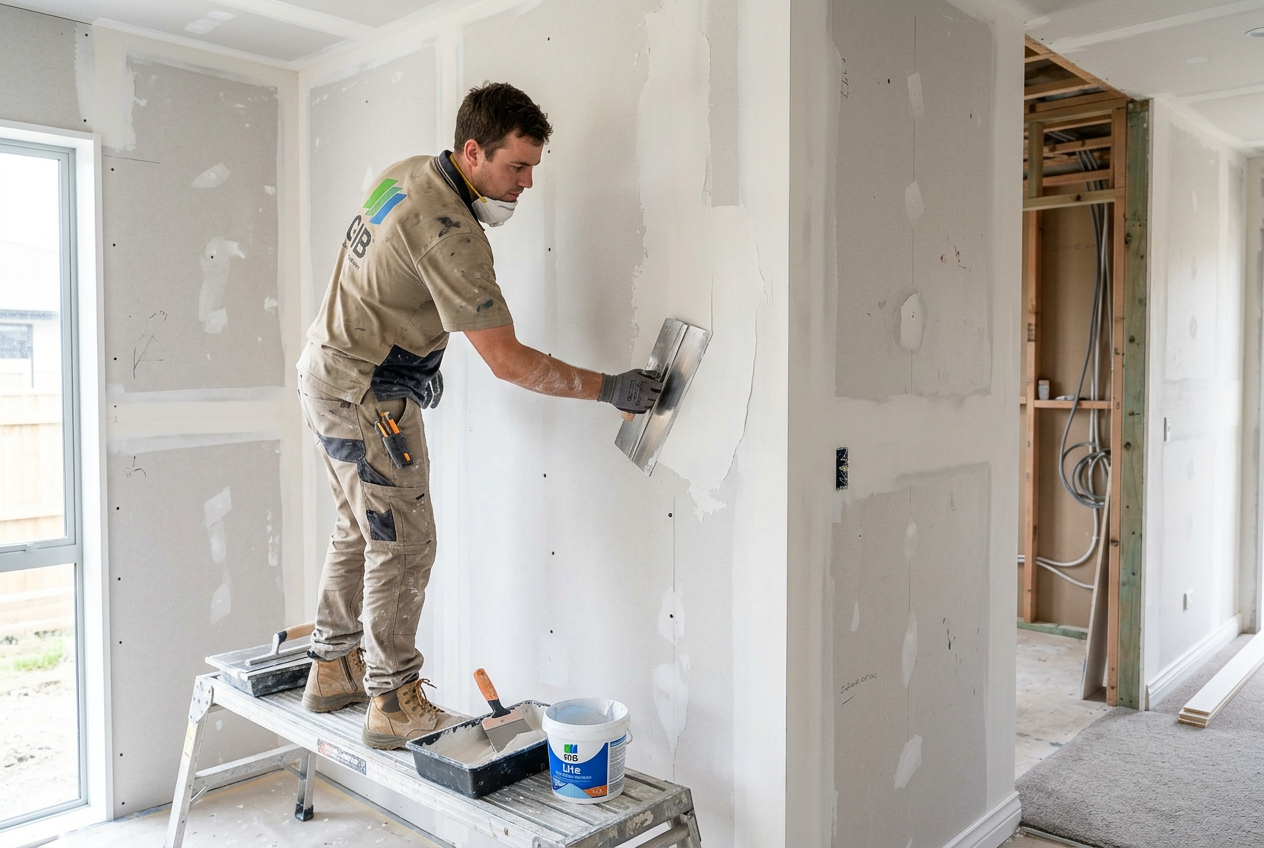
In most cases, re-plastering an interior wall in NZ does not require a building consent. Routine repair and maintenance plastering is generally exempt under Schedule 1 of the Building Act 2004. However, there are situations where consent may be needed, so it pays to understand the rules before you start.
What the NZ Building Act Says
The Building Act 2004 sets out which building work requires a consent and which is exempt. Schedule 1 lists exemptions for work that is low-risk, and general repair and maintenance — including re-plastering an interior wall — typically falls into this category, provided the work:
- Is like-for-like repair or maintenance (restoring the wall to its original condition)
- Does not affect the structural integrity of the building
- Does not involve restricted building work (more on this below)
- Does not alter or remove any element that contributes to weathertightness or fire separation
Always confirm with your local council before starting, as interpretations can vary and your specific situation may have unique factors.
When Re-Plastering Is Likely Exempt
The following scenarios are generally considered routine maintenance and are unlikely to need a building consent:
- Patching cracks or holes in existing plaster or GIB plasterboard linings
- Re-skimming a damaged or deteriorated wall surface with a finish coat
- Replacing a section of damaged plasterboard with the same product and thickness
- Repairing water-damaged plaster on an internal wall (once the source of moisture has been fixed)
These are everyday plastering jobs that qualified tradespeople carry out regularly without needing to apply for consent.
When You Might Need a Building Consent
Some plastering work goes beyond simple maintenance and may trigger the need for a building consent. Consider getting advice from your council or a Licensed Building Practitioner (LBP) if your project involves:
- Removing or significantly altering internal walls, even if re-plastering follows — structural changes almost always require consent
- Plastering over a fire-rated wall or ceiling where the fire-separation rating could be affected
- Remediation work following significant weathertightness failure (leaky building repairs can involve complex consenting requirements)
- Changing the wall system — for example, switching from traditional wet plaster to a different lining system that changes the wall's performance
- New construction or additions where plastering is part of a larger consented project
If you are unsure, the safest approach is always to contact your local council's building department and describe the scope of work. They can advise whether consent is required at no cost.
Restricted Building Work and LBPs
Even when no building consent is required, some plastering work may still be Restricted Building Work (RBW). RBW must be carried out or supervised by a Licensed Building Practitioner. In the context of plastering, this is most relevant when the work involves:
- Primary structure (e.g., plastering that is integral to a structural element)
- Weathertightness (e.g., exterior plaster systems — though this article focuses on interior walls)
For straightforward interior re-plastering, RBW restrictions are unlikely to apply, but it is worth checking with MBIE Building Performance or your council if you have any doubt.
DIY vs. Hiring a Professional Plasterer
Re-plastering is not legally restricted work in the way that electrical or plumbing work is — there is no licensing body that prohibits homeowners from doing their own interior plastering. That said, achieving a smooth, professional finish is genuinely skilled work. Poor plastering can result in:
- Visible imperfections that show through paint
- Cracking due to incorrect mix ratios or application technique
- Adhesion failures if the substrate is not properly prepared
Products from suppliers like Ardex and Mapei offer quality patching and finishing compounds, and Bunnings and Mitre 10 stock a range of DIY-friendly plaster repair products. However, for anything beyond small patches, most homeowners get a far better result by engaging a qualified plasterer.
A Note on Healthy Homes and Rental Properties
If you are a landlord carrying out repairs to meet Healthy Homes Standards, ensure any plastering work is completed to a proper standard. Moisture-related wall damage in particular should be fully remediated — not just re-plastered over — to comply with your obligations.
When to Call a Professional
Call a qualified plasterer if:
- The damaged area is larger than you can comfortably patch yourself
- You suspect the damage is related to a structural issue or ongoing moisture problem
- The wall is part of a fire-rated assembly
- You want a finish that will look seamless once painted
- The work is part of a renovation that may require building consent
A professional plasterer will also be able to advise you on whether consent is needed for your specific job. You can find qualified local plasterers on tradedirectory.co.nz.

 Master Painters NZ member








