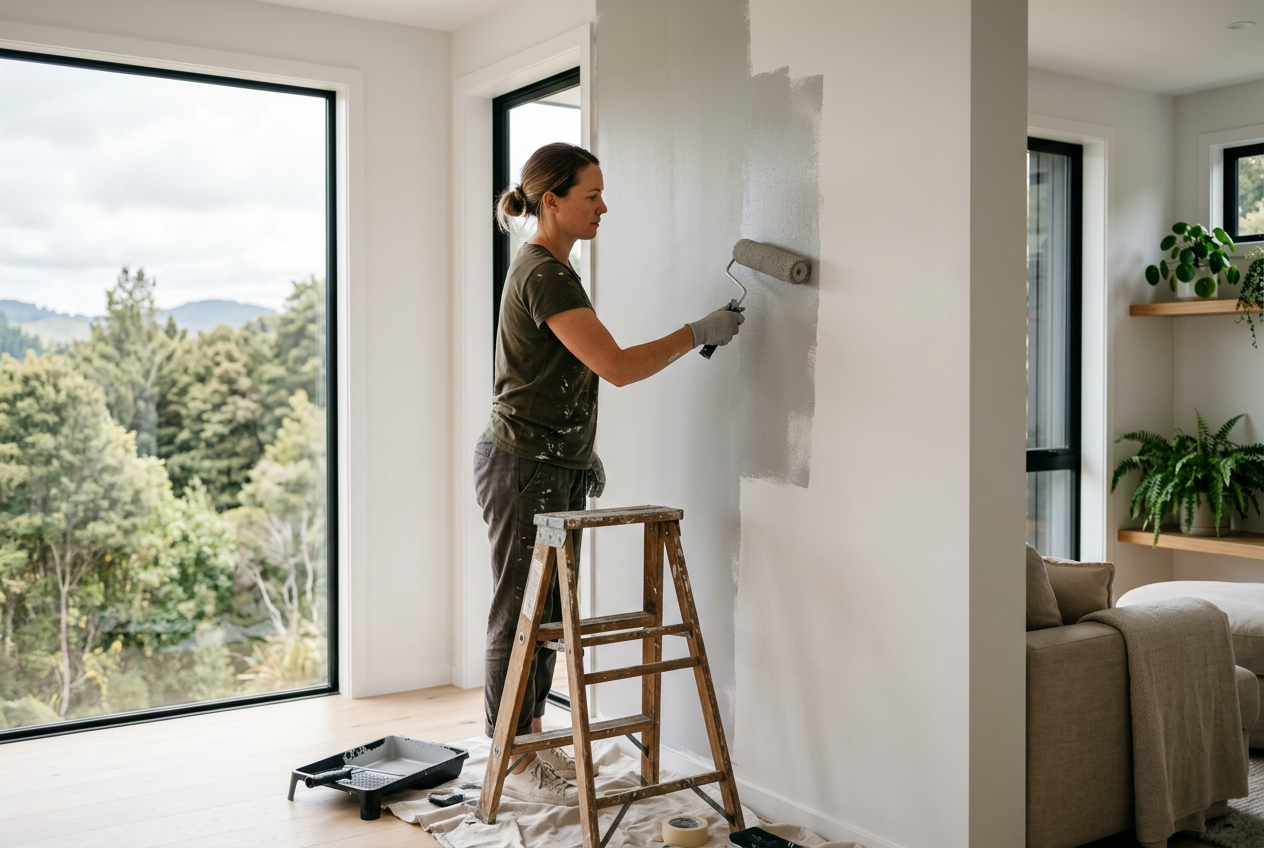
For the vast majority of painting projects in New Zealand — whether you're freshening up interior walls or recoating exterior weatherboards — no building consent is required. Painting is generally considered routine maintenance and decoration. That said, there are some situations where the work around painting (or the reason for it) can bring consent requirements into play, so it pays to understand the rules before you pick up a brush.
What the NZ Building Code Says About Painting
The NZ Building Code, administered by MBIE Building Performance, sets out the performance requirements all buildings must meet. Painting itself is not a restricted building work and does not typically trigger a consent requirement. Under the Building Act 2004, work that is purely cosmetic — like applying paint to existing surfaces — falls outside the consent process.
However, the Building Code does care about weathertightness (Clause E2) and durability. If painting is part of a repair or remediation job — for example, recoating a leaky cladding system or applying a waterproof membrane to a deck — the broader scope of that work may require consent, even if the painting step itself doesn't.
Schedule 1 Exemptions: What's Allowed Without Consent
Schedule 1 of the Building Act lists work that is exempt from building consent. Routine painting and decorating sits comfortably within these exemptions. This includes:
- Painting interior walls, ceilings, and trim
- Repainting exterior cladding (timber, fibre cement, masonry)
- Applying decorative coatings and wallpaper
- Recoating fences, decks, and outbuildings with paint or stain
Always confirm with your local council if you're unsure whether your specific project falls under a Schedule 1 exemption — exemptions can have conditions, and councils have the final say.
When Painting Might Be Connected to Consented Work
While painting alone rarely needs consent, it often forms part of a larger project that does. Watch out for these scenarios:
- New cladding installation — If you're replacing weatherboards or installing new fibre cement (like James Hardie products), that work may need consent, and painting is simply the final step.
- Structural repairs — Repairing earthquake damage, rot, or significant weathertightness issues may require a consent before painting can proceed.
- Heritage or character buildings — Some local councils have rules under their District Plans about exterior colours and finishes on heritage-listed properties. Check with your council before changing the look of a protected building.
- Rental properties — While painting itself doesn't trigger the Healthy Homes Standards, landlords should be aware that moisture and mould issues (which painting alone won't fix) have their own compliance requirements.
Lead Paint: A Safety Consideration for Older Homes
If your home was built before the mid-1970s, there's a real chance it contains lead-based paint. Sanding, scraping, or heat-stripping lead paint creates hazardous dust. This isn't a consent issue, but it is a serious health and safety matter regulated by WorkSafe NZ. A professional painter experienced in lead paint removal will follow safe work practices and proper disposal procedures. Always disclose this to any tradesperson you hire.
DIY Painting vs. Hiring a Professional
Unlike electrical or plumbing work, painting is not restricted work in New Zealand. Homeowners can legally paint their own homes without holding any licence. However, quality and durability depend heavily on proper surface preparation, the right primer, and choosing appropriate products for the substrate and climate.
NZ's variable climate — from the humid north to the frosty south — means paint selection really matters. Reputable NZ paint brands like Resene, Dulux, and Wattyl all offer technical data sheets and advice for different conditions. Supplies and tools are widely available at Bunnings, Mitre 10, and PlaceMakers.
A Quick Comparison
| Scenario | Consent Required? | Notes |
|---|---|---|
| Interior repainting | No | Routine maintenance |
| Exterior repainting (same cladding) | No | Schedule 1 exempt |
| New cladding + painting | Likely yes | Consent for cladding work |
| Heritage building exterior | Check with council | District Plan rules may apply |
| Waterproof membrane to deck | Possibly | Depends on scope of work |
| Lead paint removal | No consent, but safety rules apply | Follow WorkSafe NZ guidance |
When to Call a Professional
While DIY painting is perfectly legal, there are times when hiring a qualified painter is the smart move:
- Multi-storey or high-access work — Working at height carries real risk. A professional will have the right scaffolding and safety equipment.
- Lead paint or hazardous coatings — Safe removal requires proper training and PPE.
- Large-scale exterior repaints — Surface prep, priming, and coating systems on weatherboards or plaster cladding are best left to someone who knows the products and the substrate.
- Insurance and warranty purposes — Some paint manufacturer warranties require professional application.
- Part of a larger consented project — If your painting is tied to building work that needs consent, a Licensed Building Practitioner (LBP) may need to be involved in the broader project.
You can find qualified, local painters on tradedirectory.co.nz — it's a great way to get someone familiar with your region's conditions and building stock.

 BCITO Qualified

 Master Painters NZ
 Site Safe