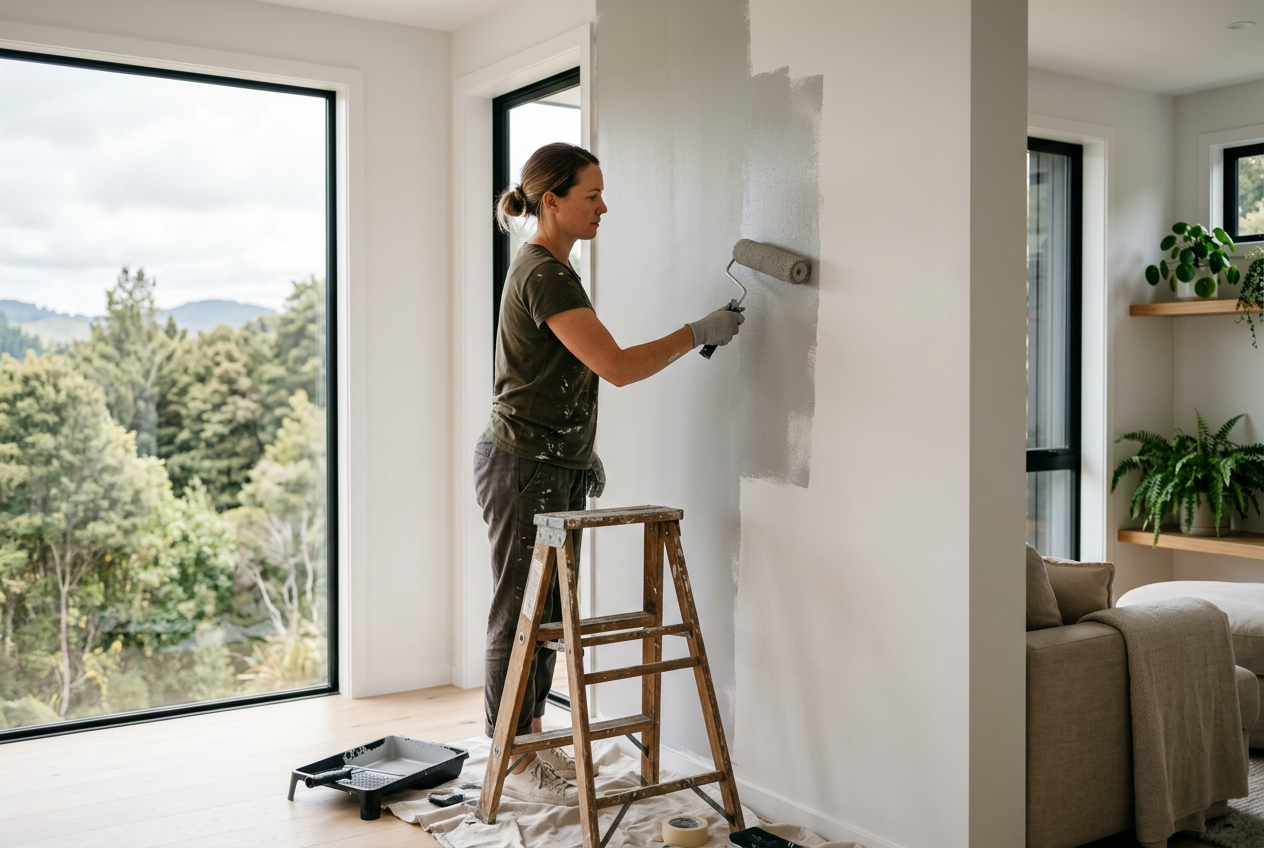
For the vast majority of New Zealand homeowners, repainting the exterior of your house does not require a building consent. Routine repainting is generally considered maintenance work and falls under the exemptions listed in Schedule 1 of the Building Act 2004. That said, there are some important situations where consent — or at least a conversation with your local council — may be needed before you pick up a brush.
The General Rule: Repainting Is Exempt
Under New Zealand's building legislation, like-for-like maintenance work is typically exempt from the consent process. If you're repainting your exterior walls, weatherboards, or trim in a similar colour and with a similar paint system, you're almost certainly in the clear. This applies whether you're doing the work yourself or hiring a professional painter.
The key principle is that the work must not affect the structural integrity or weathertightness of the building. A straightforward repaint — even a full exterior repaint — generally meets this test.
For a full breakdown of what's exempt and what isn't, check the guidance from MBIE Building Performance, which administers the Building Act and Building Code.
When You Might Need Consent
There are several scenarios where painting the exterior could trigger a consent requirement or at least require careful consideration:
1. Changing the Cladding System
If your painting project involves changing the type of cladding — for example, replacing weatherboards with a plaster system, or applying a thick textured coating that fundamentally alters how the wall manages moisture — this may be considered a change to the building envelope. Work that affects compliance with Building Code clause E2 (External Moisture) is likely to require consent.
2. Heritage or Character Buildings
If your home is in a heritage overlay zone or is a listed heritage building, your local council may have rules about exterior colours and finishes. Some councils require resource consent (under the Resource Management Act, not the Building Act) for significant colour changes on heritage properties. Always check with your council before proceeding.
3. Remediation Work on Leaky Homes
If you're repainting as part of fixing a weathertightness problem — for instance, applying a new coating system over a damaged monolithic cladding — the underlying repair work may well require a building consent. The paint itself may not, but the remediation it's part of likely will. BRANZ has useful technical guidance on weathertightness and cladding systems.
4. Applying Specialist Coating Systems
Some elastomeric or membrane coatings are thick enough to be considered a cladding system in their own right. If a manufacturer's system is being applied as a weatherproofing solution rather than a decorative finish, check with your council whether consent is needed.
Choosing the Right Paint for NZ Conditions
Even without a consent requirement, choosing the right exterior paint matters enormously in New Zealand's varied climate — from the UV-intense summers in the North Island to the damp, cold winters in the South Island and coastal salt exposure throughout the country.
Look for exterior paints rated for NZ conditions. Reputable brands available here include:
- Resene — widely used by NZ painters, with a strong range of exterior systems
- Dulux — offers weatherproof exterior ranges suited to NZ climates
- Wattyl — another established option with exterior-specific products
Always follow the manufacturer's preparation and application guidelines. Poor surface prep is the number one cause of premature paint failure.
DIY vs Hiring a Professional Painter
Unlike electrical or plumbing work, painting is not restricted trade work in New Zealand. There is no legal requirement to use a licensed painter for exterior painting — homeowners can legally do it themselves.
However, a professional painter will:
- Properly assess and prepare the surface (filling, sanding, priming)
- Identify any underlying issues such as rot, moisture damage, or failing cladding
- Apply paint to manufacturer specifications, which can affect warranty
- Work safely at height, in compliance with WorkSafe NZ guidelines
Working at height is one of the leading causes of serious injury in New Zealand. If your home is more than one storey, scaffolding or appropriate fall protection is strongly recommended — and may be legally required depending on the height and duration of the work.
When to Call a Professional
Consider hiring a qualified painter if:
- Your home is two or more storeys (height safety is a serious concern)
- The existing paint is in poor condition or you suspect lead paint (homes built before 1980 may have lead-based paint — take precautions and consider professional removal)
- You notice signs of moisture damage, rot, or cladding failure — a good painter will flag these before they paint over them
- You want a manufacturer's warranty on the paint system
- The job involves heritage or character requirements
You can find qualified local painters on tradedirectory.co.nz to get quotes and advice specific to your home.
Always Check With Your Council
Building consent rules can vary depending on your local council, the age of your home, zoning, and the specific nature of the work. When in doubt, contact your local council's building department before starting work. A quick phone call can save you significant hassle down the track.

 BCITO Qualified

 Master Painters NZ
 Site Safe