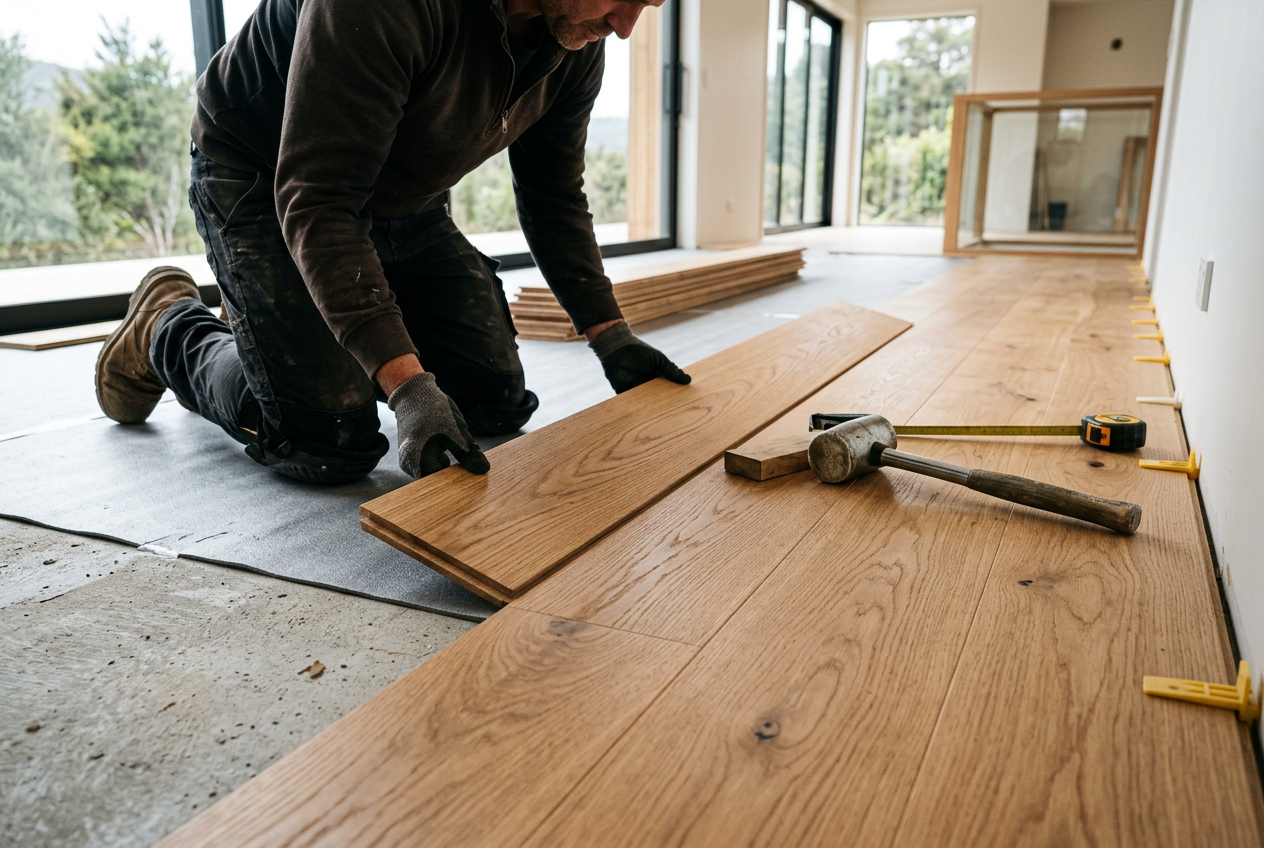
Most flooring installation in New Zealand does not require a licensed tradesperson by law — but that doesn't mean anyone can do it well, and there are some important exceptions depending on what's underneath your floor. Here's what every Kiwi homeowner should know before pulling up the old carpet or laying new tiles.
Is Flooring Installation Licensed Work in NZ?
Unlike electrical or plumbing work, general flooring installation is not classified as restricted building work (RBW) under the NZ Building Act 2004. This means there is no legal requirement to use a licensed tradesperson for most flooring jobs — including laying carpet, timber, laminate, vinyl, or tiles.
However, if your flooring project involves structural work (such as replacing subfloor framing or joists), that work may fall under the NZ Building Code and could require a building consent, depending on the scope. Always check with your local council before starting any work that goes beyond the surface layer.
What Types of Flooring Can Homeowners Install Themselves?
Many homeowners successfully tackle the following as DIY projects:
- Floating timber or laminate floors — click-together systems are designed for DIY installation
- Vinyl planks and sheet vinyl — relatively forgiving and widely available at Bunnings and Mitre 10
- Carpet tiles — straightforward for confident DIYers
- Self-adhesive floor tiles — suitable for low-traffic areas
That said, skill and preparation matter enormously. Poor subfloor preparation, incorrect acclimatisation of timber, or badly laid tiles can lead to costly failures — warping, cracking, or lifting floors that need to be redone entirely.
When Does Flooring Work Require a Consent or Licensed Professional?
While the flooring itself may not be restricted work, related tasks often are:
Subfloor and Structural Work
If you need to repair or replace floor joists, bearers, or the structural subfloor, this is likely to require a building consent and should be carried out by a Licensed Building Practitioner (LBP). Check with your council — work exempt from consent is listed under Schedule 1 of the Building Act, but interpretations vary.
Wet Areas (Bathrooms, Laundries, Kitchens)
Tiling in wet areas must comply with NZ Building Code clause E3 (Internal Moisture). Waterproofing membranes beneath tiles in showers and wet areas are critical — if done incorrectly, you risk serious moisture damage. While not always legally restricted, this work is strongly recommended to be carried out by an experienced tradesperson who understands E3 requirements.
Underfloor Heating
If your new floor will sit over electric underfloor heating, the electrical installation is restricted work and must be carried out by a registered electrician. Check the Electrical Workers Registration Board (EWRB) to verify a sparky's registration. Similarly, hydronic (water-based) underfloor heating connected to plumbing is restricted plumbing work regulated by the Plumbers, Gasfitters and Drainlayers Board (PGDB).
Asbestos in Old Floors
Homes built before the mid-1980s may have asbestos-containing vinyl tiles or adhesive beneath existing flooring. Disturbing these materials without proper precautions is a serious health risk. WorkSafe NZ sets out strict requirements for asbestos removal — class A or B asbestos removal work must be carried out by a licensed removalist. Never sand or grind old vinyl without testing first.
Does Quality Matter More Than Licensing?
Absolutely. Even though flooring isn't licensed work, experience and technique make a huge difference to the finished result and longevity of your floor. A professional flooring installer will:
- Properly assess and prepare the subfloor (moisture testing, levelling)
- Acclimatise timber products correctly for NZ's varied climate
- Follow manufacturer installation guidelines to maintain product warranties
- Achieve clean, professional finishes around edges, doorways, and transitions
NZ's climate varies significantly — from the humid north to the cold, dry south — and this affects how flooring products perform. BRANZ provides research and guidance on building performance including moisture management, which is particularly relevant for timber and engineered wood floors.
Healthy Homes Standards and Rental Properties
If you're a landlord, note that the Healthy Homes Standards include requirements for underfloor insulation in rental properties. If you're replacing flooring in a rental, it's a good time to check your underfloor insulation meets the current standards.
Choosing the Right Flooring Product
For adhesives, levelling compounds, and tile setting products, reputable NZ suppliers include Ardex, Mapei, and Sika. Always follow manufacturer specifications — using the wrong adhesive or substrate preparation product can void warranties and cause premature failure.
When to Call a Professional
Consider hiring a qualified flooring installer when:
- The job involves large areas, complex patterns, or natural stone tiles
- You're working in wet areas requiring waterproofing
- The subfloor needs significant repair or levelling
- You suspect asbestos in existing flooring materials
- You want the manufacturer's warranty to remain valid (many require professional installation)
- The project involves underfloor heating (electrical or hydronic)
A skilled flooring installer will save you time, stress, and potentially expensive mistakes. You can find qualified local flooring professionals on tradedirectory.co.nz.







