Most electrical work in New Zealand does not require a building consent from your local council — but that doesn't mean you can do it yourself or skip the paperwork entirely. Electrical work is tightly regulated under a separate system, and getting it wrong can be dangerous, illegal, and costly to fix.
Building Consent vs Electrical Compliance: What's the Difference?
These are two separate approval systems that sometimes overlap:
- Building consent is issued by your local council under the Building Act 2004. It covers structural, weathertightness, and other building work.
- Electrical compliance is governed by the Electricity Act 1992 and the Electricity (Safety) Regulations 2010. It requires that electrical work is done by a licensed professional and certified with a Certificate of Compliance (CoC).
For most standard electrical jobs — rewiring a room, adding power points, installing a heat pump, or replacing a switchboard — you'll need a licensed electrician and a CoC, but not a building consent.
When Does Electrical Work Need a Building Consent?
A building consent may be required when electrical work is part of a larger building project, such as:
- Building a new home or major addition
- Converting a garage or sleepout into habitable space
- Installing a new switchboard as part of a structural alteration
- Adding a new sub-panel as part of a significant renovation
In these cases, the electrical work is captured under the broader building consent for the project. The MBIE Building Performance website has detailed guidance on what triggers a consent requirement.
Some work is exempt from building consent under Schedule 1 of the Building Act — but always confirm with your local council before assuming your project qualifies. Exemptions can be interpreted differently by different councils.
What Is Restricted Electrical Work?
This is the critical part for homeowners. Under NZ law, most electrical work is restricted work — meaning it must be carried out by, or under the supervision of, a registered electrician licensed by the Electrical Workers Registration Board (EWRB).
Restricted electrical work includes:
- Installing, altering, or repairing fixed wiring
- Adding or moving power points, light fittings, or switches
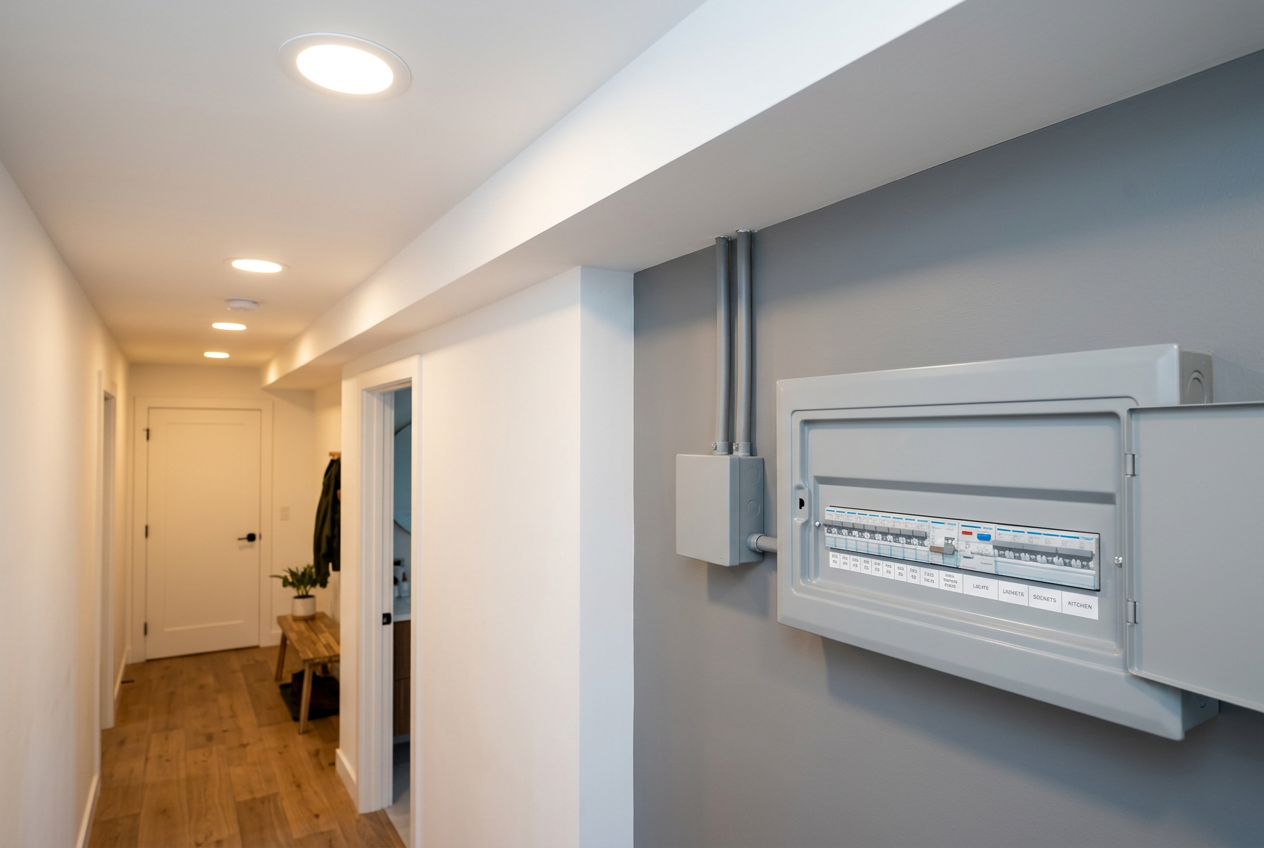
- Installing switchboards, circuit breakers, or RCDs
- Connecting appliances to fixed wiring (e.g. ovens, heat pumps, hot water cylinders)
Once the work is complete, the electrician must issue a Certificate of Compliance (CoC). Keep this document — you'll need it if you ever sell your home.
What Can a Homeowner Do Themselves?
The rules are strict. As a homeowner, you are legally allowed to do only very limited electrical tasks, such as:
- Replacing a light bulb or fuse
- Replacing a socket outlet or light switch cover (check current regulations with the EWRB, as the rules around what homeowners may do themselves are limited and subject to change)
- Connecting a plug to a flexible cord on a portable appliance
If you're unsure whether a task counts as restricted work, don't guess — contact the EWRB or a licensed electrician. Doing restricted work yourself is illegal and could void your home insurance, create fire hazards, and put lives at risk.
⚠️ Safety note: Electricity can kill. Even work that looks simple — like adding a power point — involves live circuits and potential shock or fire risk. Always use a licensed electrician for any fixed wiring work.
Healthy Homes and Rental Properties
If you're a landlord, electrical safety is also tied to your obligations under the Healthy Homes Standards. Heating, ventilation, and draught-stopping requirements often involve electrical work that must be done by a licensed professional and properly certified.
Do You Need a Permit for a Heat Pump or EV Charger?
These are common questions:
| Installation | Building Consent? | Licensed Electrician? | CoC Required? |
|---|---|---|---|
| Heat pump (standard split system) | Usually no | Yes | Yes |
| EV home charger | Usually no | Yes | Yes |
| Solar panels (grid-tied) | Sometimes | Yes | Yes |
| New switchboard | Usually no | Yes | Yes |
| New home build | Yes | Yes | Yes |
For solar installations, check with your council and your lines company, as requirements can vary. MBIE Building Performance and WorkSafe NZ both publish guidance on electrical safety obligations.
When to Call a Professional
For virtually any electrical work beyond changing a light bulb, you should hire a licensed electrician. A qualified sparky will:
- Assess whether your project needs a building consent
- Carry out all restricted work legally and safely
- Issue the required Certificate of Compliance
- Ensure your work meets the NZ Wiring Rules (AS/NZS 3000)
You can find qualified, local electricians on tradedirectory.co.nz. Always check that your electrician is registered with the EWRB — you can verify their licence on the EWRB website before work begins.

 Site Safe
 Licensed Electrical Inspector







