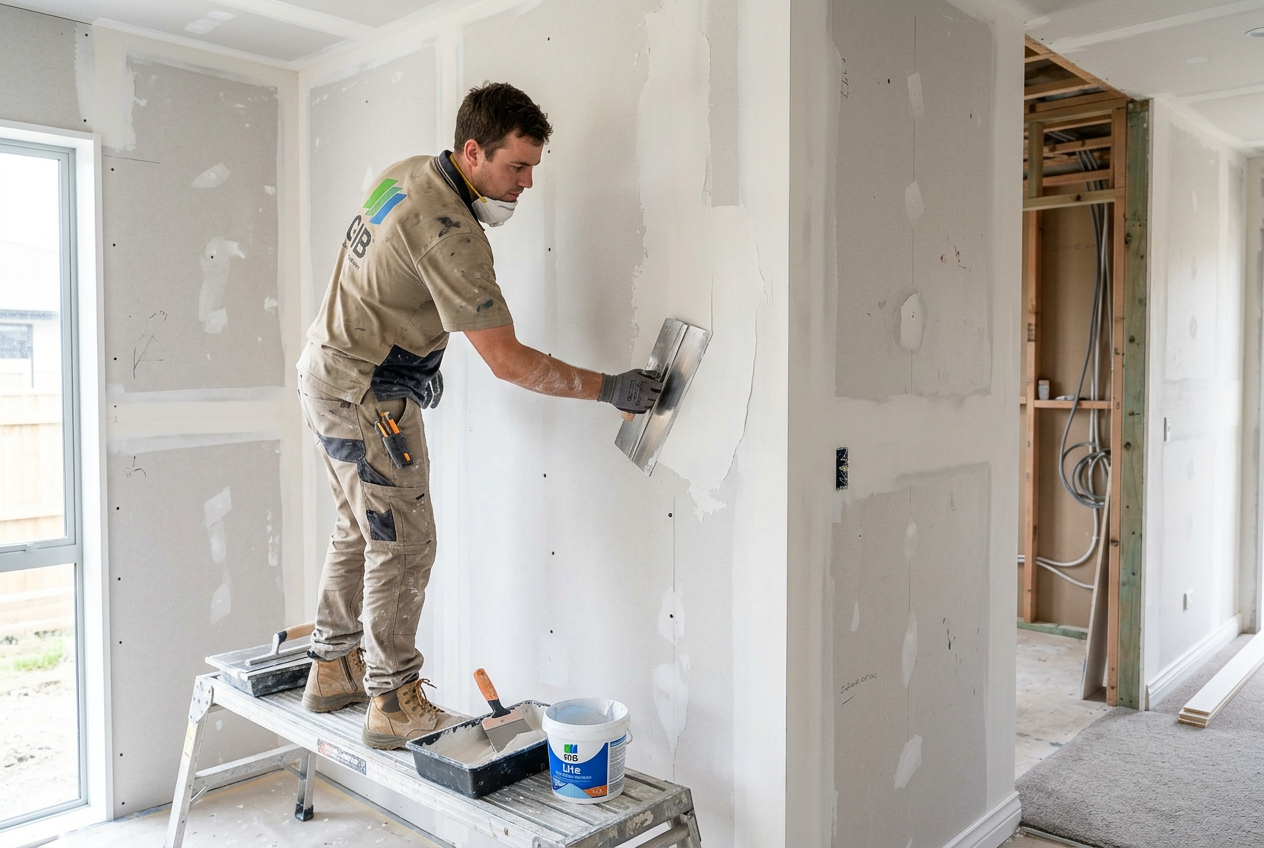
Rendering is not a licensed or registered trade in New Zealand — there is no specific government-issued licence that a renderer must hold before they can legally take on work. However, that doesn't mean qualifications and experience don't matter. The quality of a render system has a direct impact on your home's weathertightness, and getting it wrong can be very costly to fix.
No Mandatory Licence — But Qualifications Still Count
Unlike electricians or plumbers, renderers are not regulated under a dedicated licensing regime. There is no equivalent of the Electrical Workers Registration Board or the Plumbers, Gasfitters and Drainlayers Board for the rendering trade. This means, in theory, anyone can offer rendering services.
In practice, reputable renderers will typically hold:
- A New Zealand Certificate in Solid Plastering (Level 3 or 4) through a polytechnic or industry training organisation
- Membership with a plastering or building trade association
- Manufacturer training or accreditation for specific render systems (e.g. texture coatings, EPS-based systems)
Always ask a prospective renderer about their training, experience, and examples of completed work before hiring.
When a Licensed Building Practitioner (LBP) Is Required
While rendering itself is not restricted work, the building work surrounding it often is. If your rendering project involves restricted building work (RBW) — such as work on the weathertight envelope of a house — then an Licensed Building Practitioner (LBP) must either carry out or supervise that work.
Rendering over a new or altered external wall system is likely to fall under the weathertightness category of restricted building work. In these cases:
- The renderer (or the person supervising them) should hold an LBP licence in the relevant category, such as Roofing or External Plastering
- An LBP must provide a Record of Work on completion
- Homeowners doing their own work may be exempt in some circumstances, but should confirm this with their local council
If you're unsure whether your project involves restricted building work, check with MBIE Building Performance or your local council.
Building Consent — Do You Need One?
Whether you need a building consent for rendering work depends on what's being done:
| Scenario | Consent likely required? |
|---|---|
| Like-for-like re-render of existing surface | Usually not (Schedule 1 exemption may apply) |
| New render on an existing wall (no structural change) | Check with your council |
| Render as part of new construction or addition | Yes |
| Render over a new EPS (polystyrene) cladding system | Yes |
Schedule 1 of the Building Act 2004 lists work that is exempt from building consent. However, exemptions can be complex and vary by situation. Always confirm with your local council before starting work — do not assume an exemption applies.
Any consented work involving the external envelope must comply with NZ Building Code Clause E2 (External Moisture), which sets out requirements for weathertightness. BRANZ publishes guidance on compliant render and plaster systems that is widely used by the industry.
Render Systems and Manufacturer Requirements
Many modern render systems — particularly monolithic cladding and texture coat systems — require installers to be trained and sometimes accredited by the manufacturer. Using an unaccredited applicator can void the product warranty and may affect your ability to make an insurance claim if problems arise later.
Well-known render and coating brands available in NZ include Resene and Dulux for texture coatings, as well as specialist plaster and render suppliers. Always check whether the system you're using has specific installer requirements.
What Homeowners Can Do Themselves
Homeowners can legally carry out some rendering work on their own homes, provided:
- The work does not require a building consent (or consent has been obtained)
- The work is not restricted building work (or if it is, they follow the owner-builder rules and notify their council)
- They are competent to carry out the work to the required standard
DIY rendering is generally more practical for small repairs, patching, or interior plastering than for full external cladding systems, where weathertightness is critical.
When to Call a Professional
You should always engage a qualified, experienced renderer when:
- The work involves the external weathertight envelope of your home
- You are installing a new cladding or render system
- A building consent is required
- The existing render shows signs of cracking, delamination, or moisture damage — these can indicate deeper structural or weathertightness issues
- You need a Record of Work from an LBP for consent sign-off
A skilled renderer will assess the substrate, choose the right system, and apply it correctly — protecting your home for years to come. You can find qualified local renderers and plasterers on tradedirectory.co.nz.

 Licensed Building Practitioner (LBP)