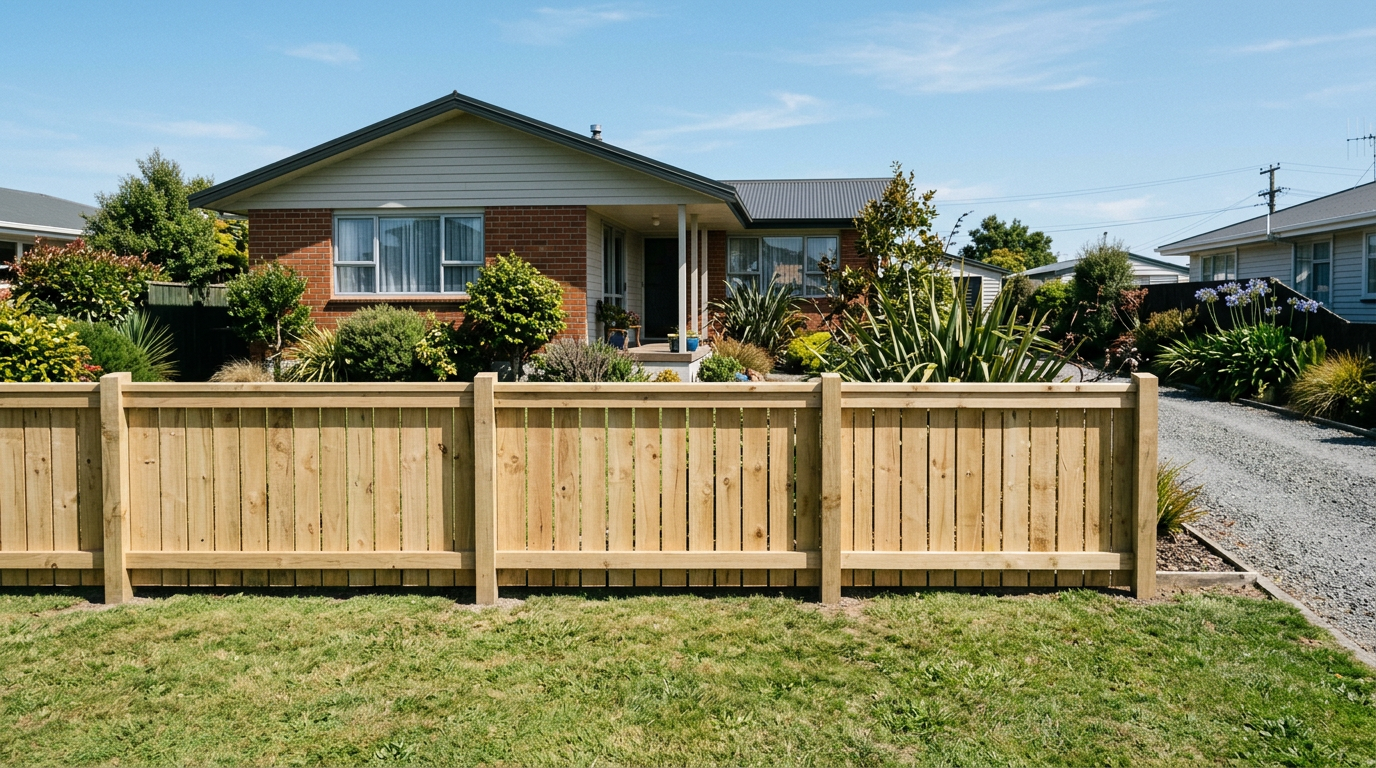
Planning a new fence is one of the most common home improvement projects in New Zealand — but it's also one of the most misunderstood when it comes to rules and compliance. Get it wrong and you could face a costly removal order or a dispute with your neighbour. This guide walks you through the key decisions, consent requirements, and practical steps to get your fencing project right from the start.
Does a Fence Need Building Consent?
In most cases, a standard residential fence does not require building consent — but there are important exceptions. Under Schedule 1 of the Building Act 2004, certain building work is exempt from the consent process, and many fences fall into this category.
Generally, a fence is exempt from building consent if it is:
- No more than 2.5 metres high (measured from the ground)
- Not part of a swimming pool or spa barrier (these have their own strict rules — see below)
- Not located in a special hazard area (such as a flood zone or coastal erosion zone)
- Not a retaining wall combined with a fence that together exceed height thresholds
However, being exempt from building consent does not mean you can ignore the NZ Building Code or your local council's district plan. Always confirm your specific situation with your local council before you start work. You can read more about Schedule 1 exemptions on the MBIE Building Performance website.
How High Can My Fence Be?
This is where things get a little more nuanced, because two separate sets of rules apply:
1. Building Consent Height Threshold
As noted above, fences up to 2.5 metres are generally exempt from building consent under Schedule 1. Go higher than that and you'll likely need consent.
2. Council District Plan Rules
Your local council's district plan (or unitary plan, in Auckland) may impose its own height limits — often lower than 2.5 m — particularly for front boundary fences. Common district plan limits include:
| Location | Typical Height Limit (guide only) |
|---|---|
| Front boundary (facing street) | 1.0 m – 1.2 m |
| Side and rear boundaries | 1.8 m – 2.0 m |
| Corner sites (sight-line rules) | May be lower for safety |
Important: These figures are a general guide only. Every council is different. Check your council's district plan or ring your local planning department before you build.
If your fence exceeds the district plan height limit, you may need a resource consent — a separate process from building consent. Some councils also have rules about materials, colours, and styles in heritage areas or special character zones.
Pool and Spa Fencing — Strict Rules Apply
If your fence forms part of a swimming pool or spa pool barrier, the rules are completely different and non-negotiable. Under the Fencing of Swimming Pools Act 1987 (and updated guidance), pool barriers must:
- Be at least 1.2 metres high
- Have no climbable footholds
- Have a self-closing, self-latching gate
- Comply with NZS 8500:2006 (the NZ standard for pool fencing)
Pool fencing always requires a building consent and a council inspection. Non-compliant pool fencing is a serious safety risk and can result in significant fines. Check the requirements with your local council and refer to MBIE Building Performance for the latest guidance.
The Fences Act and Neighbour Agreements
If your fence sits on or near a boundary shared with a neighbour, the Fences Act 1978 comes into play. Key points:
- Neighbours generally share the cost of a sufficient fence on a common boundary
- You must serve a formal notice to fence before starting work if you want to recover costs
- Disputes can be taken to the Disputes Tribunal
Getting your neighbour on board early — and ideally in writing — will save a lot of headaches. Agree on height, materials, and which side the posts face before any work begins.
Planning Your Fence Project — Key Steps
- Check your district plan — contact your local council or search their online GIS/planning maps for height and setback rules.
- Confirm boundary locations — if you're unsure where your boundary sits, consider hiring a licensed cadastral surveyor before you build.
- Talk to your neighbour — especially for boundary fences. Document any agreement.
- Choose your materials — timber, steel, aluminium, concrete block, and composite options all have different maintenance, cost, and durability profiles. Mitre 10 and PlaceMakers are good starting points for comparing materials.
- Get quotes from licensed fencers — a qualified fencer will know local rules and can advise on the right solution for your site.
- Apply for consent if required — allow time for processing (typically 20 working days for building consent, longer for resource consent).
Budgeting for Your Fence
Fencing costs vary widely depending on materials, length, terrain, and labour rates in your region. As a very rough guide:
- Basic timber paling fence — generally the most affordable option per metre
- Coloured steel or aluminium — mid to upper range, low maintenance
- Concrete block or masonry — higher cost, very durable, may trigger consent at lower heights
- Pool fencing (glass or aluminium) — premium pricing, consent and inspection costs add to the total
Always get at least three written quotes and make sure each quote specifies materials, post depth, and any consent or inspection fees. Do not rely on verbal estimates.
When to Call a Professional
While a confident DIYer can build a simple timber fence, there are situations where hiring a qualified fencer is strongly recommended:
- Pool or spa fencing — must meet NZS 8500 and be inspected by council
- Retaining walls combined with fencing — structural considerations apply
- Masonry or concrete block fences — require proper footings and engineering
- Boundary disputes or complex sites — a professional fencer knows how to navigate these
- Any fence requiring building or resource consent — a pro can help with documentation
You can find qualified, local fencing contractors on tradedirectory.co.nz. Look for members of a recognised trade association and always ask for references.
Realistic Timeline
| Stage | Typical Timeframe |
|---|---|
| Planning, quotes, neighbour agreement | 1–3 weeks |
| Council/consent check and application | 1–6 weeks (if required) |
| Materials procurement | 1–2 weeks |
| Installation (standard residential fence) | 1–3 days |
| Pool fence inspection and sign-off | Allow 1–2 weeks after installation |





