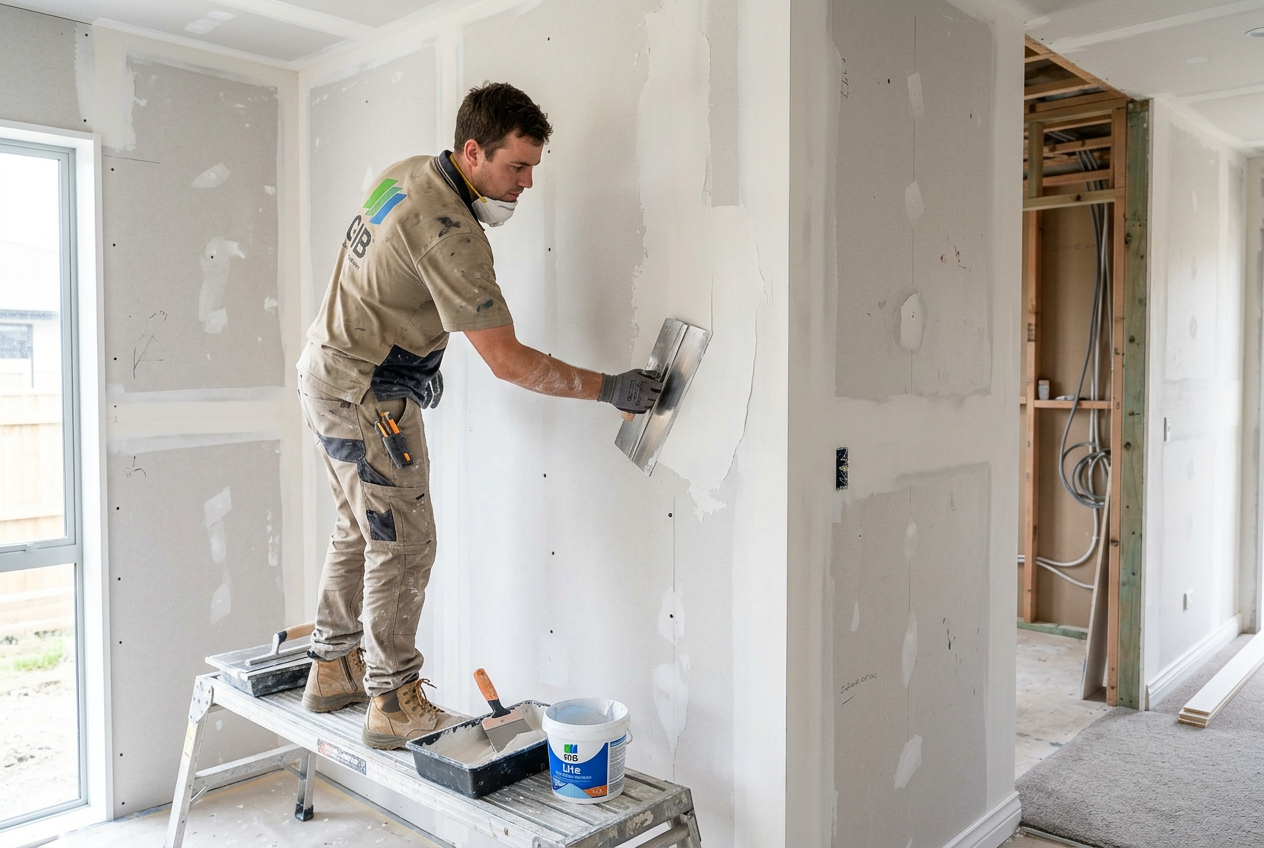
Replastering your home's exterior is one of the most impactful maintenance jobs you can undertake — it protects your home from New Zealand's harsh UV, wind, and rain, and can dramatically improve kerb appeal. Whether you have a classic 1950s plaster-over-masonry home or a more recent monolithic cladding system showing its age, understanding what's involved will help you plan your budget and choose the right professional for the job.
What Does Replastering a House Exterior Involve?
Replastering (also called rendering or re-rendering) is the process of removing or preparing the existing exterior plaster coating and applying a new one. Depending on the condition of your existing substrate, this may involve:
- Crack repair and surface preparation — filling, grinding, or cutting out damaged sections
- Priming the substrate to ensure adhesion
- Applying one or more coats of render (scratch coat, brown coat, finish coat)
- Texture and finish work — smooth, sand, or textured finishes
- Painting or sealing the new plaster surface
In New Zealand, exterior plaster systems must comply with NZ Building Code Clause E2 (External Moisture), which sets requirements for weather-tightness. If your home has had leaky building issues, replastering may be part of a broader remediation project — and the scope (and cost) can increase significantly.
Average Costs in NZ
Costs vary significantly depending on the scope of work, your location, and the quality of materials. As a general guide, most NZ homeowners spend between $2,000 and $20,000 on this type of work, depending on the project size.
At the lower end, you might be looking at a small townhouse or a partial re-render of one or two walls. At the upper end, a large two-storey home requiring full strip-back, remediation, and a premium finish system will push costs toward or beyond that top figure. For complex leaky-home remediation projects, costs can exceed this range — always get written quotes specific to your property.
What's Typically Included in a Quote?
When comparing quotes, check whether the following are included:
| Item | Often Included? |
|---|---|
| Surface preparation and crack repair | Sometimes |
| Scaffolding or access equipment | Sometimes |
| Primer coat | Usually |
| Base and finish coats of render | Usually |
| Painting or sealing | Sometimes |
| Rubbish removal | Varies |
| GST | Should be stated |
Always get at least three written quotes from qualified renderers and compare what is included in each — the cheapest is not always the best value.
Factors That Affect Cost
Several key variables will push your project toward the lower or upper end of the price range:
- Size and scope of the project — total wall area (measured in m²) is the primary driver. More surface area means more labour and materials.
- Quality of materials chosen — premium acrylic or polymer-modified render systems cost more than basic sand-and-cement mixes, but they offer better flexibility and durability in NZ's climate.
- Your location — urban centres like Auckland typically have higher labour rates than regional areas. Coastal locations may require more durable, salt-resistant systems.
- Condition of existing structures — if the existing plaster is delaminating, cracked, or hiding moisture damage, preparation work increases substantially.
- Access difficulty and site preparation — multi-storey homes, steep sites, or properties with limited access require scaffolding, which adds to cost.
- Whether building consent is needed — see the compliance section below.
NZ Climate Considerations
New Zealand's climate varies enormously from Northland to Southland. In the upper North Island, high UV and humidity accelerate plaster degradation. Coastal areas face salt spray, which can attack poorly specified systems. The South Island's freeze-thaw cycles can crack rigid plaster coatings. A good renderer will specify a system suited to your specific region and exposure.
The Replastering Process: What to Expect
- Initial assessment — a qualified renderer inspects the existing substrate, identifies damage, and specifies the appropriate system.
- Scaffolding erected — for most full-house jobs, scaffolding is required for safe access.
- Preparation — existing loose or damaged plaster is removed or stabilised; cracks are cut out and filled; control joints may be installed.
- Priming — a bonding primer is applied to the prepared surface.
- Render coats applied — typically a scratch/base coat followed by a finish coat; some systems use a single-coat product.
- Finishing and texturing — the surface is finished to the agreed texture (smooth, sand finish, roughcast, etc.).
- Painting or sealing — most render systems require a quality exterior paint or sealer to complete the weatherproofing. Brands like Resene and Dulux offer exterior systems specifically designed for plaster and render substrates.
- Scaffolding removed and site cleaned up.
Building Consent and Compliance
Whether you need a building consent depends on the scope of work. In many cases, like-for-like repair and maintenance of existing plaster may be exempt under Schedule 1 of the Building Act — but this is not always straightforward, particularly if the work involves changes to the cladding system or remediation of weather-tightness issues.
Always confirm with your local council before starting work. The MBIE Building Performance website is a good starting point for understanding consent requirements. Work that affects weather-tightness must comply with NZ Building Code Clause E2, and your renderer should be familiar with these requirements.
If your home is a monolithic cladding system (common in homes built between the late 1980s and early 2000s), remediation work almost certainly requires consent and should involve a licensed building practitioner. You can verify LBP status at Licensed Building Practitioners.
DIY vs Hiring a Professional
Small crack repairs and patching can be a DIY task for a competent homeowner using appropriate products. However, full replastering of a house exterior is not a DIY job for most people. Achieving a consistent, weathertight finish requires skill, the right tools, and knowledge of NZ Building Code requirements. Poor workmanship can lead to moisture ingress, which is a costly problem to fix.
For anything beyond minor patching, hire a qualified renderer or plasterer. BRANZ provides technical guidance on exterior plaster systems that both professionals and informed homeowners will find useful.
When to Call a Professional
Call a qualified renderer or licensed building practitioner if you notice:
- Widespread cracking — particularly diagonal or stair-step cracks, which can indicate structural movement
- Hollow or delaminating plaster — tapping the wall produces a hollow sound
- Staining or damp patches inside the home near exterior walls
- Visible mould or rot around windows, doors, or at the base of walls
- Your home was built between the late 1980s and early 2000s — monolithic cladding systems from this era are at higher risk of weather-tightness issues
Don't delay — moisture damage compounds quickly and remediation costs rise the longer issues are left unaddressed. Find qualified local renderers and plasterers on tradedirectory.co.nz.
Tips for Getting the Best Value
- Get multiple quotes and compare value, not just price — check what each quote includes before making a decision
- Choose quality materials that last longer — a cheaper render system that fails in five years costs more in the long run
- Bundle work together where possible — if you're already scaffolding the house, consider combining painting, gutter replacement, or window maintenance at the same time
- Plan ahead — rushed jobs cost more; good renderers are often booked weeks in advance
- Ask about off-peak discounts — some tradespeople offer better rates during quieter periods
- Check references and past work — ask to see examples of completed jobs and speak to previous clients
Sources & Further Reading
- MBIE Building Performance — Building Code and compliance
- BRANZ — Technical guidance for building professionals and homeowners
- Licensed Building Practitioners — Verify your renderer's LBP status
- Resene — Exterior paint systems for render and plaster
- Dulux — Exterior coatings for NZ conditions
- Consumer NZ — Tips for hiring tradespeople

 Licensed Building Practitioner (LBP)