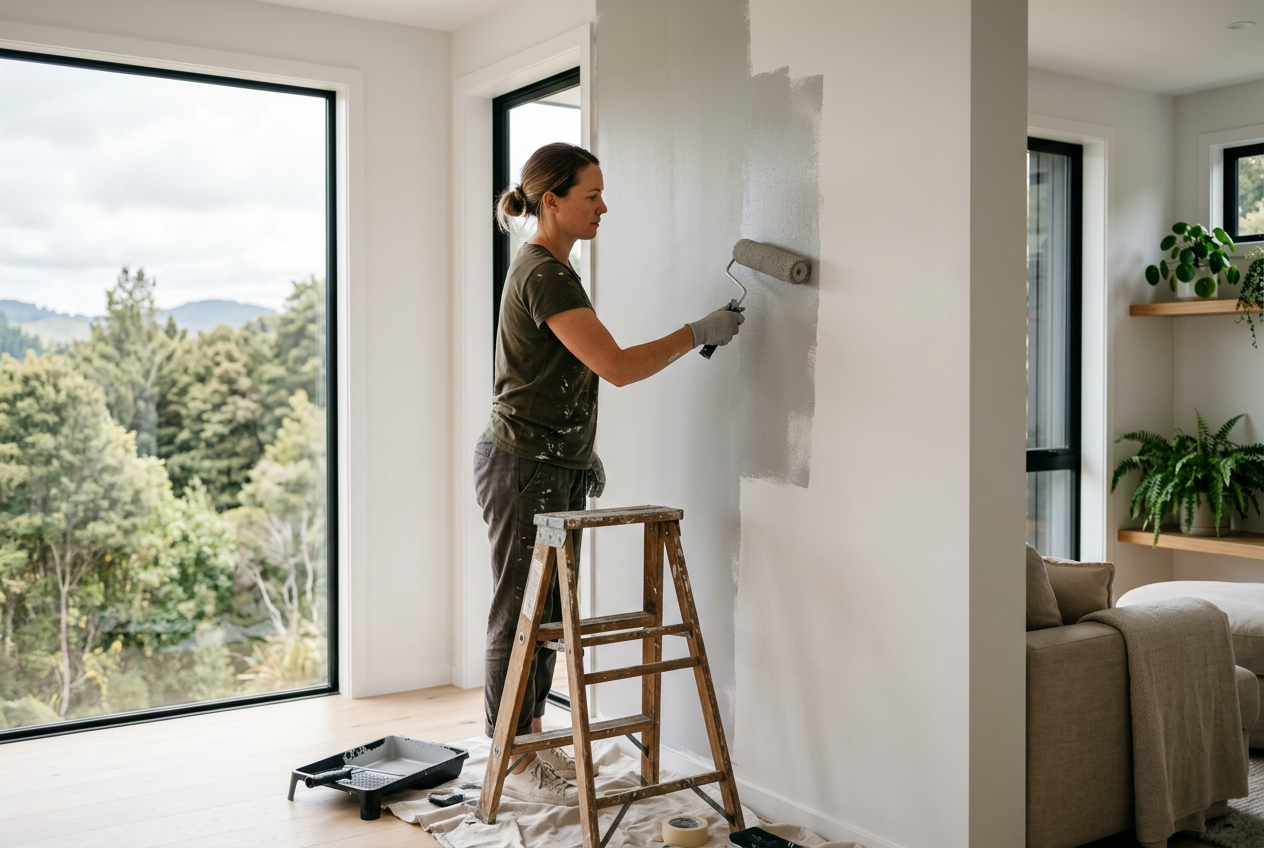
Painting your interior walls is one of the most cost-effective ways to refresh a home, but costs can vary enormously across New Zealand. Whether you're freshening up a single room or repainting an entire house, understanding what drives the price — and how to get genuine value — will help you plan your project with confidence.
Average Costs for Interior Wall Painting in NZ
Most NZ homeowners spend between $2,000 and $20,000 on interior painting, depending on the project size. A single-room refresh sits toward the lower end of that range, while a full repaint of a large multi-storey home with high ceilings, extensive prep work, and premium paints can push toward the upper end. These figures typically cover labour, standard preparation, and mid-range paint products.
Because costs vary significantly depending on the scope of work, your location, and the quality of materials, the figures above are a guide only. Always get written quotes tailored to your specific home.
What Affects the Cost of Interior Painting?
Several key factors will push your quote up or down:
Size and Scope of the Project
Painters generally price by the square metre of paintable surface (walls and ceilings), or by the room. More rooms, higher ceilings, and complex layouts (alcoves, archways, stairwells) all increase the time and materials required.
Condition of Existing Surfaces
Surface preparation is often the biggest variable in any painting quote. Walls with cracks, holes, water stains, mould, or old flaking paint require filling, sanding, priming, and sometimes specialist treatment before a topcoat can go on. Skimping on prep leads to a poor finish that won't last — a good painter will always include adequate prep in their scope.
Quality of Materials
Paint quality makes a real difference to durability and finish. Premium waterborne paints from trusted NZ brands such as Resene, Dulux, and Wattyl cost more per litre than budget options but typically offer better coverage, washability, and longevity — meaning fewer repaints over time. A quality interior paint in a washable finish (such as a low-sheen or semi-gloss) is especially worthwhile in kitchens, bathrooms, and hallways.
Number of Coats
Most interior jobs require a primer or sealer coat plus at least two topcoats for an even, durable result — particularly when changing from a dark to a light colour, or painting over bare plasterboard. Confirm with your painter how many coats are included in the quote.
Your Location
Labour rates differ across New Zealand. Auckland and Wellington tend to have higher hourly rates than regional centres, reflecting higher overheads and demand. Rural locations may also attract a travel surcharge. Urban vs rural, and north vs south, can all shift your final price.
Access Difficulty
High stud ceilings, stairwells, and multi-storey homes require scaffolding, tall ladders, or elevated work platforms, all of which add cost. If your home has a mezzanine or a stairwell void, flag this when getting quotes so painters can price accurately.
Whether Building Consent Is Needed
For a standard interior repaint, building consent is not required. However, if painting is part of a larger renovation involving structural changes, wet-area linings, or alterations to fire-rated assemblies, consent may be needed. Always confirm with your local council — requirements vary. See MBIE Building Performance for general guidance on when consent applies.
Typical Scope: What's Usually Included?
| Item | Typically Included? |
|---|---|
| Moving and protecting furniture | Often included or extra |
| Filling minor holes and cracks | Usually included |
| Sanding and priming | Usually included |
| Two topcoats on walls | Usually included |
| Ceiling painting | Sometimes separate |
| Trim, doors, and architraves | Often priced separately |
| Mould treatment | Extra if required |
Always clarify exactly what is and isn't included before accepting a quote.
Getting Quotes: How to Compare Properly
Always get at least three written quotes from qualified painters. A written quote should detail:
- The surfaces to be painted (walls, ceilings, trim)
- The number of coats and products to be used
- Surface preparation included
- Estimated timeframe
- Payment terms and any warranty offered
The cheapest quote is not always the best value. A low price may mean fewer coats, cheaper paint, or minimal prep — all of which affect how long the finish lasts. Ask each painter what paint brand and product they intend to use, and look them up on the manufacturer's website to understand the quality tier.
You can find qualified local painters on tradedirectory.co.nz — look for painters with good reviews, a portfolio of similar work, and clear communication.
NZ Climate Considerations
New Zealand's climate varies dramatically from Northland to Southland, and this affects paint choice. Homes in high-humidity areas (coastal regions, Auckland, Northland) are more prone to mould and moisture — look for paints with built-in mould inhibitors and ensure bathrooms and kitchens meet the Healthy Homes moisture and ventilation standards if you're a landlord. In southern regions, condensation on cold walls can cause paint to fail prematurely; a good painter will recommend appropriate primers and finishes for your climate.
If your home has had moisture issues, check that the underlying cause (leaks, poor ventilation) is fixed before repainting — paint alone won't solve a moisture problem. BRANZ has excellent guidance on moisture management in NZ homes.
DIY vs Hiring a Professional
Interior painting is one of the more accessible DIY tasks for a competent homeowner — no licensing is required, and materials are readily available from Bunnings, Mitre 10, or PlaceMakers. However, the quality of the finish depends heavily on preparation and technique. DIY is most practical for:
- Small, straightforward rooms with good existing surfaces
- Homeowners with time, patience, and some prior experience
- Projects where a perfect finish is not critical
For large homes, complex surfaces, high ceilings, or where a high-quality finish matters (e.g., before selling), a professional painter will almost always deliver a better, longer-lasting result — and often faster than you'd expect.
Practical Tips for Saving Money
- Get multiple quotes and compare value, not just price — understand exactly what each quote covers
- Choose quality materials that last longer — a premium paint may cost more upfront but reduces repainting frequency
- Bundle work together where possible — painting multiple rooms in one visit reduces mobilisation costs
- Plan ahead — rushed jobs cost more; give painters adequate notice
- Ask about off-peak discounts — some painters offer better rates during quieter periods (typically winter)
- Do your own furniture moving — if you can safely clear the room yourself, some painters will reduce their price
When to Call a Professional
While interior painting isn't restricted work under NZ law, there are situations where a professional is strongly recommended:
- Mould or water damage — a professional can identify the cause and apply appropriate treatments
- High or difficult access — working at height carries real risk; WorkSafe NZ guidelines apply to anyone working on ladders or scaffolding
- New plasterboard (GIB) — GIB board requires specific stopping, priming, and painting sequences to avoid flashing and surface defects
- Heritage or textured surfaces — specialist knowledge is needed to achieve a good result without damaging the substrate
- Rental properties — landlords must meet Healthy Homes standards; a professional can advise on compliant finishes
Always hire a painter who can provide references, show examples of previous work, and give you a clear written quote.

 BCITO Qualified

 Master Painters NZ
 Site Safe