Insulation is one of the most cost-effective home improvements you can make in New Zealand — it reduces heating and cooling bills, improves comfort, and is now a legal requirement for rental properties under the Healthy Homes standards. Whether you're insulating a new build, retrofitting an older home, or topping up existing insulation, understanding what drives costs will help you budget confidently and get the best value from your investment.
Average Costs for Insulation Installation in NZ
Costs vary significantly depending on the scope of work, your location, and the quality of materials. As a general guide, most NZ homeowners spend between $2,000 and $20,000 on this type of work, depending on the project size. A small retrofit of underfloor insulation in a modest home will sit toward the lower end, while a full ceiling, wall, and underfloor insulation package for a larger or more complex property can push toward the upper end or beyond.
Because pricing is so project-specific, the most important step is to always get at least three written quotes from qualified insulation installers and compare what is included in each — the cheapest is not always the best value.
Types of Insulation and Where They're Used
The type of insulation you choose affects both performance and cost. Common options in NZ include:
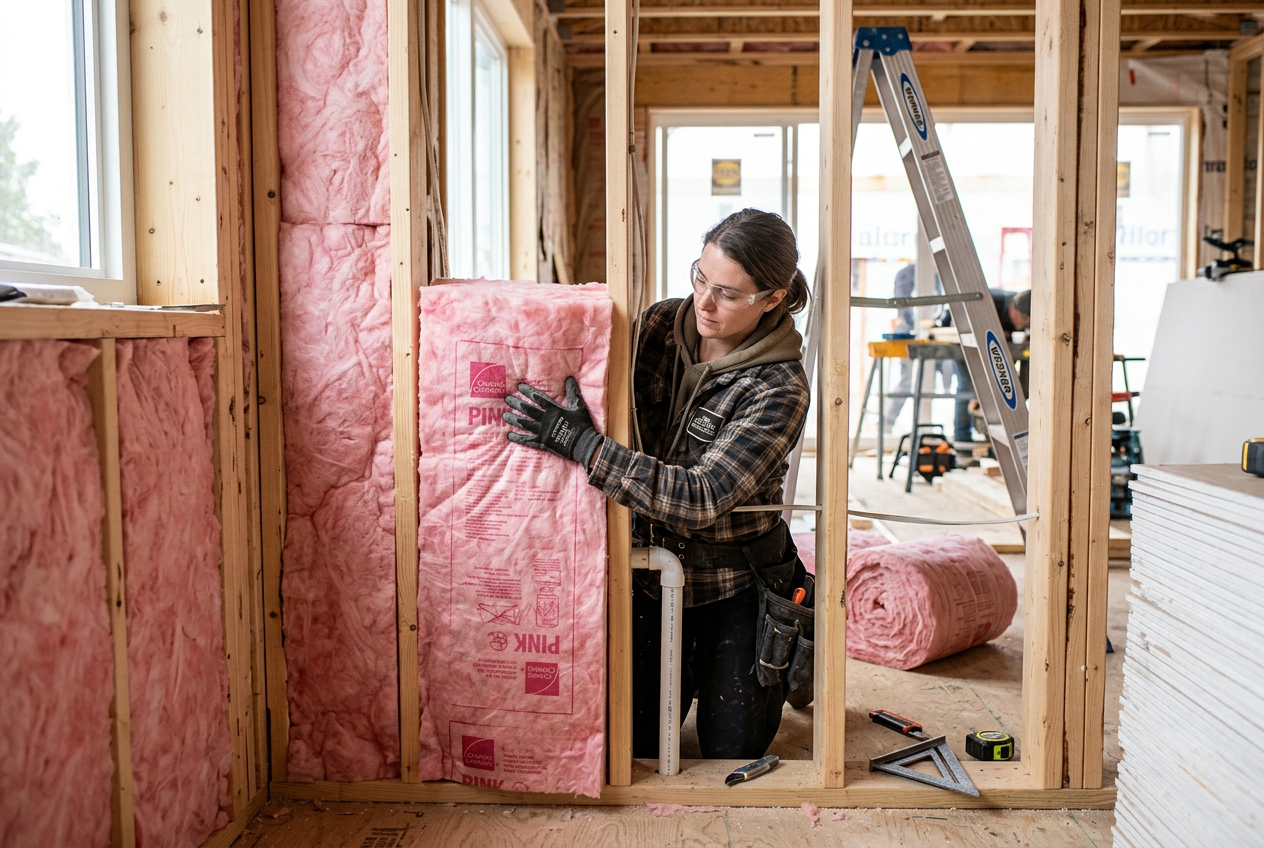
- Glass wool batts (e.g., Pink Batts, Knauf) — widely used in ceilings and underfloor; cost-effective and readily available from Bunnings and Mitre 10.
- Polyester batts — softer to handle, no irritants, popular for DIY ceiling and wall installs.
- Rigid foam board (polystyrene or polyisocyanurate) — used under concrete slabs, in walls, and on exterior cladding systems.
- Blown-in loose fill (glass wool or cellulose) — ideal for retrofitting existing wall cavities and hard-to-reach ceiling spaces.
- Spray foam — used for sealing gaps and in specific applications; typically installed by specialists.
- Reflective foil — sometimes used under roofs or floors, often in combination with bulk insulation.
For most NZ homes, ceiling and underfloor insulation offer the greatest thermal benefit per dollar spent.
Factors That Affect Insulation Installation Costs
Several variables will push your quote up or down:
| Factor | Impact on Cost |
|---|---|
| Size and scope of the project | Larger homes or full-house installs cost more overall but often less per m² |
| Quality and R-value of materials | Higher R-values (better performance) generally cost more upfront |
| Your location | Urban areas like Auckland may have more competitive pricing; rural or remote sites can attract travel charges |
| Condition of existing structures | Damaged framing, moisture issues, or old insulation removal adds cost |
| Access difficulty | Tight subfloor crawl spaces, steep roofs, or multi-storey homes increase labour time |
| Site preparation required | Clearing debris, treating moisture, or installing vapour barriers adds to the job |
| Whether building consent is needed | Consent fees and compliance documentation add cost and time |
R-Value Requirements Under the NZ Building Code
The NZ Building Code clause H1 (Energy Efficiency) sets minimum R-value requirements for new builds and significant alterations. NZ is divided into climate zones — homes in Southland or Central Otago require higher R-values than those in Northland, which directly affects material costs. Always confirm the required R-values for your climate zone with your installer or local council.
Healthy Homes Standards for Rental Properties
If you're a landlord, insulation is not optional. The Healthy Homes standards require ceiling and underfloor insulation that meets minimum R-value thresholds in all rental properties. Compliance deadlines have passed for most tenancies, so if your rental isn't yet insulated, factor in the cost of bringing it up to standard promptly to avoid penalties.
Do You Need Building Consent?
In many cases, installing or replacing insulation in an existing home falls under Schedule 1 exemptions to the Building Act and does not require a building consent. However, this depends on the scope of work — for example, if insulation is being installed as part of a larger renovation involving structural changes, consent may be required. Always confirm with your local council before starting work, as rules can vary. You can find general guidance at MBIE Building Performance.
DIY vs Hiring a Professional
Some insulation work is genuinely DIY-friendly — fitting polyester or glass wool batts into an accessible ceiling space is within reach of a capable homeowner. However, there are important caveats:
- Wall cavity insulation in an existing home almost always requires specialist equipment (blown-in systems) and is best left to professionals.
- Underfloor insulation in tight crawl spaces can be physically demanding and requires correct vapour barrier installation to comply with BRANZ best practice and the Building Code.
- Working near electrical wiring in ceiling spaces carries real risk. If in doubt, engage a professional. Note that any electrical work uncovered during the job must be carried out by a registered electrician — this is restricted work under the Electricity (Safety) Regulations. Check the Electrical Workers Registration Board (EWRB) to verify your electrician's registration.
- Spray foam application requires professional equipment and training.
For most homeowners, the combination of correct installation, appropriate R-values, and warranty protection makes hiring a qualified insulation installer the better long-term investment.
When to Call a Professional
Call a qualified insulation installer when:
- You're insulating wall cavities in an existing home (requires specialist blown-in equipment)
- Your subfloor has moisture issues that need assessment before insulation is installed
- You're unsure which R-value is required for your climate zone or building consent
- The ceiling space contains asbestos-containing materials (common in pre-1990 homes — do not disturb; engage a licensed asbestos removalist)
- You're a landlord needing to meet Healthy Homes compliance and want documented proof of installation
- The project is part of a larger renovation requiring building consent
You can find qualified local insulation installers on tradedirectory.co.nz — always check that they carry current public liability insurance and ask for references from recent local jobs.
Practical Tips for Saving Money
- Get multiple quotes and compare value, not just price — check what R-value, brand, and warranty is included in each quote
- Choose quality materials that last longer — cheap insulation that compresses or degrades quickly costs more over time
- Bundle work together where possible — combining ceiling, underfloor, and wall insulation in one job often reduces the per-m² cost
- Plan ahead — rushed jobs cost more; booking in advance gives installers time to schedule efficiently
- Ask about off-peak discounts — some installers offer better rates outside their busiest seasons
- Check for government subsidies — the Warmer Kiwi Homes programme (administered by EECA) has offered subsidised insulation for eligible owner-occupiers; check Energywise for current availability
- Improve airtightness at the same time — draught-stopping around doors, windows, and penetrations is low-cost and amplifies the benefit of insulation
Sources & Further Reading
- MBIE Building Performance — Building Code clause H1 (Energy Efficiency)
- Energywise — Home insulation and Warmer Kiwi Homes
- Tenancy Services — Healthy Homes insulation standard
- BRANZ — Insulation best practice guidance
- WorkSafe NZ — Working safely in ceiling and subfloor spaces
- EWRB — Verify your electrician's registration