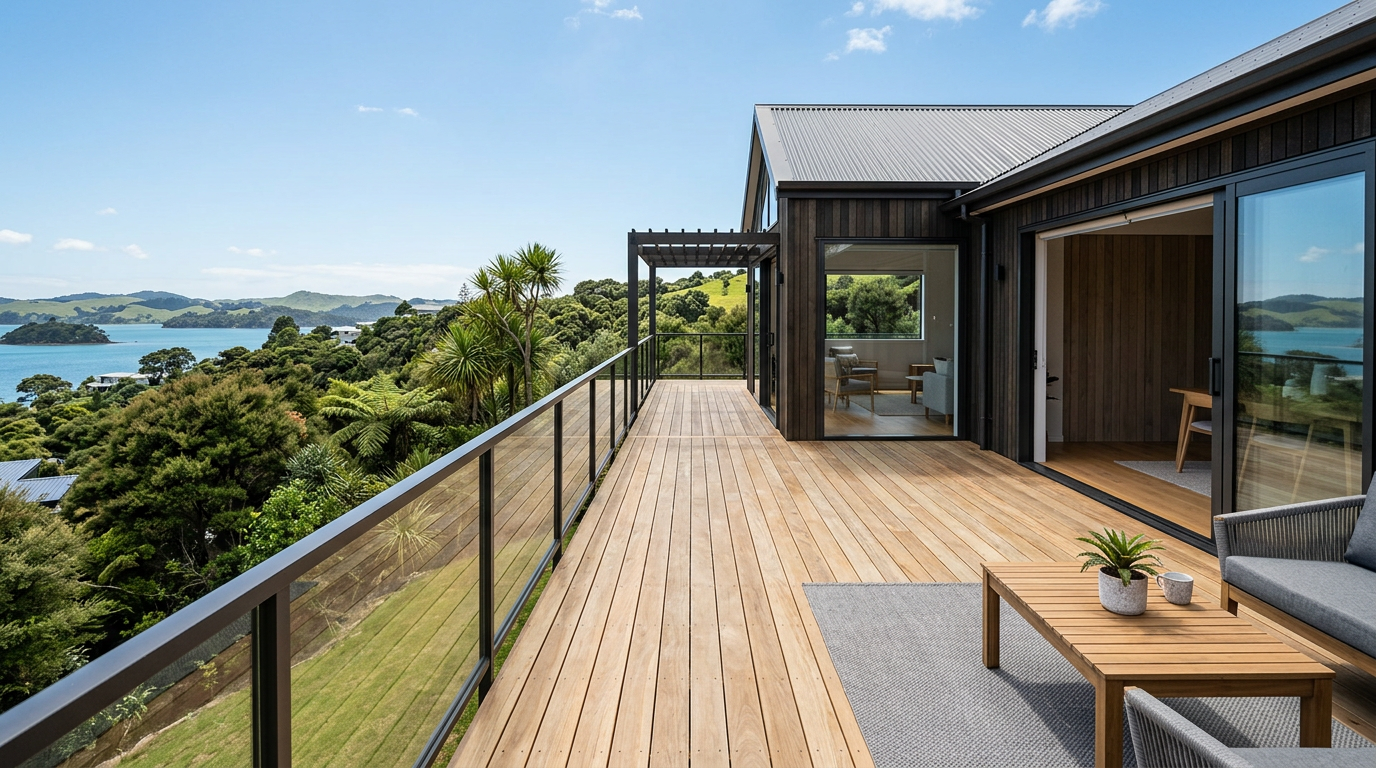
Building a deck is one of the most popular home improvement projects in New Zealand — and for good reason. A well-built deck extends your living space, adds value to your property, and makes the most of our outdoor lifestyle. Whether you're planning a simple ground-level platform or a multi-level entertainer's deck, understanding the costs and process upfront will help you make smart decisions.
Average Deck Building Costs in NZ
Costs vary significantly depending on the scope of work, your location, and the quality of materials. As a general guide, most NZ homeowners spend between $2,000 and $20,000 on this type of work, depending on the project size.
At the lower end, you're typically looking at a small, ground-level deck using treated pine. At the upper end, expect larger structures, premium hardwood or composite decking, multi-level designs, built-in features like seating or pergolas, and complex site conditions. Very large or bespoke decks can exceed $20,000 — always get written quotes to understand what applies to your specific project.
| Project Type | Typical Scope | Rough Cost Range |
|---|---|---|
| Small ground-level deck | Up to ~20 m², treated pine | Lower end of range |
| Mid-size standard deck | 20–40 m², treated pine or composite | Mid range |
| Large or elevated deck | 40 m²+, hardwood or composite | Upper end and beyond |
| Multi-level or complex deck | Custom design, premium materials | Get written quotes |
Note: These ranges are indicative only. Costs vary by region, site conditions, and builder. Always get at least three written quotes.
What Affects the Cost of a Deck?
Several key factors will push your project toward the lower or upper end of the $2,000–$20,000 range:
Size and Scope
The larger and more complex the deck, the more it costs — in materials, labour, and potentially consent fees. A simple square or rectangular deck is cheaper to build than an L-shaped or multi-level design.
Materials
Treated pine (H3.2 or H4 treated, depending on ground contact) is the most affordable and widely available option in NZ. Hardwoods such as kwila (merbau) or garapa offer durability and aesthetics but come at a premium. Composite decking (a mix of timber fibre and recycled plastic) costs more upfront but requires less maintenance — a worthwhile trade-off in coastal or high-UV environments common across much of New Zealand. You can compare decking products at Bunnings, Mitre 10, and PlaceMakers.
Location
Urban areas — particularly Auckland — tend to have higher labour rates than regional centres. Coastal locations may require more durable (and expensive) fixings and finishes to cope with salt air. In the South Island, decks may need to handle heavier snow loads or frost, which can affect structural design.
Site Preparation and Access
A sloping section, rocky ground, or difficult access will increase costs. Elevated decks require more substantial subframes and posts, and may need engineering input.
Condition of Existing Structures
If you're replacing an old deck, demolition and disposal of the old structure adds cost. Rotted bearers or posts attached to the house may also need remediation before building begins.
Whether Building Consent Is Needed
This is a critical factor — see the section below.
Building Consent and NZ Regulations
In New Zealand, building consent may or may not be required for a deck, depending on its size and height. Under Schedule 1 of the Building Act 2004, some decks are exempt from consent — but the rules are specific and have changed over time.
As a general guide:
- Decks no more than 1.5 metres above ground and meeting other criteria may qualify as exempt work.
- Decks attached to the house, or above 1.5 m, typically require a building consent.
- Any structural work must still comply with the NZ Building Code, including B1 (Structure) and B2 (Durability) clauses.
Always confirm consent requirements with your local council before starting work. Rules vary between territorial authorities, and getting this wrong can cause serious problems when you sell your home. Your deck builder should be familiar with local requirements, but the responsibility ultimately sits with the property owner.
If consent is required, factor in council fees (which vary by council and project value) and allow time for the consent process before construction begins.
Choosing the Right Deck Builder
Not all deck builders hold the same qualifications. In NZ, structural building work — including decks that require consent — should be carried out by or under the supervision of a Licensed Building Practitioner (LBP). LBPs are licensed under the Building Act and are accountable for their work. You can verify a builder's licence at Licensed Building Practitioners.
When vetting builders:
- Always get at least three written quotes from qualified deck builders
- Compare what is included in each quote — the cheapest is not always the best value
- Ask to see examples of previous deck projects
- Check that they hold current public liability insurance
- Ask whether they will manage the consent process on your behalf
- Confirm what timber treatment grades they use (H3.2 for above-ground, H4 for in-ground contact is standard NZ practice)
You can find qualified local deck builders on tradedirectory.co.nz.
DIY vs Hiring a Professional
Small, ground-level decks that fall within Schedule 1 exemptions may be within reach of a competent DIYer with good carpentry skills. However, there are important caveats:
- Any work requiring building consent must be carried out or supervised by an LBP — DIY restricted building work on your own home has specific rules — check with MBIE or your council before proceeding.
- Incorrect subframe construction or inadequate fixings can create serious structural and safety risks.
- Poor waterproofing or drainage around the deck can lead to moisture damage to your home's framing — a costly problem to fix later.
For most homeowners, hiring a qualified professional delivers better results, proper compliance, and peace of mind. If you do tackle a small exempt deck yourself, follow BRANZ guidance and use correctly graded treated timber throughout.
Tips for Getting the Best Value
- Get multiple quotes and compare value, not just price — a detailed quote that specifies materials and scope is worth more than a vague low number
- Choose quality materials that last longer — composite or hardwood decking costs more upfront but reduces maintenance and replacement costs over time
- Bundle work together where possible — if you're also planning landscaping, fencing, or outdoor lighting, combining trades can reduce mobilisation costs
- Plan ahead — rushed jobs cost more; give yourself time to get consent (if needed) and compare quotes properly
- Ask about off-peak discounts — some builders are more flexible on pricing during quieter periods
- Seal and maintain your deck regularly to extend its life; Resene and Wattyl both offer NZ-formulated deck stains and oils suited to our climate
When to Call a Professional
You should always engage a qualified deck builder or LBP when:
- The deck requires building consent
- The deck is elevated (more than 1.5 m above ground)
- The deck is attached to the house (structural connection to the building)
- You are on a sloping or unstable site
- You are unsure about any aspect of compliance, drainage, or structural design
- The project involves electrical work (outdoor lighting, power points) — this is restricted work that must be carried out by a registered electrician under the Electrical Workers Registration Board
Don't take chances with structural work. A deck that fails can cause serious injury, and unpermitted work can complicate your home's sale or insurance.




 Licensed Building Practitioner (LBP)





