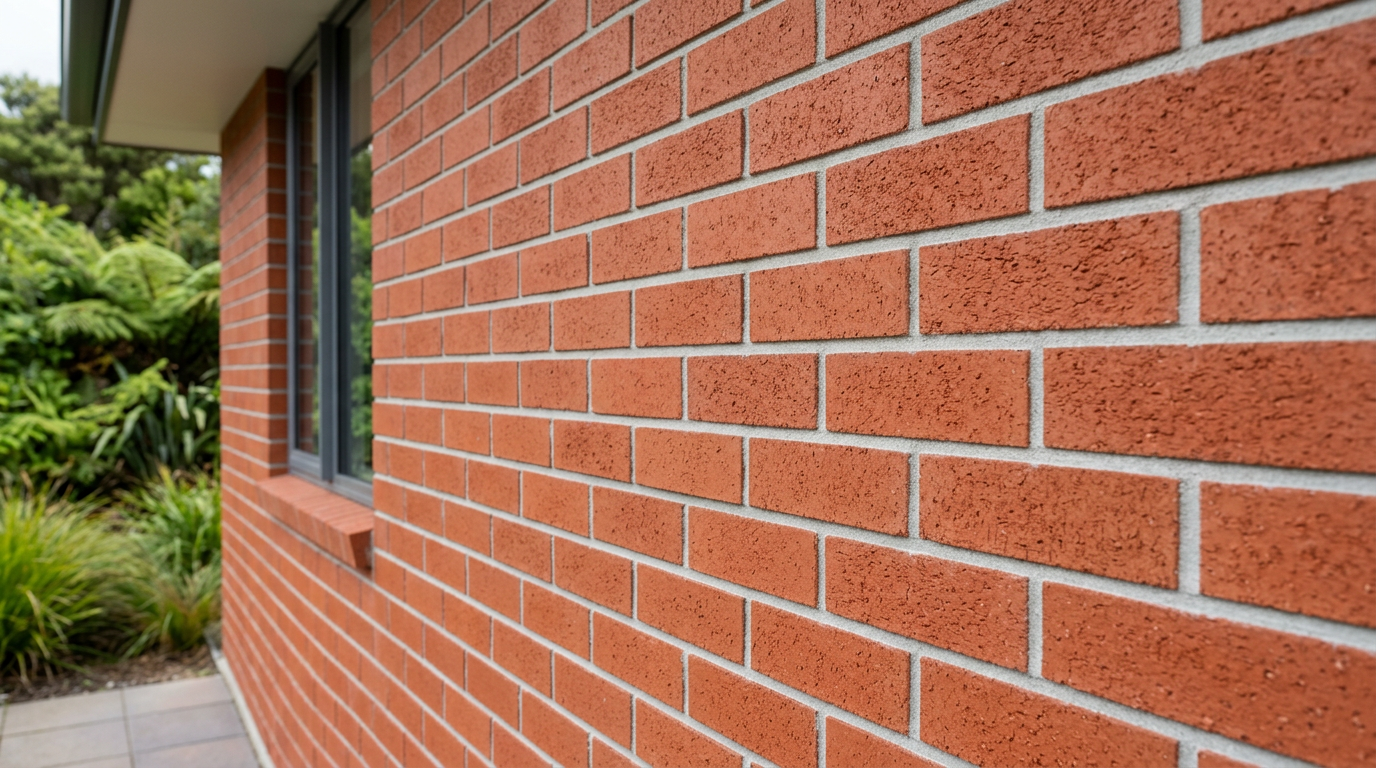
Choosing between clay brick and concrete block is one of the first big decisions you'll face when planning a masonry build or renovation in New Zealand. Both materials have been used successfully in Kiwi construction for generations, but they suit different situations — and picking the wrong one can cost you time, money, and headaches down the track. Whether you're building a new home, adding a retaining wall, or cladding an extension, this guide will help you make a confident, informed choice.
What Is Clay Brick?
Clay brick is made by shaping and kiln-firing natural clay. It's one of the oldest building materials in the world, and in New Zealand it remains a popular choice for house cladding (veneer brick), garden walls, and feature elements. NZ-made clay bricks are produced to meet Standards NZ specifications, and their warm, natural tones are a familiar sight in suburbs across Auckland, Wellington, and Christchurch.
Clay bricks are typically solid or have small perforations, and they're laid in mortar by a qualified bricklayer. Because the colour is fired right through the material, clay bricks are highly resistant to fading — what you see on day one is essentially what you'll see in 50 years.
What Is Concrete Block?
Concrete block (also called concrete masonry unit or CMU) is made from Portland cement, aggregate, and water, cast into moulds and cured. In New Zealand, concrete blocks are widely used for structural walls, retaining walls, boundary fences, and commercial construction. They come in a range of sizes — the standard 390 × 190 × 190 mm hollow block is the workhorse of the industry — and can be filled with concrete and reinforcing steel for added strength.
Concrete blocks are faster to lay than clay bricks (fewer units per square metre), and their structural versatility makes them a go-to for engineers and builders working to the NZ Building Code. BRANZ research confirms concrete masonry performs well in NZ's seismic environment when correctly reinforced.
Head-to-Head Comparison
| Criteria | Clay Brick | Concrete Block |
|---|---|---|
| Durability | Excellent — 100+ years with minimal maintenance | Very good — 50–100+ years; surface may need sealing |
| Aesthetics | Warm, natural tones; colour is permanent | Utilitarian by default; can be rendered, painted, or face-finished |
| Thermal mass | Good thermal mass; moderate insulation | High thermal mass; hollow cores can be insulated |
| Structural use | Mainly veneer/cladding in NZ; limited structural | Excellent structural and retaining wall applications |
| Seismic performance | Good as veneer tied to frame | Excellent when reinforced per NZS 4230 |
| Moisture resistance | Naturally low water absorption; breathes well | Hollow blocks can absorb moisture; sealing recommended |
| Maintenance | Very low — occasional repointing after decades | Low–moderate; may need sealing or repainting if rendered |
| Approx. cost (guide only) | Higher material and labour cost per m² | Generally lower material cost; faster to lay |
| DIY suitability | Low — skilled trade required for good results | Low–moderate — small garden walls possible for capable DIYers |
| NZ availability | Good; several NZ and imported ranges | Excellent; widely stocked at PlaceMakers and Mitre 10 |
Thermal Performance and NZ Climate
Both materials offer thermal mass — they absorb heat during the day and release it at night, helping to stabilise indoor temperatures. This is a genuine advantage in NZ's variable climate, particularly in Canterbury and Central Otago where temperature swings are large.
However, thermal mass alone doesn't equal insulation. Under the NZ Building Code (Clause H1 Energy Efficiency), your wall assembly must meet minimum R-value requirements. Concrete block walls with insulated cores or an insulated cavity can meet these requirements efficiently. Clay brick veneer walls rely on the cavity and internal lining for insulation. Talk to your designer or a Licensed Building Practitioner to ensure your wall system is compliant.
In coastal areas — think the Coromandel, Marlborough Sounds, or anywhere within a few kilometres of the sea — salt air corrosion is a real concern for metal ties and reinforcing. Both brick and block can perform well in these zones, but detailing and material selection (stainless steel ties, appropriate mortar mix) become critical.
Seismic Considerations
New Zealand sits on the Pacific Ring of Fire, so earthquake performance is non-negotiable. Unreinforced masonry (URM) — old-style solid brick or block walls without steel reinforcement — is now well understood to be a serious seismic risk, and many councils are actively managing earthquake-prone buildings.
Modern clay brick in NZ is almost always used as a veneer tied to a timber or steel frame, which performs well in earthquakes because the frame carries the structural load. Concrete block used structurally must be reinforced in accordance with NZS 4230 (Design of Reinforced Concrete Masonry Structures). Always engage a structural engineer and a qualified bricklayer for any structural masonry work.
Cost Considerations
As a rough guide only, clay brick typically costs more per square metre than concrete block — both in materials and labour — because bricks are smaller units requiring more individual placements and more skilled finishing. That said, a well-laid clay brick wall needs almost no maintenance for decades, so the lifetime cost picture is more balanced than the upfront price suggests.
Concrete block is generally faster and cheaper to lay for large areas like retaining walls or boundary fences. If you plan to render or paint the block anyway, the base material cost is less important than the finished result.
Get at least two or three quotes from qualified bricklayers before committing. Prices vary by region, complexity, and current demand for trades.
Our Recommendation
Here's practical guidance for the most common NZ scenarios:
- New home cladding: Clay brick veneer is hard to beat for kerb appeal, longevity, and low maintenance. It suits most NZ residential styles and holds its value well. Budget accordingly and hire an experienced bricklayer.
- Retaining walls: Concrete block (reinforced) is the clear winner. It's engineered for the job, cost-effective, and widely used. Note that retaining walls over 1.5 m typically require a building consent — check with your local council.
- Boundary and garden walls: Either can work. Clay brick looks beautiful but costs more. Concrete block is practical and can be rendered to suit your aesthetic.
- Commercial or multi-unit construction: Reinforced concrete block is usually the structural choice, often specified by engineers for its strength and speed of construction.
- Earthquake-prone areas: Both can be used safely with modern detailing. Avoid any unreinforced masonry for structural elements.
Whatever you choose, bricklaying is a skilled trade. Poor workmanship — uneven courses, weak mortar joints, inadequate ties — can compromise both the look and the structural integrity of your wall. Find a qualified, experienced bricklayer through tradedirectory.co.nz to ensure the job is done right.


 Licensed Building Practitioner (LBP)





