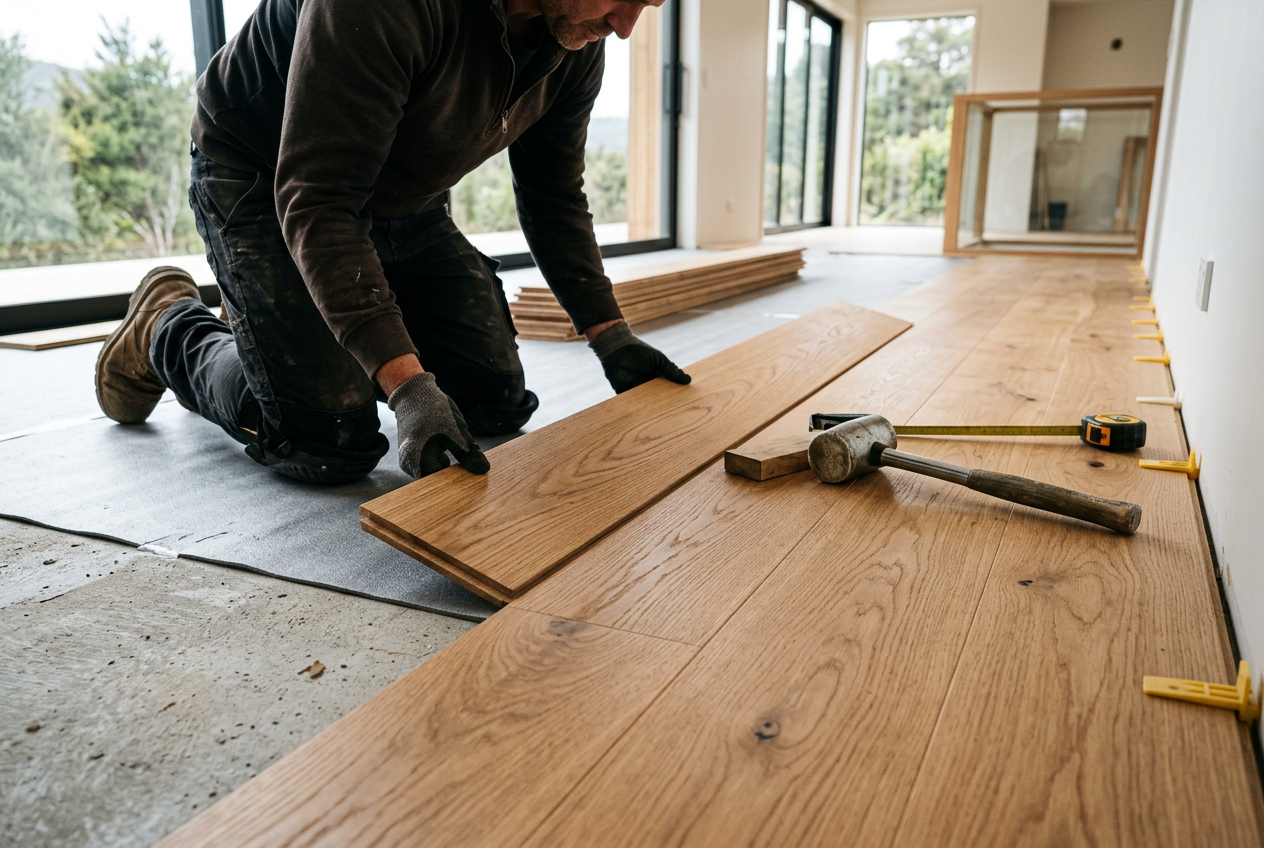
Choosing between carpet and hard flooring is one of the most impactful decisions you'll make when renovating or building a home. Get it right and your floors will look great, last for years, and suit your lifestyle. Get it wrong and you'll be replacing them sooner than you'd like — at real cost. This guide breaks down the choice room by room, with honest trade-offs so you can decide with confidence.
What Counts as Hard Flooring?
Hard flooring covers a wide range of products: solid timber, engineered timber, laminate, luxury vinyl plank (LVP), ceramic or porcelain tile, and polished concrete. Each has its own personality, but they share key traits — they're rigid, easy to wipe clean, and generally more moisture-resistant than carpet.
Carpet comes in wool, wool-blend, nylon, polyester, and polypropylene options. New Zealand-made wool carpet is world-class — warm, naturally resilient, and well-suited to our climate. Brands like Cavalier Bremworth and Bremworth are household names here for good reason.
Head-to-Head Comparison
| Criteria | Carpet | Hard Flooring |
|---|---|---|
| Warmth & comfort underfoot | Excellent — soft and insulating | Poor to moderate (tiles coldest, timber warmer) |
| Acoustic performance | Excellent — absorbs sound well | Poor — can amplify footstep noise |
| Moisture resistance | Poor — prone to mould and staining | Good to excellent (especially tile and LVP) |
| Durability (high traffic) | Moderate — flattens and wears over time | Good to excellent depending on product |
| Ease of cleaning | Moderate — vacuuming, periodic steam clean | Easy — sweep, mop, done |
| Allergy considerations | Can trap dust and allergens | Better for allergy sufferers |
| DIY friendliness | Difficult — stretching requires a knee kicker and experience | Moderate — LVP and laminate are DIY-friendly |
| Approximate cost (supply & install) | $40–$120/m² as a rough guide | $60–$250+/m² depending on product |
| NZ climate suitability | Great for cooler South Island climates | LVP and tile suit humid/coastal areas well |
Prices are a rough guide only and vary by region, product, and installer. Get quotes from local flooring installers on tradedirectory.co.nz for accurate pricing.
Room-by-Room Recommendations
Living Room
The living room is where comfort and aesthetics matter most. Carpet wins on cosiness — it's warm underfoot, reduces echo, and creates an inviting feel. A quality wool or wool-blend carpet handles moderate foot traffic well. However, if you have pets, young children, or entertain frequently, hard flooring (particularly engineered timber or LVP) is easier to keep clean and more forgiving of spills. A large area rug can give you the best of both worlds.
Verdict: Either works well — carpet for warmth and comfort, hard flooring for easy maintenance.
Bedrooms
Bedrooms are low-traffic, low-moisture environments — the ideal setting for carpet. It's warm when you step out of bed on a cold Dunedin morning, quiet, and comfortable. Wool carpet in particular is naturally breathable and temperature-regulating. BRANZ research supports the role of soft furnishings and flooring in thermal comfort, which matters in New Zealand's cooler climates.
Verdict: Carpet is the clear winner for most bedrooms.
Kitchen
The kitchen is a hard flooring zone — full stop. Spills, grease, dropped food, and heavy foot traffic make carpet completely impractical. Porcelain tile is the gold standard: durable, waterproof, and easy to clean. LVP is a popular and more budget-friendly alternative that's also fully waterproof and comfortable underfoot. Avoid laminate in kitchens as it can swell with moisture over time.
Verdict: Hard flooring only. Tile or LVP are the top picks.
Bathroom and Laundry
Under the NZ Building Code clause E3 (Internal Moisture), wet areas must be waterproofed and use appropriate materials. Carpet in bathrooms is a moisture and mould risk — avoid it entirely. Porcelain or ceramic tile is the standard choice, and for good reason. If you want something softer, some LVP products are rated for wet areas — check the manufacturer's specifications carefully.
Verdict: Hard flooring only. Tile is the safest and most durable option.
Hallways and Stairs
Hallways and stairs cop serious wear. Carpet on stairs is safer (better grip, quieter) and is still a popular choice — but it needs to be a dense, durable pile that won't flatten quickly. Hard flooring on stairs looks sharp but requires non-slip nosings or strips to meet safety requirements. Hallways in hard flooring can be noisy and show scratches over time.
Verdict: Carpet is often the safer and more practical choice for stairs; either works in hallways.
Rumpus Rooms and Playrooms
Kids are tough on floors. LVP is arguably the best all-rounder here — it's waterproof, durable, comfortable enough for playing on, and easy to clean. Carpet is cosy for play but can be hard to rescue after paint, juice, or craft glue incidents.
Verdict: LVP or a hardwearing carpet with a good stain-resistance rating.
Home Office
Comfort and acoustics matter in a home office. Carpet reduces echo and is pleasant for long hours at a desk. However, if you use a wheeled office chair, hard flooring (or a chair mat over carpet) is more practical.
Verdict: Carpet with a chair mat, or hard flooring — personal preference.
Cost Considerations
Flooring costs vary significantly by product, region, and installer. As a rough guide, carpet (supply and install) typically ranges from around $40 to $120 per square metre, while hard flooring can range from around $60 for basic laminate up to $250 or more per square metre for solid timber or large-format tile. Don't forget to budget for underlay (critical for carpet comfort and longevity), subfloor preparation, and scotia or trims. You can find flooring supplies at Bunnings, Mitre 10, and PlaceMakers, though specialist flooring retailers often carry a wider range.
DIY or Hire a Pro?
LVP and laminate floating floors are genuinely DIY-friendly for a competent homeowner with patience and the right tools. Carpet installation, however, is harder than it looks — achieving a smooth, wrinkle-free result requires a knee kicker, power stretcher, and experience. Poorly laid carpet bubbles and wears unevenly. Tiling is also a skilled job; poor adhesive coverage or grout work leads to cracked or hollow tiles. For best results, hire a qualified flooring installer — you can find local professionals on tradedirectory.co.nz.
Our Recommendation
For most NZ homes, a mixed approach works best: carpet in bedrooms and living areas for warmth and comfort, hard flooring (tile or LVP) in kitchens, bathrooms, and laundries for practicality. If you have allergies, pets, or young children, lean toward hard flooring in high-traffic areas. If you're in a colder part of New Zealand — think Canterbury, Otago, or Southland — don't underestimate the comfort value of good wool carpet paired with quality underlay. If you're renting out a property, check the Healthy Homes Standards for any relevant flooring requirements.
When in doubt, get a few quotes and ask your installer what they'd put in their own home — that's usually the most honest answer you'll get.







