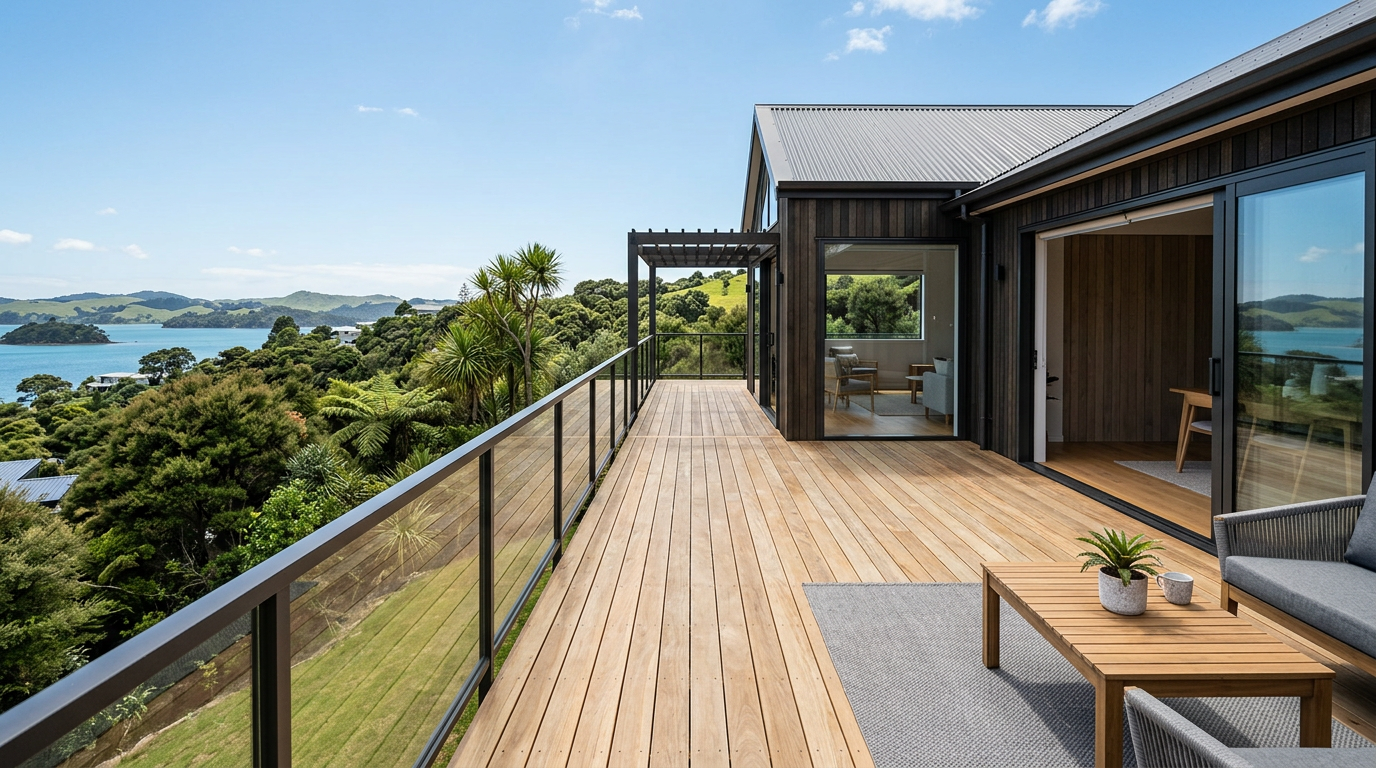
Using untreated timber for above-ground deck framing is generally not permitted under the New Zealand Building Code. Even if your deck sits well clear of the ground, the framing is still exposed to moisture, UV, and biological attack — and the Code sets clear minimum treatment requirements to ensure your structure remains durable and safe for its intended life.
What the NZ Building Code Says
The Building Code clause B2 (Durability) requires that structural elements not easily accessible for inspection or replacement must last at least 50 years, while elements that are accessible and replaceable must last at least 15 years. Deck framing typically falls into the 15-year category at minimum, but this still rules out untreated timber in most exposed situations.
The relevant standard for timber treatment in New Zealand is NZS 3602, which specifies the minimum Hazard Class (H-class) required depending on the timber's end use and exposure. For deck framing, you'll generally need timber treated to at least H3.2, which provides protection against weathering, decay, and insect attack in above-ground, exposed situations.
For any timber in contact with or close to the ground, H4 treatment is required. Always check with your local council and refer to MBIE Building Performance for the most current guidance.
Understanding Hazard Classes for Decks
Here's a quick guide to the H-classes most relevant to deck construction:
| Hazard Class | Typical Use | Example Location |
|---|---|---|
| H3.1 | Above ground, sheltered | Protected framing under a covered deck |
| H3.2 | Above ground, exposed | Standard deck framing, joists, bearers |
| H4 | Ground contact | Posts set in or near soil |
| H5 | In-ground, high decay risk | Posts in wet or coastal soils |
For most NZ residential decks, H3.2 is the minimum for joists and bearers, and H4 or H5 for any posts going into the ground.
Why Untreated Timber Fails Outdoors
New Zealand's climate — particularly in wetter regions like the West Coast, Northland, and much of the South Island — creates ideal conditions for timber decay and fungal attack. Even in drier areas like Canterbury or Hawke's Bay, seasonal rain and dew cycles mean exposed framing is regularly wetted and dried, accelerating deterioration.
Untreated timber used in deck framing can:
- Rot within a few years, especially at joints and end-grain cuts
- Become structurally compromised without visible warning signs
- Attract borer and other insects
- Lead to costly remediation or full deck replacement
- Create safety hazards if structural members fail underfoot
BRANZ research consistently highlights moisture management and appropriate timber treatment as critical factors in the longevity of NZ outdoor structures.
Are There Any Exceptions?
Some naturally durable timber species — such as kwila (merbau), tōtara, or heart rimu — have inherent decay resistance and may be acceptable in certain above-ground applications without chemical treatment. However:
- You must be able to verify the species and heartwood content
- Acceptance still depends on your local council and building consent conditions
- Naturally durable timbers are increasingly expensive and harder to source
- End-grain cuts and joints still need protection
Do not assume a timber is naturally durable without proper documentation. Always confirm with your council before proceeding.
Does Your Deck Need a Building Consent?
Many decks in NZ require a building consent, though some low-level decks may qualify as Schedule 1 exempt work under the Building Act 2004. As a general guide, decks that meet certain height and size thresholds and are not attached to the primary structure may be exempt — check with your local council for the specific criteria that apply to your situation — but this varies by council and site conditions.
Always check with your local council before starting work. Building without consent when one is required can result in fines, difficulty selling your property, and orders to demolish the structure. You can find more information at MBIE Building Performance.
If consent is required, your plans will need to demonstrate compliance with the Building Code, including correct timber treatment specifications.
Choosing the Right Treated Timber
Treated pine (radiata pine) is the most common and cost-effective option for NZ deck framing. Look for timber stamped with its H-class rating — reputable suppliers will clearly mark this. You can source treated framing timber from suppliers such as Bunnings, Mitre 10, or PlaceMakers.
Key tips when working with treated timber:
- Seal all cut ends with an appropriate end-grain preservative — cutting exposes untreated wood
- Use stainless steel or hot-dipped galvanised fixings to avoid corrosion reactions with treatment chemicals
- Allow timber to acclimatise before installation where possible
- Follow the timber supplier's handling and safety guidelines, as some treatments contain chemicals requiring care during cutting
Refer to WorkSafe NZ for safe handling guidance when cutting treated timber, particularly in enclosed spaces.
When to Call a Professional
While some homeowners are comfortable building their own decks, there are good reasons to engage a qualified Licensed Building Practitioner (LBP):
- If your deck requires a building consent, restricted building work must be carried out or supervised by an LBP
- Complex sites, multi-level decks, or decks attached to the house add structural considerations best handled by a professional
- An experienced deck builder will specify the correct timber treatments, fixings, and drainage details from the outset — saving you money and headaches down the track
You can verify a tradesperson's LBP licence at Licensed Building Practitioners, and find qualified local deck builders on tradedirectory.co.nz.
Sources & Further Reading
- MBIE Building Performance – Building Code and durability requirements
- BRANZ – Research and guidance on timber and outdoor structures
- WorkSafe NZ – Safe handling of treated timber
- Licensed Building Practitioners – Find or verify an LBP
- Bunnings – Treated timber and deck framing supplies
- PlaceMakers – Structural timber and building supplies




 Licensed Building Practitioner (LBP)





