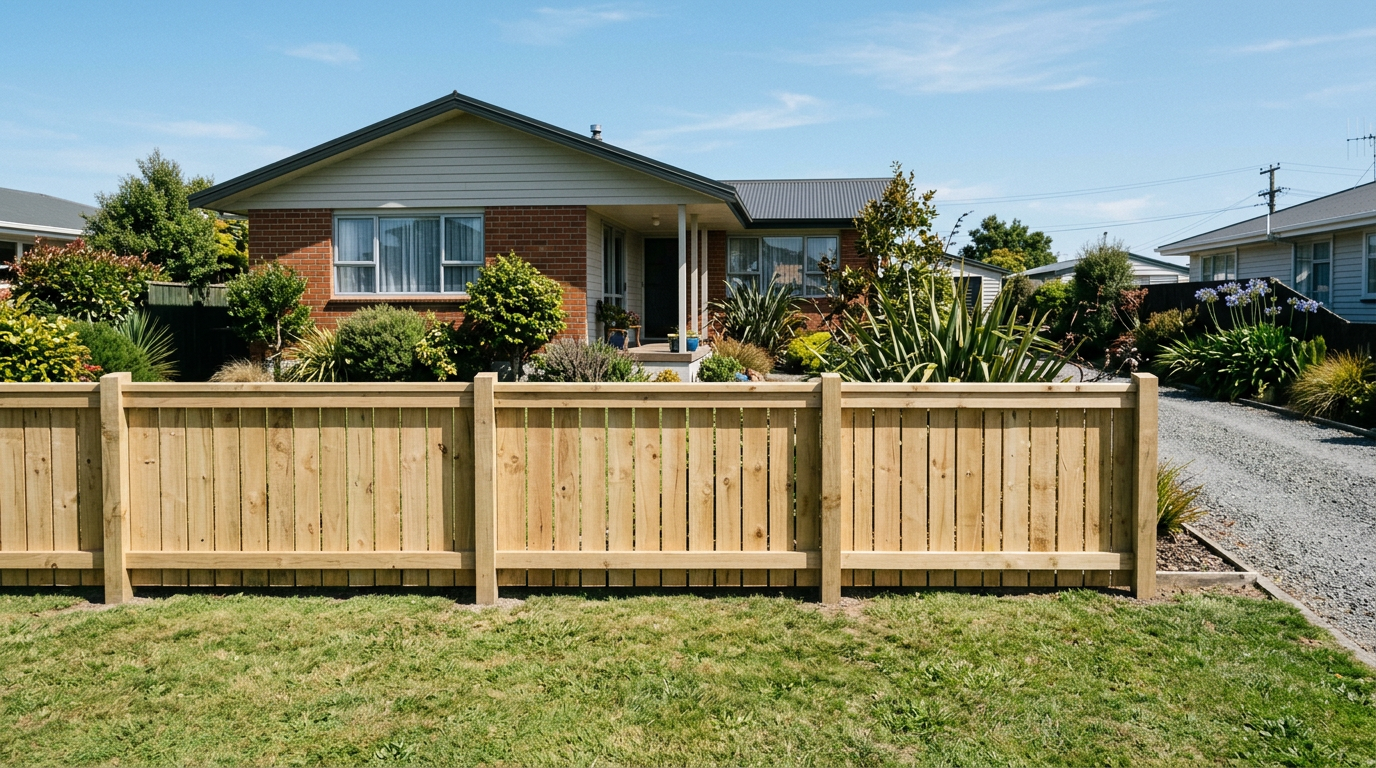
Yes — untreated macrocarpa is a perfectly legitimate and widely used timber for garden fencing in New Zealand. Its naturally occurring oils give it good resistance to rot and insect attack, making it one of the few species you can confidently use without chemical treatment in outdoor applications. That said, there are some important things to understand before you head to the sawmill.
Why Macrocarpa Works Well for Fencing
Macrocarpa (Cupressus macrocarpa), also known as Monterey cypress, has been grown extensively across New Zealand for over a century — particularly on farms as shelter belts. This widespread availability makes it a cost-effective and sustainable local timber choice.
Its key advantages for fencing include:
- Natural durability: Macrocarpa heartwood is rated as Durability Class 2–3 under NZS 3602, meaning it has moderate to good natural resistance to decay when used in above-ground applications.
- No chemical treatment needed: Unlike radiata pine, which requires H3.2 or H4 treatment for ground contact, macrocarpa heartwood can be used untreated in many above-ground fencing situations.
- Workability: It cuts, nails, and screws reasonably well, and takes stains and oils nicely if you choose to finish it.
- Aesthetic appeal: The warm, golden-brown colour and attractive grain make it popular for feature fences, garden borders, and rural post-and-rail fencing.
Understanding Heartwood vs Sapwood
This is the most critical point when using untreated macrocarpa: only the heartwood is naturally durable. The pale outer sapwood has little natural resistance to rot and should not be relied upon in exposed conditions.
When sourcing macrocarpa from a local sawmill or supplier, ask specifically about heartwood content. Well-milled macrocarpa rails and boards from mature trees will have a high heartwood proportion, but cheaper or younger-tree timber may contain significant sapwood. Inspect your timber before buying — the heartwood is noticeably darker than the creamy sapwood.
Ground Contact: Proceed with Caution
For fence posts set in the ground, untreated macrocarpa is generally not recommended. Ground contact dramatically accelerates decay, even in naturally durable timbers. For posts, you have a few options:
- Use H4-treated timber posts (such as treated radiata pine) and pair them with untreated macrocarpa rails and boards above ground.
- Use concrete spurs or steel post shoes to keep timber posts out of direct ground contact.
- If you do use macrocarpa posts in the ground, be aware they will have a shorter service life than treated alternatives — this is a trade-off some rural and lifestyle block owners accept.
Always check with your local timber supplier about the specific durability rating of the macrocarpa stock they're selling, as quality varies between sources.
NZ Building Code and Consent Considerations
Most residential garden fences do not require a building consent under Schedule 1 of the Building Act 2004, provided they meet certain height limits (generally up to 2.5 m for fences not on a boundary with a public space). However, rules vary by council and site, so always confirm with your local council before starting work.
Where a consent is required, the timber species and its durability class must comply with NZS 3602: Timber and Wood-Based Products for Use in Building. Macrocarpa heartwood is recognised within this standard, but your building consent application may need to specify the timber species and durability class. BRANZ is a useful resource for understanding timber durability requirements in NZ construction.
For further guidance on the Building Code and consent exemptions, visit MBIE Building Performance.
Finishing and Maintenance
Untreated macrocarpa will weather naturally to a silvery-grey if left uncoated — many people love this look. If you prefer to maintain the warm timber colour, you can apply a penetrating oil or timber stain. Products from Resene or Wattyl include exterior timber oils and stains suitable for macrocarpa.
Some practical maintenance tips:
- Allow freshly milled macrocarpa to dry and season before applying any finish, as it can be quite resinous when green.
- Reapply oil or stain every 2–4 years depending on exposure and product used.
- Check fixings periodically — stainless steel or hot-dipped galvanised nails and screws are recommended to avoid rust staining on the timber.
- Inspect the base of any posts annually for early signs of decay.
Sourcing Macrocarpa in NZ
Macrocarpa is widely available from rural sawmills, particularly in the South Island and lower North Island. It's less commonly stocked at large hardware chains, so you may need to seek out a local or regional timber merchant. PlaceMakers and Mitre 10 can sometimes source it, but a specialist timber yard or sawmill will generally offer better quality and value.
When to Call a Professional
Fencing is generally a DIY-friendly project, but there are situations where a qualified fencer adds real value:
- Boundary fences involving neighbour agreements or disputes (the Fencing Act 1978 governs cost-sharing obligations).
- Retaining walls combined with fencing, which may require engineering input and building consent.
- Large-scale or complex installations where post alignment, bracing, and structural integrity are critical.
- If you're unsure about consent requirements or timber specifications.
You can find experienced local fencing contractors on tradedirectory.co.nz who are familiar with macrocarpa and other NZ timber species.





