You can use small cans of expanding spray foam yourself for sealing gaps and penetrations, but filling entire wall cavities with spray foam is a different matter — it carries real risks, may affect your building's compliance, and is best left to a professional installer in most cases.
What Type of Spray Foam Are We Talking About?
There are two main types of spray foam insulation:
- One-component foam (DIY cans): The kind you buy off the shelf at Bunnings or Mitre 10. These are great for sealing small gaps, around pipes, window frames, and penetrations — but they're not designed or rated for filling large wall cavities.
- Two-component polyurethane spray foam (professional systems): This is the high-performance product used by insulation installers. It requires specialised equipment, protective gear, and training to apply safely and correctly.
For whole-wall cavity filling, you're almost certainly looking at the two-component system — and that's where things get more complex.
NZ Building Code Considerations
Any insulation work in your home needs to comply with the NZ Building Code, particularly Clause H1 (Energy Efficiency), which sets minimum thermal performance requirements. Spray foam can meet H1 requirements when correctly specified and installed, but the product must be appropriate for the application and installed to the manufacturer's specifications.
If your work requires a building consent, you'll need to demonstrate compliance. Many insulation jobs in existing homes fall under Schedule 1 exemptions (meaning no consent is required), but this depends on the scope of work and your specific situation — always confirm with your local council before starting.
Also consider Clause E2 (External Moisture) and E3 (Internal Moisture). Spray foam, if incorrectly applied, can trap moisture inside wall cavities, leading to rot and mould — a serious issue in NZ's varied climate, particularly in wetter regions like the West Coast, Northland, or Wellington.
Health and Safety: This Is Serious
Two-component spray foam contains isocyanates, which are hazardous chemicals. Exposure without proper respiratory protection can cause asthma and other serious respiratory conditions — sometimes permanently. WorkSafe NZ classifies isocyanates as a significant occupational health hazard.
Even DIY one-component foam requires gloves and eye protection. For two-component systems, you need:
- A properly fitted respirator with the correct cartridges
- Full protective clothing
- Adequate ventilation
- Training in safe handling and application
This is not a job to improvise.
Practical Challenges of DIY Wall Cavity Foam
Filling closed wall cavities (as opposed to open framing during a renovation) presents real practical challenges:
- Access: You'd need to drill holes in your wall lining or cladding to inject foam — and then make good afterwards.
- Overfilling risk: Expanding foam can exert significant pressure inside a cavity. Overfilling can bow or crack wall linings, and even damage framing.
- Uneven coverage: Without professional equipment and technique, it's difficult to ensure consistent fill throughout the cavity, leaving cold spots.
- Irreversibility: Once foam is in, it's extremely difficult to remove. If something goes wrong, remediation is costly.
BRANZ — New Zealand's building research authority — has published guidance on insulation retrofits, and generally recommends professional installation for cavity-fill applications.
What a Homeowner Can Legally and Safely Do
As a homeowner, you can generally:
- Use DIY expanding foam cans to seal small gaps, cracks, and penetrations (around pipes, cables, window frames)
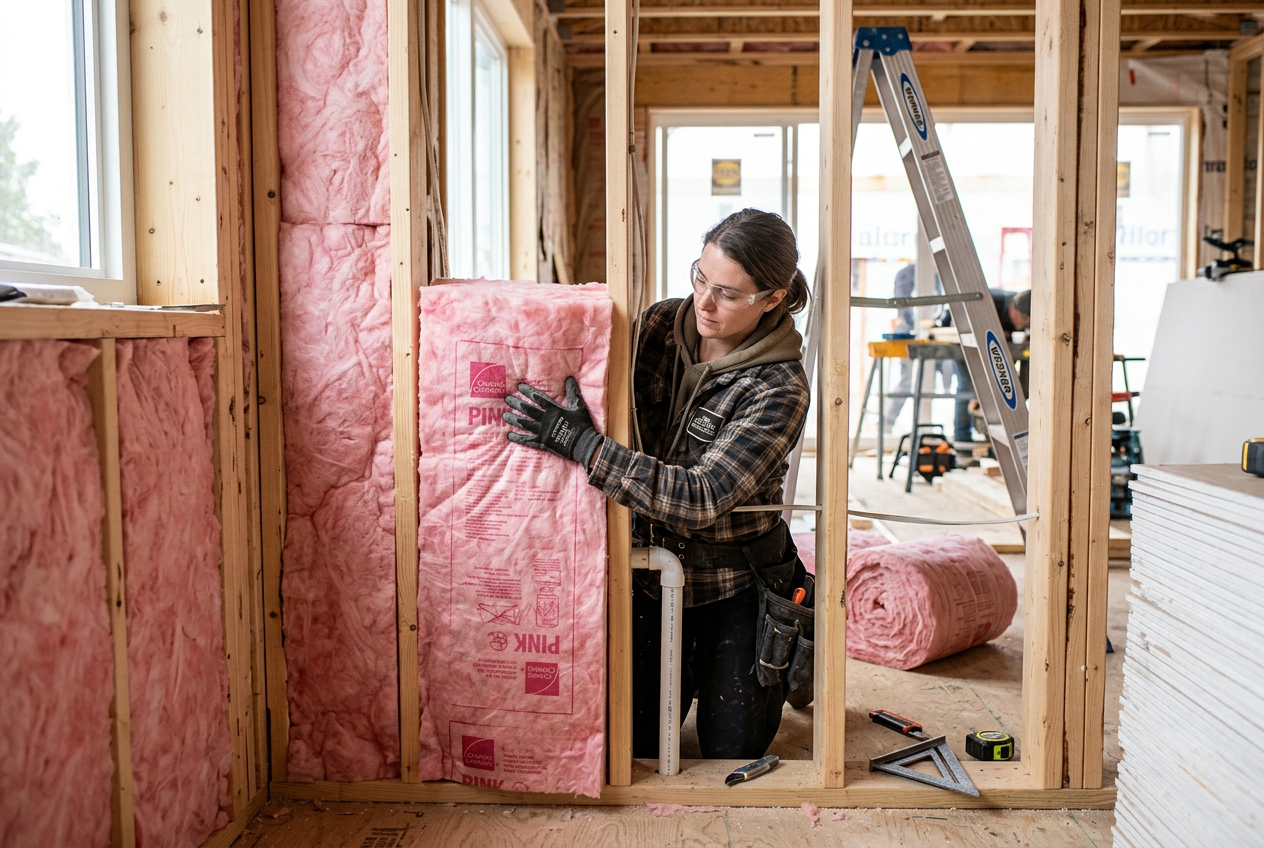
- Install bulk insulation (such as polyester or glasswool batts) in accessible open cavities during a renovation, provided it meets H1 requirements
- Improve ceiling insulation in accessible roof spaces
For whole-wall cavity spray foam injection, it's strongly advisable to engage a qualified insulation installer.
Healthy Homes Standards
If you're a landlord, note that the Healthy Homes Standards require rental properties to meet specific insulation requirements. Work must be done to an acceptable standard — using the right product, correctly installed. Poorly installed DIY foam that doesn't meet the standard won't count toward compliance.
When to Call a Professional
You should hire a qualified insulation installer if you are:
- Filling closed wall cavities in an existing home
- Unsure whether your project needs a building consent
- Working in a home with older cladding systems (e.g., monolithic cladding) where moisture management is critical
- A landlord needing to meet Healthy Homes compliance
- Dealing with a large area or complex building geometry
A professional will assess your wall system, choose the right product, apply it safely with proper equipment, and provide documentation for compliance purposes. You can find qualified local insulation installers on tradedirectory.co.nz.