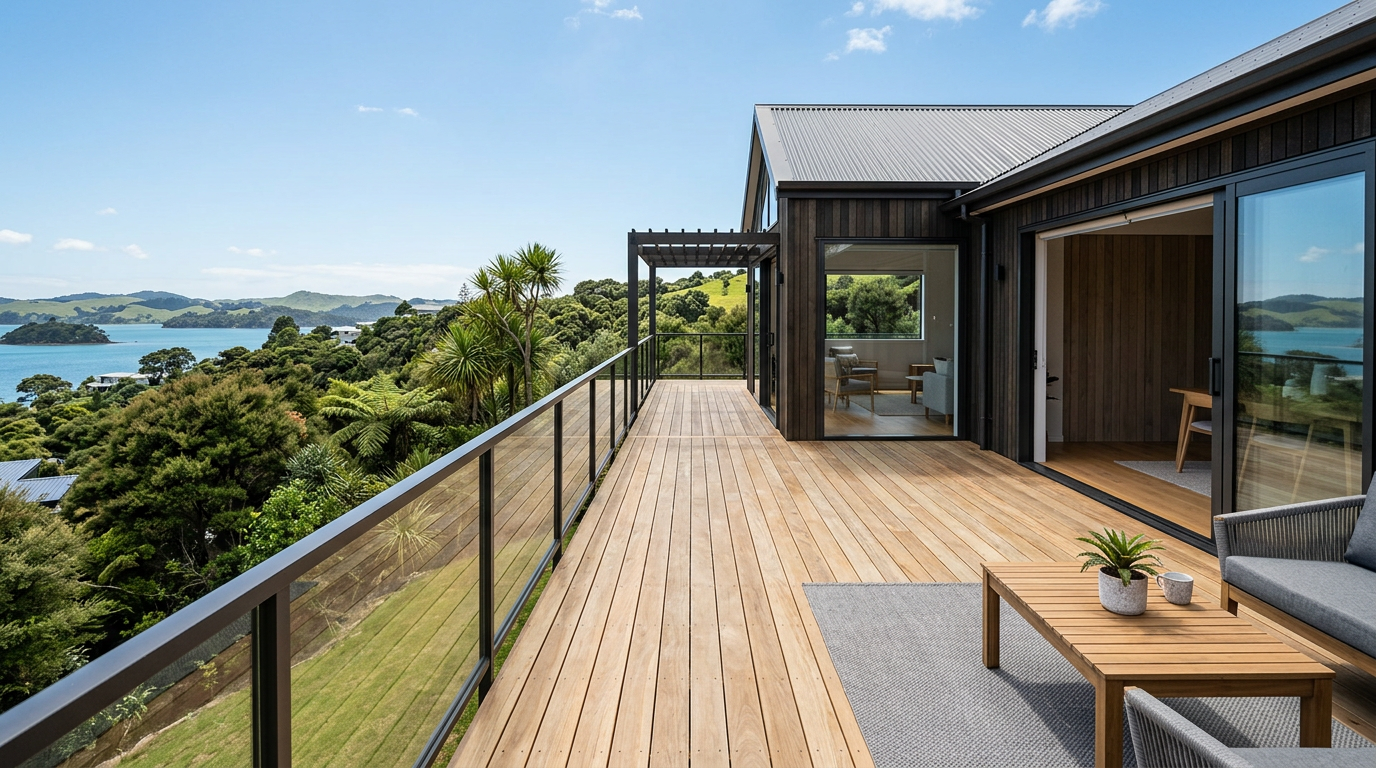
Using roofing screws to fix decking boards is not recommended and can lead to fastener failure, board movement, and even structural problems over time. The good news is that fixing decking boards is generally something a capable homeowner can tackle — provided you use the right fasteners and follow NZ building requirements.
Why Roofing Screws Aren't Suitable for Decking
Roofing screws (sometimes called tek screws or self-drilling roofing fasteners) are designed to fix metal roofing sheets to purlins. They have a wide, neoprene-sealed head to keep water out of a roof penetration — not to hold timber decking boards flat and secure under foot traffic and weather cycling.
Here's why they fall short for decking:
- Wrong thread profile: Roofing screws have a coarse thread optimised for thin metal, not for gripping through thick hardwood or treated pine decking into a timber joist.
- Inadequate shank strength: Decking boards expand and contract with moisture and temperature. Roofing screws can shear or work loose under this repeated lateral stress.
- Corrosion risk: Many roofing screws are only lightly coated for roofing environments, not for prolonged ground-level moisture exposure around decking.
- Head design: The wide rubber-washered head sits proud of the board surface, creating a trip hazard and a water trap rather than a flush, clean finish.
What Fasteners Should You Use for Decking?
For timber decking in New Zealand, you should use fasteners that comply with NZS 3604:2011 (Timber-framed buildings) and the requirements of your decking timber supplier or manufacturer.
Recommended decking fasteners
- Stainless steel decking screws (Grade 304 or 316): The gold standard, especially near the coast or in high-moisture areas. Grade 316 is preferred within 500 m of the sea.
- Hot-dipped galvanised (HDG) nails or screws: Acceptable in many inland situations, but check your decking timber supplier's recommendations — some treated timbers require stainless steel to avoid corrosion reactions.
- Proprietary hidden fastener systems: Brands like Camo or similar clip systems let you fix boards from the side, leaving a clean, screw-free surface.
| Fastener Type | Coastal Use | Inland Use | Finish |
|---|---|---|---|
| SS 316 screws | ✅ Recommended | ✅ Fine | Flush or countersunk |
| SS 304 screws | ⚠️ Check with supplier | ✅ Good | Flush or countersunk |
| HDG screws/nails | ❌ Not ideal | ✅ Acceptable | Flush |
| Roofing screws | ❌ No | ❌ No | Proud (trip hazard) |
Always check the fastener requirements specified by your decking timber supplier or the treated timber manufacturer's technical data sheet, as some products void warranties if incorrect fasteners are used.
Treated Timber and Fastener Compatibility
Most NZ decking timber is H3.2 or H4 treated pine (hazard levels for above-ground and in-ground contact respectively). Modern preservative treatments — particularly copper-based ones — can accelerate corrosion of standard zinc-plated or lightly galvanised fasteners. This is a well-known issue in the NZ trade.
Always confirm fastener compatibility with your timber supplier or check BRANZ guidance on treated timber and fixings.
Can You Fix Decking Boards Yourself?
Yes — in most cases, fixing decking boards to an already-built deck frame is DIY-friendly work and does not require a building consent or a Licensed Building Practitioner (LBP) to physically do the screwing down. However, there are important caveats:
- The deck structure itself (posts, bearers, joists) must comply with NZS 3604 or be designed by an engineer. If you're building the whole deck from scratch, check whether a building consent is required with your local council. Decks over 1.5 m above ground almost always need consent; lower decks may qualify as Schedule 1 exempt work — but always confirm with your council before starting, as rules vary. See MBIE Building Performance for general guidance.
- Restricted building work (RBW): If the deck is attached to the house and is part of the weathertight envelope, or if it requires a consent, certain work must be carried out or supervised by an LBP.
- Fixing boards to a compliant, consented frame is generally not RBW, but check with your council if you're unsure.
Tips for Fixing Decking Boards Correctly
- Pre-drill and countersink hardwood boards to prevent splitting and get a flush finish.
- Leave a 3–5 mm gap between boards for drainage and airflow — a offcut of decking or a couple of nails make a handy spacer.
- Keep boards consistent: Run a string line to keep your board edges aligned.
- Fix at every joist: Don't skip joists — two fixings per board per joist is standard practice.
- Check for crown: Lay boards bark-side up (growth rings curving down) to minimise cupping as the timber dries.
- Wear safety glasses when drilling, and follow WorkSafe NZ guidelines when using power tools.
When to Call a Professional
Call a qualified deck builder if:
- You're building the frame from scratch and are unsure about spans, bearer sizes, or post footings.
- The deck is more than 1 m above ground — falls from height are a serious risk during construction.
- A building consent is required and you need an LBP to carry out or supervise the work.
- You're unsure about the condition of existing joists or bearers before re-boarding.
- The deck connects to the house structure in a way that could affect weathertightness.
A professional deck builder will know the correct fasteners, timber grades, and fixing patterns for your specific situation. You can find qualified local deck builders on tradedirectory.co.nz.




 Licensed Building Practitioner (LBP)