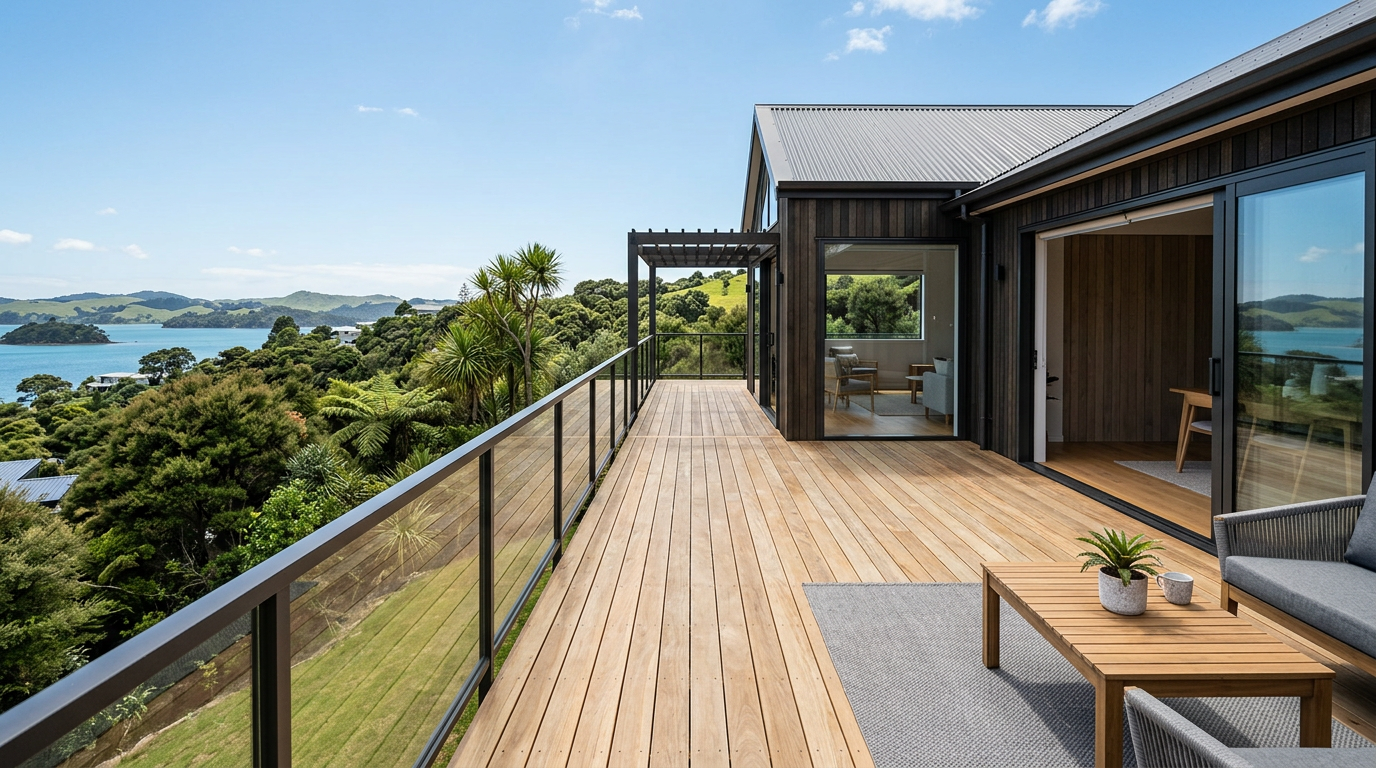
Yes, you can use recycled timber for a backyard deck in New Zealand — and it can be a fantastic, characterful choice. However, there are important rules around structural integrity, timber condition, and compliance with the NZ Building Code that you need to understand before you start. Done right, recycled timber decking is durable, sustainable, and often more affordable than new timber.
Why Recycled Timber Is Worth Considering
Recycled timber — often salvaged from old houses, wharves, factories, or bridges — can be excellent decking material. Older NZ timbers like heart rimu, matai, totara, and kauri were often cut from old-growth trees and are extremely dense and durable. Recycled hardwoods such as kwila (merbau) and jarrah are also commonly available and highly rot-resistant.
Beyond the character and aesthetics, using recycled timber is a sustainable choice that reduces waste and can save money compared to buying new premium decking.
What the NZ Building Code Requires
Most backyard decks require a building consent, particularly if they are:
- More than 1.5 metres above ground level
- Attached to the house
- Over a certain size (thresholds vary by council)
Some low-level, freestanding decks may qualify as Schedule 1 exempt work under the Building Act, but you should always confirm this with your local council before starting. Don't assume your project is exempt.
Whether consented or not, your deck must comply with the NZ Building Code — specifically Clause B1 (Structure) and Clause B2 (Durability). Clause B2 requires structural elements to last at least 50 years (or 15 years for easily replaceable components). This means any recycled timber you use must be in good enough condition to meet these durability expectations.
For structural design, decks are commonly built to NZS 3604:2011 (Timber-framed buildings), which provides span tables and fixing requirements. If your deck falls outside the scope of NZS 3604, you may need a specific engineering design.
How to Assess Recycled Timber for Decking
Not all recycled timber is suitable. Before using any salvaged timber, assess it carefully:
Check the Species and Grade
- Identify the timber species if possible — denser, oilier timbers like totara, kwila, or jarrah are ideal for decking boards.
- Structural framing (joists, bearers, posts) should ideally be No. 1 Framing grade or better.
- Avoid using recycled timber of unknown species or grade for structural members without an engineer's sign-off.
Inspect for Damage and Decay
- Look for rot, borer holes, splits, and excessive warping.
- Probe suspect areas with a screwdriver — soft spots indicate decay.
- Check for old fixings (nails, bolts) that may need to be removed.
- Avoid timber that has been treated with CCA (copper-chrome-arsenic) from old industrial or agricultural uses, as this can pose health risks. If in doubt, don't use it in areas where people will have skin contact.
Consider Moisture Content
- Recycled timber can have variable moisture content. Ideally, decking boards should be reasonably dry before installation to minimise shrinkage and movement.
Hazardous Timber: A Safety Note
Older recycled timber — especially from pre-1990s buildings — may have been treated with arsenic-based preservatives or painted with lead-based paint. Before cutting or sanding any recycled timber, check for these hazards. WorkSafe NZ has guidance on working safely with hazardous materials. If you're unsure, have the timber tested before proceeding.
Structural Framing vs. Decking Boards
It's worth distinguishing between two uses of recycled timber on a deck:
| Component | Recycled Timber Suitability | Key Consideration |
|---|---|---|
| Decking boards (surface) | Generally good if sound | Species, condition, slip resistance |
| Joists and bearers | Possible with care | Must meet structural grade requirements |
| Posts | Possible with care | Must be suitable for in-ground or near-ground use |
| Handrails and balustrades | Generally fine if sound | Must meet B1 structural requirements |
For structural framing, using recycled timber of unknown grade is riskier. A Licensed Building Practitioner (LBP) or structural engineer can assess whether your recycled timber is fit for purpose. Find qualified LBPs at lbp.govt.nz.
Finishing and Maintenance
Recycled timber often benefits from a good clean, sand, and protective finish. Products from Resene, Dulux, or Wattyl offer a range of decking oils, stains, and sealers suited to NZ conditions. A quality finish will extend the life of your deck and protect the timber from UV and moisture — especially important in NZ's varied climate.
Recycled timber may weather and move more unpredictably than new timber, so plan for regular maintenance (cleaning and re-oiling every one to two years depending on exposure).
Where to Source Recycled Timber
Good sources of recycled timber in NZ include:
- Demolition and salvage yards (search locally — many regions have specialist salvage businesses)
- Online marketplaces (Trade Me, Facebook Marketplace)
- Deconstruction projects (with permission from the owner)
Always ask about the timber's origin and any known treatments.
When to Call a Professional
While a competent DIYer can build a low-level deck, there are situations where you should engage a qualified tradesperson:
- Your deck requires a building consent — an LBP must carry out or supervise restricted building work.
- You're unsure whether your recycled timber is structurally adequate.
- The deck is elevated (over 1 metre) or attached to the house.
- You suspect the timber may contain hazardous treatments.
A professional deck builder will know how to assess recycled timber, meet code requirements, and produce a deck that's safe and built to last. You can find experienced, local deck builders on tradedirectory.co.nz.



 Licensed Building Practitioner (LBP)





