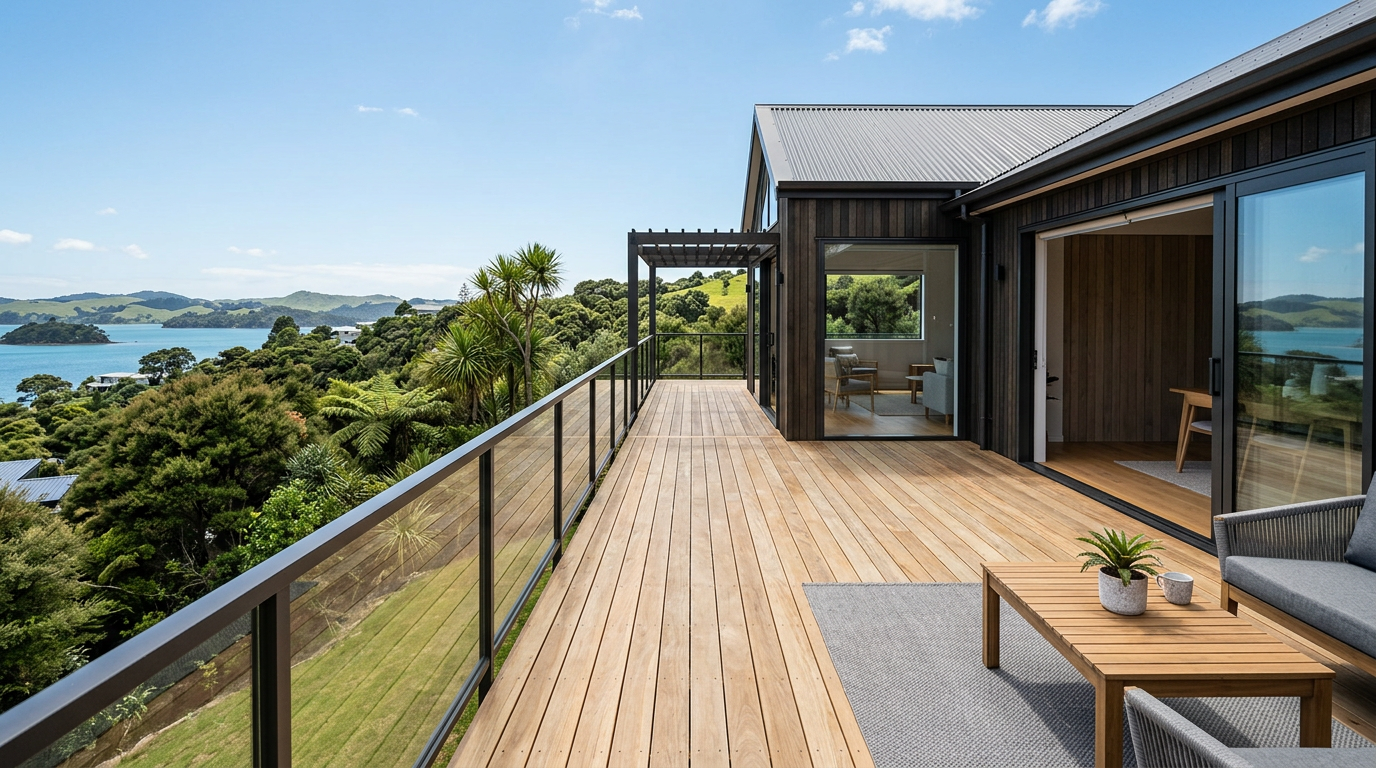
Using galvanised nails on a kwila deck is generally not recommended and can lead to premature fastener failure, unsightly black staining, and a deck that may need costly remediation within just a few years. For kwila (also known as merbau), stainless steel fasteners are the industry-standard choice in New Zealand, and for good reason.
Why Kwila Is Hard on Fasteners
Kwila is a dense, oily hardwood popular on NZ decks for its durability and rich reddish-brown colour. However, those same natural oils and tannins that make it weather-resistant also make it highly corrosive to certain metals. When moisture enters the timber and reacts with the tannins, it creates a mild acidic environment that attacks zinc coatings rapidly.
The result? Galvanised nails can begin to corrode within one to two years, causing:
- Black streaking and staining across your deck boards — very difficult to remove
- Swelling and splitting around nail heads as corrosion products expand
- Loss of holding strength, leading to loose or lifting boards
- Potential structural concerns if framing connections are also affected
What NZ Standards and Best Practice Say
New Zealand's building environment — particularly in coastal and high-humidity areas — demands robust corrosion resistance from all structural fasteners. BRANZ research and guidance consistently highlights the incompatibility of standard galvanised fixings with high-tannin timbers like kwila.
For decks built under NZS 3604:2011 (Timber-framed buildings), fastener specifications must suit both the timber species and the exposure environment. In corrosive or coastal zones, the requirements are even stricter. Always check with your local council and refer to the MBIE Building Performance guidance to confirm what applies to your specific project.
Stainless Steel: The Right Choice for Kwila
Grade 316 stainless steel fasteners are the gold standard for kwila decking in New Zealand. Grade 316 contains molybdenum, giving it superior resistance to the acidic tannin environment and to salt air in coastal locations. Grade 304 stainless is sometimes used inland in low-exposure areas, but 316 is the safer, more future-proof option.
Stainless steel fasteners for decking are widely available at Bunnings, Mitre 10, and PlaceMakers.
What About Hot-Dip Galvanised (HDG)?
Standard electro-galvanised nails offer very little protection in kwila and should be avoided entirely. Hot-dip galvanised (HDG) fasteners have a thicker zinc coating and perform better, but they are still not ideal for kwila — the tannin reaction will eventually compromise them too. Most experienced NZ deck builders will not use HDG in kwila as a long-term solution.
Hidden Fastener Systems
Many NZ homeowners and builders now use hidden fastener clip systems made from stainless steel or engineered polymer. These clip into the groove or side of each board, eliminating visible nail heads altogether. This approach not only avoids the staining issue but also gives a cleaner finish. Ask your deck supplier about clip systems compatible with kwila's hardness and profile.
Pre-Drilling Is Essential
Because kwila is extremely dense, pre-drilling pilot holes is essential regardless of fastener type. Driving nails or screws without pilot holes risks splitting the boards and can shear fastener heads. Use a drill bit slightly smaller than the fastener shank, and countersink screws slightly below the surface.
Coastal and High-Exposure Locations
If your deck is within 500 metres of the coast or in an area with high humidity or industrial exposure, the corrosion risk is amplified significantly. In these situations, grade 316 stainless steel is non-negotiable. WorkSafe NZ and BRANZ both note that corrosion in structural connections is a safety issue, not just a cosmetic one.
Does Your Deck Need a Building Consent?
Many residential decks in NZ fall under Schedule 1 exemptions to the Building Act and do not require a building consent — but this depends on the deck's height, size, and proximity to boundaries or other structures. Always confirm with your local council before starting work. Decks that do require consent must comply fully with the NZ Building Code, including fastener specifications.
You can find general guidance at MBIE Building Performance.
When to Call a Professional
Building a kwila deck involves more than just choosing the right nails. Structural connections to the house, bearer and joist sizing, and subfloor framing all need to be correct. If your deck is elevated, attached to the house, or requires a building consent, it's well worth engaging a qualified deck builder.
A licensed professional will know exactly which fasteners, spacings, and fixing methods suit kwila in your specific location and exposure zone. You can find experienced local deck builders on tradedirectory.co.nz.




 Licensed Building Practitioner (LBP)