See the latest posts from tradesmen around the country
DIY AnswersPlasterer

Can I Use Filler Instead of Stopping Compound on GIB Joins?

Filler and stopping compound are not the same thing. Using the wrong product on GIB joins can lead to cracking, poor finish, and failed paintwork.

Can I Use Filler Instead of Stopping Compound on GIB Joins?

Using standard wall filler instead of a proper stopping compound on GIB plasterboard joins is a common DIY mistake — and one that often shows up months later as cracking, shadowing, or paint failure. The short answer is: no, you should use a purpose-made stopping compound for GIB joins, and here's why.

What Is the Difference Between Filler and Stopping Compound?

Wall filler (sometimes called Polyfilla or a similar brand) is designed for small, localised repairs — filling nail holes, minor dents, or hairline cracks in already-finished surfaces. It sets hard and fast, shrinks as it dries, and is not designed to flex or bond across a joint between two sheets.

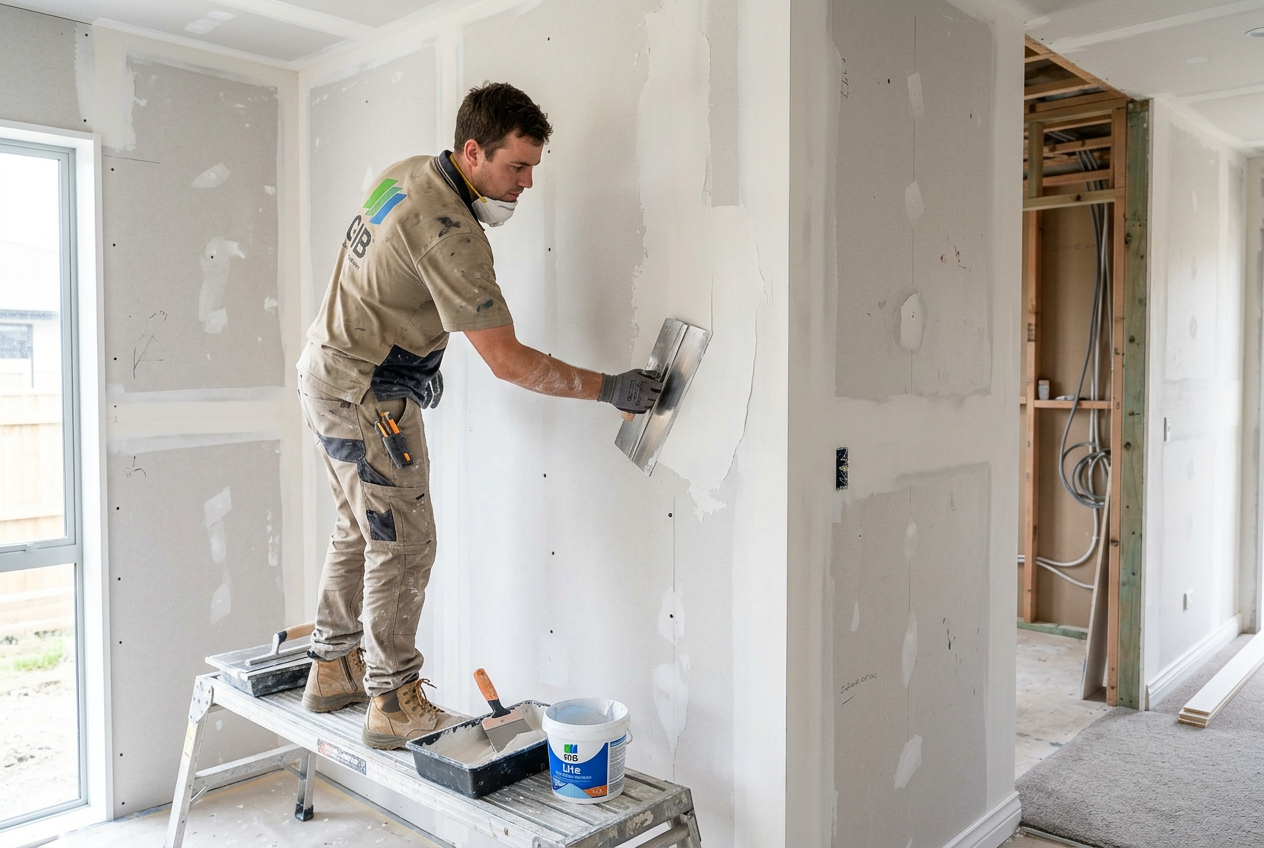
Stopping compound (also called joint compound or stopping) is specifically formulated for embedding paper or fibreglass tape over GIB joins, finishing corner beads, and building up smooth, feathered coats across a broad area. It has a much finer particle size, better adhesion to plasterboard, and is engineered to minimise shrinkage over multiple coats.

GIB's own technical guidance specifies the correct stopping systems for their plasterboard products, including recommended compounds, tape types, and the number of coats required to achieve a Level 4 or Level 5 finish.

Why Filler Fails on GIB Joins

Plasterboard joins are a dynamic area. Even in a well-built house, minor seasonal movement, framing settlement, and temperature changes cause the sheets to move slightly. Stopping compound is formulated to handle this; filler is not.

Using filler over joins typically results in:

  • Cracking — often appearing within weeks or months of painting
  • Poor adhesion — filler may not bond well to the paper face of GIB or to joint tape
  • Telegraphing — the join becomes visible through paint, especially in raking light
  • Tape lifting — if tape isn't properly embedded in the right compound, it can bubble or peel

These problems are frustrating and expensive to fix, often requiring the area to be cut back and re-stopped from scratch.

The Correct GIB Stopping Process

For standard GIB plasterboard joins, the industry-standard approach involves:

  1. Tape coat — Apply a base coat of stopping compound into the recess, embed paper tape (or fibreglass mesh tape for certain applications), and smooth off. Allow to dry fully.
  2. Fill coat — Apply a second, wider coat to fill and flatten the tape. Feather the edges out.
  3. Finish coat — A thin, wide skim coat to achieve a smooth, flat surface ready for painting.

Each coat must be fully dry before the next is applied. Sanding between coats (once dry) helps achieve a flat finish. The number of coats and the width of each pass depends on the finish level specified — refer to GIB's technical literature for the specific system that suits your project.

What Products Should You Use?

In New Zealand, several well-regarded stopping compounds are available from trade and hardware suppliers:

  • GIB Tradeset and GIB Basecoat — part of GIB's own system, widely available
  • Products from Ardex and Mapei — both offer quality jointing and finishing compounds
  • General-purpose stopping compounds stocked at Bunnings, Mitre 10, and PlaceMakers

Always check the product label confirms it is suitable for plasterboard jointing, not just surface repair.

When Can You Use Filler?

Filler absolutely has its place — just not over joins. Use it for:

  • Filling screw or nail holes in already-stopped and primed plasterboard
  • Minor surface dings or dents in a finished wall
  • Small cracks in plaster or paint (once the cause of movement has been addressed)

For these small repairs, a quality filler such as Polyfilla or a similar product works well and is much easier to sand than a full stopping compound.

Getting the Right Paint System Over Stopped Joins

Once your joins are properly stopped and sanded, priming is essential before topcoating. A good quality sealer/primer helps prevent the stopped areas from flashing (appearing duller than the surrounding surface). Resene, Dulux, and Wattyl all offer suitable interior primers — check with your paint supplier for the right product for your finish level.

When to Call a Professional

Stopping GIB joins to a high standard is a skilled trade. A poor stopping job is very hard to hide once painted, particularly in rooms with strong natural light or where a sheen paint is used. If you're working on:

  • New GIB installations or large areas of replacement plasterboard
  • A Level 5 (highest quality) finish for feature walls or high-gloss paint
  • Repairs that need to be invisible

…it's well worth engaging a qualified plasterer. A licensed tradesperson will have the tools, technique, and product knowledge to get the finish right first time. You can find experienced local plasterers on tradedirectory.co.nz.

Note: Plasterboard stopping is not restricted work under the Building Act, so homeowners can legally do it themselves — but building consent requirements may apply if you're doing structural or significant work. Always check with your local council if you're unsure.


Frequently Asked Questions

Can I use Polyfilla on GIB joins?+

Polyfilla and similar wall fillers are not recommended for GIB joins. They shrink as they dry, don't bond well to joint tape, and are prone to cracking. Use a purpose-made stopping compound for joins, and save filler for small holes and surface repairs.

How many coats of stopping compound do GIB joins need?+

Typically three coats are required: a tape coat to embed the joint tape, a fill coat to level the surface, and a finish coat to achieve a smooth, paint-ready result. Each coat must be fully dry before the next is applied. Check GIB's technical documentation for the specific system recommended for your finish level.

Do I need to use tape on GIB joins, or can I just use compound?+

Tape is strongly recommended on all butt and recessed joins. Without tape, the compound alone is much more likely to crack as the building moves. Paper tape is standard for most joins; fibreglass mesh tape is sometimes used but requires a setting-type compound. Follow GIB's guidance for your specific application.

Why do my GIB joins crack after painting?+

Cracking after painting is usually caused by using the wrong product (such as filler instead of stopping compound), applying coats before the previous one is fully dry, skipping the tape, or not feathering the edges wide enough. In some cases it can also indicate framing movement or moisture issues worth investigating.

Is stopping GIB joins restricted building work in New Zealand?+

No, plastering and stopping plasterboard is not classified as restricted building work under the Building Act, so homeowners can legally do it themselves. However, if the work is part of a larger project that requires a building consent, you'll need to comply with consent conditions. Check with your local council if you're unsure.

Need a Plasterer?

Find qualified plasterers near you in our directory.

Find a Plasterer →

Plasterers Near You

5 Stars Painting & Plastering Ltd logo

Plasterer

5.0(4)

Auckland, Auckland

5 Stars Painting & Plastering Ltd is a plastering and painting business based in Auckland. They offer services for both commercial and residential projects, including offices, hotels, and homes. The company emphasises reliability, organisation, and quality assurance.

  • Master Painters NZ member

Alpha plastering logo

Plasterer

Christchurch, Canterbury

Textureclad logo

Plasterer

Whangarei, Northland

Uncategorized | 1 comment | 15 March, 2026 | 0 Welcome to WordPress. This is your first post. Edit or delete it, then start writing! Read more 11 Impossible Tech Interview Questions You Don t Want To Be Asked By admin | Photo | 0 comment | 15 August, 2015 | 0 You may purchase phone plans with more than enough data to cover things like casual web surfing and streaming the occasional song. But you may not...

Dowd Concrete & Plaster Ltd logo

Plasterer

Queenstown, Otago

Great Interiors logo

Plasterer

Christchurch, Canterbury

Great Interiors Ltd is a plastering specialist based in Christchurch, Canterbury. They provide internal plastering services including walls, ceilings, coving, artex removal, and repairs for both private and commercial clients throughout Canterbury and surrounding areas.

JA Plasterers Ltd logo

Plasterer

4.2(5)

Auckland, Auckland

JA Plasterers Ltd is a plastering company based in Auckland, New Zealand. They operate throughout the greater Auckland region and beyond, employing skilled professionals to deliver quality workmanship on projects of all sizes.

Paint & Decorating Stores Near You

Stock up for this job — paint & decorating suppliers and stores, with address, phone and email.

autocolourbank logo

autocolourbank

Otahuhu, Auckland, Auckland

Paint & Decorating

Professional-grade paints, custom colour matching and respray supplies trusted by panel beaters. NZ-wide delivery available. Free delivery on orders over $500.

Natural Paint Co logo

Natural Paint Co

Richmond, Christchurch, Canterbury

Paint & Decorating

We've created paint and wood oils that are not only good for you, but good for our planet too. Keep your home and family healthy with Ultra Low VOC paint.

Dooney and Daughters Trading Co ltd logo

Dooney and Daughters Trading Co ltd

Remuera, Auckland, Auckland

Paint & Decorating

Stockists of The Artisan Company Chalk Paint, ReDesign Transfers, Mint Decoupage & Efex Mouldings, specialists in hand painted furniture. Join a workshop or visit our in-store paint bar!

Everbrite Coatings logo

Everbrite Coatings

Cockle Bay, Auckland, Auckland

Paint & Decorating

Tough durable DIY Protective Everbrite Coatings to restore faded windows and doors - Protect all metals from UV, tarnish, corrosion, rust.

International Paint logo

International Paint

Avondale, Auckland, Auckland

Paint & Decorating

We’ve been pioneering a world of possibilities to bring surfaces to life for well over 200 years. As experts in making coatings, there’s a good chance you’re only ever a few meters away from one of our products. Our world class portfolio of brands – including Dulux, International, Sikkens and Interpon – is trusted by customers around the globe. We’re active in more than 150 countries and have set our sights on becoming the global industry leader. It’s what you’d expect from the most...

Brakes Paint & Decor Kaitaia logo

Brakes Paint & Decor Kaitaia

Kaitaia, Northland

Paint & Decorating

Brakes Paint & Decor Kaitaia — paint and decorating store in Kaitaia. Listed on Dulux's official store locator as a Dulux stockist (retail & trade). Address: 224 Commerce Street, Kaitaia, Northland 0410.

Browse all paint & decorating suppliers →
Last updated: Last reviewed:

The information on this page is provided as a general guide only. Kiwi Trade Directory makes no representations or warranties regarding the accuracy, completeness, or suitability of this information for your specific situation. Costs, timeframes, and recommendations vary significantly depending on your location, property, and individual circumstances. Always obtain multiple quotes from qualified tradespeople and seek independent professional advice before undertaking any home improvement or building work. Kiwi Trade Directory accepts no liability for any loss or damage arising from reliance on the information provided on this site.