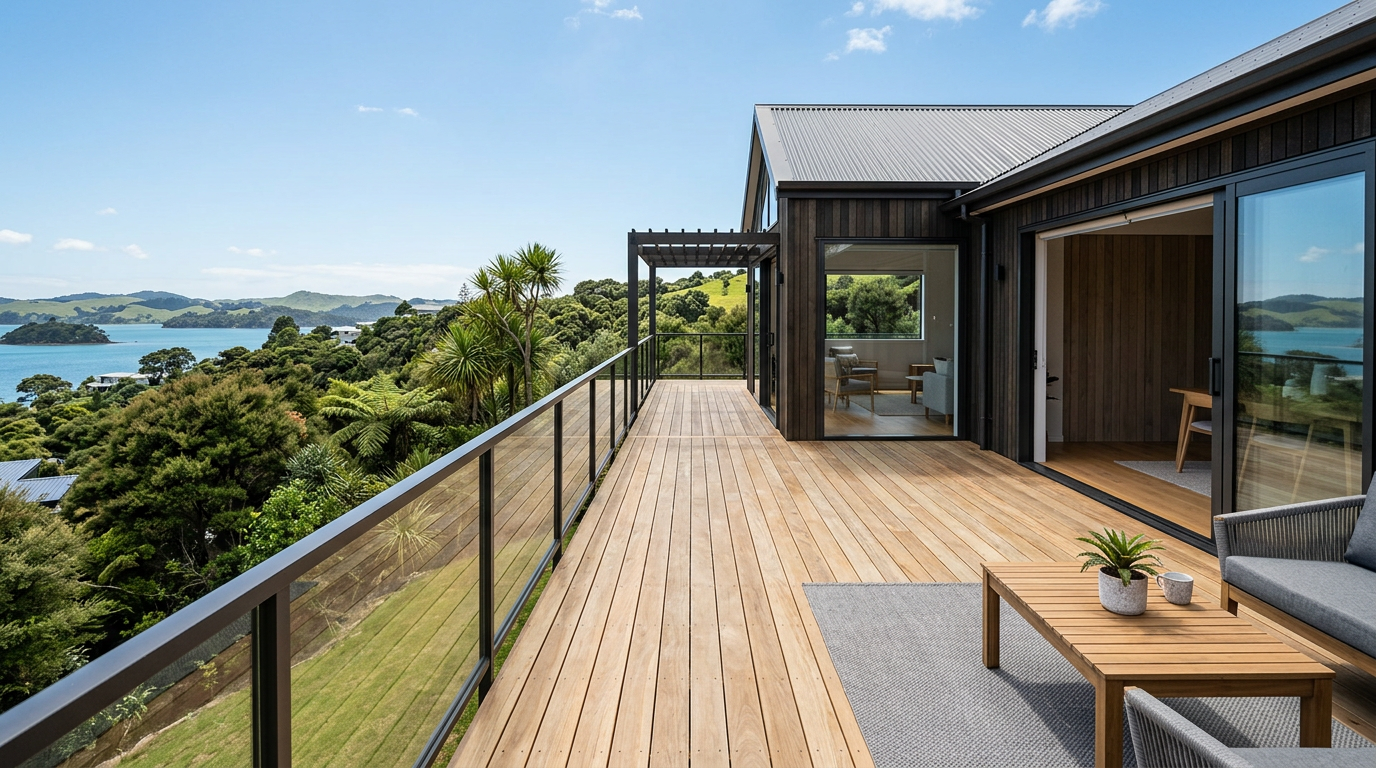
You can use exterior paint on a timber deck instead of deck oil, but whether you should depends on your timber species, the deck's exposure to weather, and how much maintenance you're prepared to do. Both products have genuine strengths — and real drawbacks — so it's worth understanding the difference before you commit.
How Deck Oil and Exterior Paint Work Differently
Deck oil (sometimes called penetrating oil or timber oil) soaks into the wood fibres, nourishing the timber from within and allowing it to breathe. Moisture can still move in and out of the wood, which reduces the risk of peeling and blistering. Deck oil typically needs reapplication every one to two years depending on exposure, but maintenance is straightforward — clean the surface and recoat.
Exterior paint forms a film on top of the timber. This film can look great and provides strong UV and weather protection, but it also traps moisture. If water gets beneath the film — through end grain, cracks, or worn patches — it can cause the paint to peel, blister, or bubble. Once that happens, you'll need to strip the surface back before recoating, which is considerably more work.
Pros and Cons at a Glance
| Feature | Deck Oil | Exterior Paint |
|---|---|---|
| Penetrates timber | Yes | No (surface film) |
| Peeling risk | Low | Higher if moisture ingress occurs |
| Colour options | Limited (natural tones) | Wide range |
| Recoat prep | Light clean and sand | Strip if peeling |
| Slip resistance | Moderate | Can add anti-slip grit |
| Typical recoat interval | 1–2 years | 3–7 years (if intact) |
| Best for | Oily/dense timbers | Stable, dry timbers |
NZ Climate Considerations
New Zealand's climate varies enormously — from the humid, wet conditions of Northland and the West Coast to the dry, UV-intense summers of Hawke's Bay and Central Otago. This matters a lot for deck coatings:
- In high-rainfall or shaded areas, moisture trapped under paint film is a serious concern. Deck oil is generally the safer choice.
- In hot, sunny regions, UV degradation is the bigger enemy. A quality exterior paint with a high-build film can offer better UV protection, but the timber must be dry and stable before application.
- Decks exposed to foot traffic need a product rated for that use. Standard exterior wall paint is not formulated for foot traffic and will wear quickly — always choose a product specifically labelled for deck or floor use.
Timber Species Matters
Not all timbers take paint equally well:
- Oily or resinous timbers such as kwila (merbau) and some treated pine species can bleed oils or resins that prevent paint from bonding properly. Deck oil is usually the recommended finish for kwila. If you want to paint over an oily timber, you'll need a compatible primer — check with the paint manufacturer first.
- Dry, stable timbers like macrocarpa or well-seasoned treated pine can accept exterior paint more successfully, provided the surface is properly prepared.
- New treated pine decking should be allowed to dry out (often several weeks to months) before any coating is applied. Applying paint to wet or green timber is a common cause of early failure.
For guidance on timber finishing, Resene and Dulux both publish detailed technical data sheets and have free advice lines — it's worth calling them with your specific timber and situation.
Surface Preparation Is Everything
Whether you choose oil or paint, preparation is the most important step. For paint:
- Ensure the deck is structurally sound — replace any damaged or rotten boards first.
- Clean thoroughly to remove dirt, mould, and any existing coating residue.
- Sand to a smooth, even surface and remove all dust.
- Apply a suitable primer compatible with your topcoat and timber species.
- Apply at least two coats of a deck-rated exterior paint.
Skipping primer or painting over a damp surface are the two most common DIY mistakes that lead to early paint failure.
Anti-Slip Safety
A painted deck surface can become slippery when wet — a real hazard in NZ's rainy seasons. If you go with paint, look for products that include an anti-slip additive, or purchase a separate non-slip grit that can be mixed into the topcoat. This is especially important for decks used by children or elderly family members. WorkSafe NZ has general guidance on slip hazards in the home environment.
Can You Switch Between Products Later?
This is where things get tricky. If you apply deck oil now and later want to paint, you'll need to strip the oil thoroughly — oil and paint film products are generally not compatible. Likewise, painting over a previously oiled surface without proper preparation will almost certainly result in adhesion failure. Plan ahead and choose the system you want to stick with long-term.
When to Call a Professional
Deck coating is generally DIY-friendly, but there are situations where a professional deck builder or painter is worth the investment:
- If your deck has structural issues (rot, damaged joists, loose fixings) — structural repairs may require a Licensed Building Practitioner (LBP). Check lbp.govt.nz for licensed tradespeople in your area.
- If you're unsure about the right product system for your specific timber and climate.
- If the deck is large, multi-level, or difficult to access safely.
- If a previous coating has failed badly and needs full stripping — this is time-consuming and can involve chemical strippers that require careful handling.
A qualified deck builder or painter can assess your specific situation and recommend the right product system from the outset, saving you time and money in the long run. You can find experienced local deck builders and painters on tradedirectory.co.nz.



 Licensed Building Practitioner (LBP)





