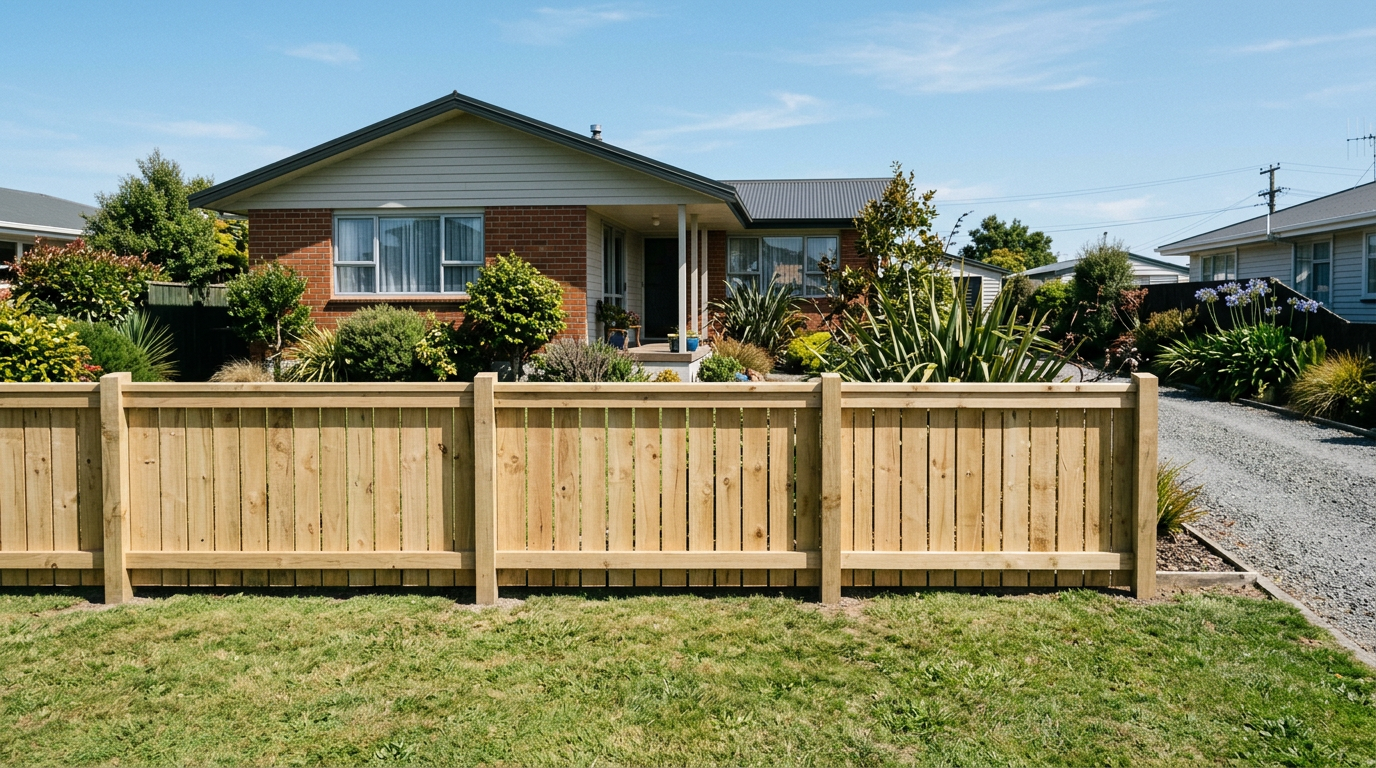
Yes, you can use expanding foam post mix as an alternative to concrete for setting fence posts, and it works well in many everyday situations. However, it's not a universal replacement — soil type, post size, fence height, and load requirements all affect whether foam is the right choice for your project.
What Is Expanding Post Foam?
Expanding post foam (sometimes called foam post mix or polyurethane post mix) is a two-part expanding foam product that you pour into the post hole around the post. It expands to fill the hole, grips the soil walls, and sets firm — typically within a few minutes. It's lightweight, doesn't require water or mixing, and sets faster than concrete. Several brands are available at Bunnings and Mitre 10.
Where Expanding Foam Works Well
Expanding foam is a solid choice in the following situations:
- Lightweight fencing — standard paling fences, picket fences, garden edging, and pool fencing on flat ground
- Dry or well-drained soils — foam bonds well to firm, stable soil
- Smaller diameter posts — typically 75 mm × 75 mm or 100 mm × 100 mm timber posts
- Fence heights up to around 1.8 m — for typical residential boundary fences
- Repairs and replacements — quick setting makes it ideal for replacing a single rotten post
- Remote or hard-to-access spots — no need to cart bags of concrete or water
Foam is also kinder to timber posts in one key way: because it doesn't hold moisture against the timber the way concrete can, it may actually help extend post life at the base.
Where Expanding Foam Has Limitations
Foam isn't always the right call. Be cautious or avoid it in these situations:
- Heavy or tall structures — retaining fence panels, large gates, or fences over 1.8 m may need the greater mass and rigidity of concrete
- Loose, sandy, or very wet soils — foam needs firm soil walls to grip; in loose or waterlogged ground it may not anchor adequately
- High-wind or exposed coastal sites — NZ's coastal and alpine areas can generate significant lateral loads; concrete provides more resistance
- Gate posts — gate posts take constant swinging loads and are generally better set in concrete
- Retaining structures — any fence that also acts as a retaining wall is a different beast entirely (see below)
- Very large posts — posts over 125 mm × 125 mm may need more volume than a single foam kit provides
Retaining Walls and the NZ Building Code
If your fence also retains soil — even a small amount — it may be classified as a retaining wall under the NZ Building Code. Retaining walls over a certain height (depending on surcharge, proximity to boundaries or structures, and other factors) generally require a building consent. Check with your local council for the applicable threshold. Always check with your local council before starting. Expanding foam is unlikely to be suitable for any post that forms part of a retaining structure.
For standard boundary fences, most residential fencing is exempt from building consent under Schedule 1 of the Building Act — but confirm this with your council, as exemptions depend on height, location, and other factors.
How to Set a Post with Expanding Foam
- Dig the hole — a general rule of thumb is to bury at least one-third of the post length, or a minimum of 600 mm deep, whichever is greater. Deeper is better in soft ground.
- Place the post — stand it in the hole and brace it plumb with temporary stakes and string lines.
- Pour the foam — follow the manufacturer's instructions exactly. Most kits require you to pour both components into the hole together. Work quickly — expansion begins fast.
- Hold the post steady — keep the post braced and plumb while the foam expands and sets (usually 3–5 minutes to firm, longer to full cure).
- Trim any excess — once cured, trim any foam that has risen above ground level with a handsaw or knife.
Tip: Slightly moist soil actually helps polyurethane foam cure. If the soil is very dry, lightly dampen the hole walls before pouring.
Concrete vs Expanding Foam: A Quick Comparison
| Factor | Concrete | Expanding Foam |
|---|---|---|
| Setting time | 24–48 hrs minimum | 3–15 minutes |
| Strength/mass | Very high | Moderate |
| Ease of use | Requires mixing/water | Pour-and-go |
| Weight to carry | Heavy (20 kg bags) | Very light |
| Cost (per post, guide only) | Lower | Higher |
| Best for | Gates, large posts, exposed sites | Standard fencing, repairs |
| Moisture retention at post | Can trap moisture | Generally better drainage |
Safety Notes
Expanding foam is a chemical product — wear gloves and eye protection when handling it. Uncured foam is sticky and difficult to remove from skin or clothing. Work in a well-ventilated area. Check the product's safety data sheet (SDS) for full handling guidance. WorkSafe NZ has general guidance on safe use of chemical products.
When to Call a Professional
Fencing is generally DIY-friendly work for a competent homeowner, but there are times to bring in a qualified fencer:
- Your fence is on or near a boundary and you're unsure of legal requirements
- The ground is rocky, heavily compacted, or waterlogged
- You need a fence over 1.8 m, or one that also retains soil
- You're installing large gate posts or a long run of fencing that needs precise alignment
- You simply want the job done right the first time
A skilled local fencer will know which setting method suits your specific soil conditions and fence type. You can find qualified fencing contractors in your area on tradedirectory.co.nz.





