Yes, you can use acoustic batts in your ceiling, but there's an important catch: most acoustic batts are not designed primarily for thermal performance, and many won't meet the minimum R-values required by the NZ Building Code on their own. Before you buy, you need to check the product's thermal rating carefully and compare it against your region's requirements.
What's the Difference Between Acoustic and Thermal Batts?
Both acoustic and thermal batts are typically made from similar materials — glasswool or polyester fibre — but they're engineered with different goals in mind.
- Thermal batts are designed to resist heat flow. Their performance is measured in R-value (resistance to heat transfer). The higher the R-value, the better the thermal insulation.
- Acoustic batts are designed to absorb sound and reduce noise transmission between rooms or floors. They tend to be denser than standard thermal batts, which helps trap sound energy.
Because they're made from similar fibrous materials, acoustic batts do provide some thermal resistance — but their R-value is often lower than a thermal batt of the same thickness, and manufacturers may not publish a reliable R-value at all.
NZ Building Code Minimum R-Values for Ceilings
Under Clause H1 (Energy Efficiency) of the NZ Building Code, ceiling insulation must meet minimum R-value requirements that vary by climate zone. New Zealand is divided into six climate zones, with colder southern and inland areas requiring higher R-values.
As a general guide (confirm current requirements with MBIE Building Performance):
| Climate Zone | Example Locations | Minimum Ceiling R-Value (new builds) |
|---|---|---|
| Zone 1 | Northland, Auckland | Confirm with MBIE |
| Zone 2 | Hamilton, Gisborne | Confirm with MBIE |
| Zone 3 | New Plymouth, Wellington | Confirm with MBIE |
| Zone 4 | Nelson, Christchurch | Confirm with MBIE |
| Zone 5 | Queenstown, inland Canterbury | Confirm with MBIE |
| Zone 6 | Central Otago highlands | Confirm with MBIE |
Note: H1 minimum R-value requirements have been updated in recent years. Always verify the current requirements for your zone and building type with your local council or MBIE Building Performance.
If you're retrofitting insulation into an existing home (rather than a new build), the requirements may differ — but meeting or exceeding these values is still strongly recommended for comfort and energy savings.
How to Check If Your Acoustic Batts Are Up to the Job
Before purchasing acoustic batts for ceiling thermal insulation, do the following:
- Check the product datasheet for a stated R-value. If no R-value is listed, treat the product as unsuitable for thermal insulation purposes.
- Compare the R-value against your climate zone's minimum requirement.
- Check the thickness — you'll need enough ceiling cavity depth to fit the batts without compressing them. Compressing insulation reduces its R-value.
- Consider combining products — some installers layer acoustic batts with a thermal batt to achieve both sound and thermal performance, but check that the combined R-value is calculated correctly.
Reputable NZ insulation suppliers and manufacturers such as those stocking products at Bunnings or Mitre 10 can provide product datasheets on request.
Healthy Homes Standards
If you're a landlord, be aware that the Healthy Homes Standards require rental properties to have ceiling insulation that meets specific R-value minimums (or that existing insulation is in reasonable condition if it was compliant when installed). Check the current requirements at Tenancy Services to make sure any insulation you install — acoustic or otherwise — keeps you compliant.
Practical Installation Tips
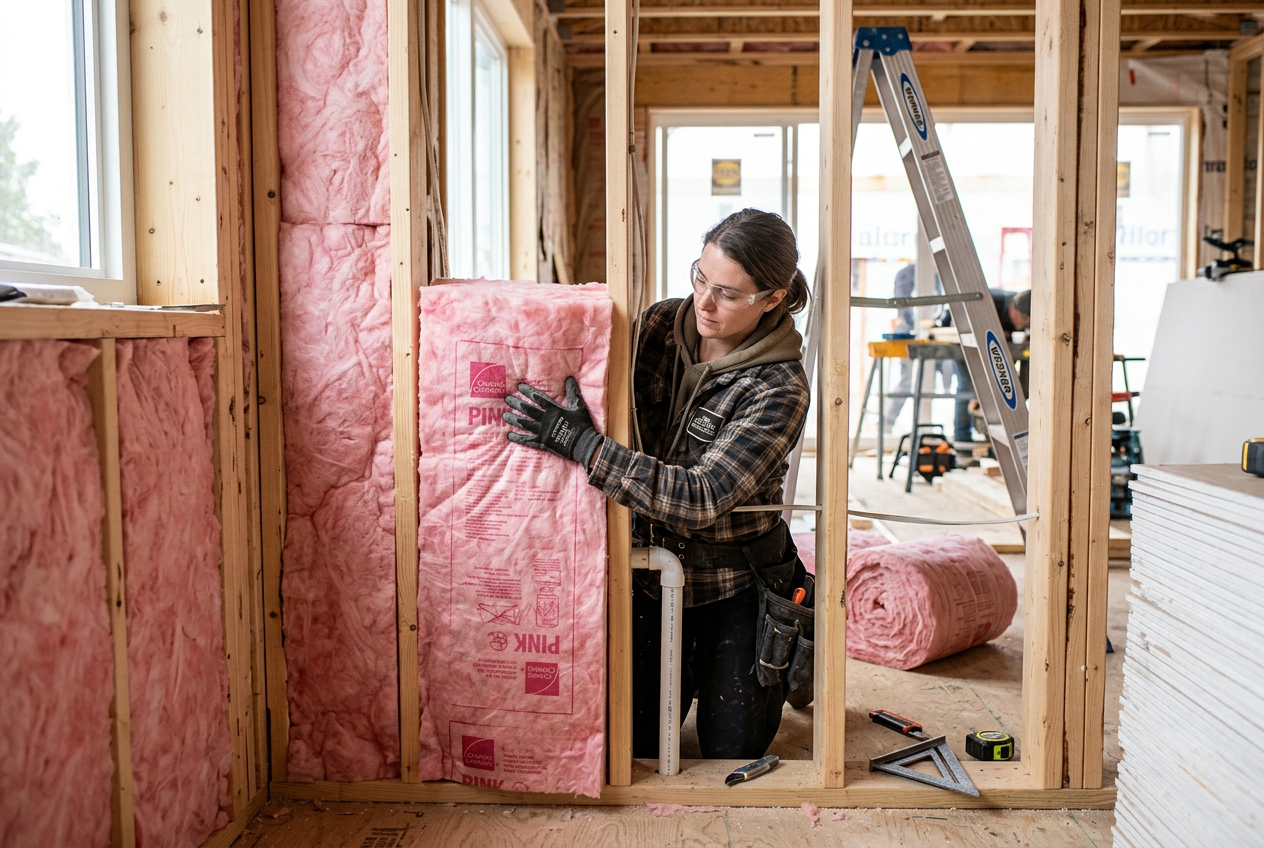
- Wear appropriate PPE when handling glasswool batts — gloves, a dust mask (P2 rated), safety glasses, and long sleeves. Glasswool fibres can irritate skin, eyes, and lungs.
- Don't compress batts when fitting them between joists. A compressed batt loses R-value.
- Butt batts tightly together with no gaps. Gaps significantly reduce overall thermal performance.
- Keep insulation clear of recessed lighting fixtures (downlights) unless they are rated IC (insulation contact) and airtight. Covering non-IC downlights is a fire risk.
- Ventilation clearance: ensure you maintain any required eave ventilation gaps as specified by BRANZ good practice guides.
When to Call a Professional
Ceiling insulation installation is generally not restricted work under NZ law, meaning a competent homeowner can do it themselves. However, consider hiring a qualified insulation installer if:
- Your ceiling space is difficult to access, cramped, or has limited ventilation.
- You're unsure which product or R-value is right for your home and climate zone.
- Your ceiling has recessed lighting, complex framing, or existing insulation that needs assessment.
- You want the work documented for Healthy Homes compliance or a building consent.
A professional installer will also know how to handle any restricted building work nearby (such as structural alterations) that would require a Licensed Building Practitioner. You can find qualified local insulation installers on tradedirectory.co.nz.