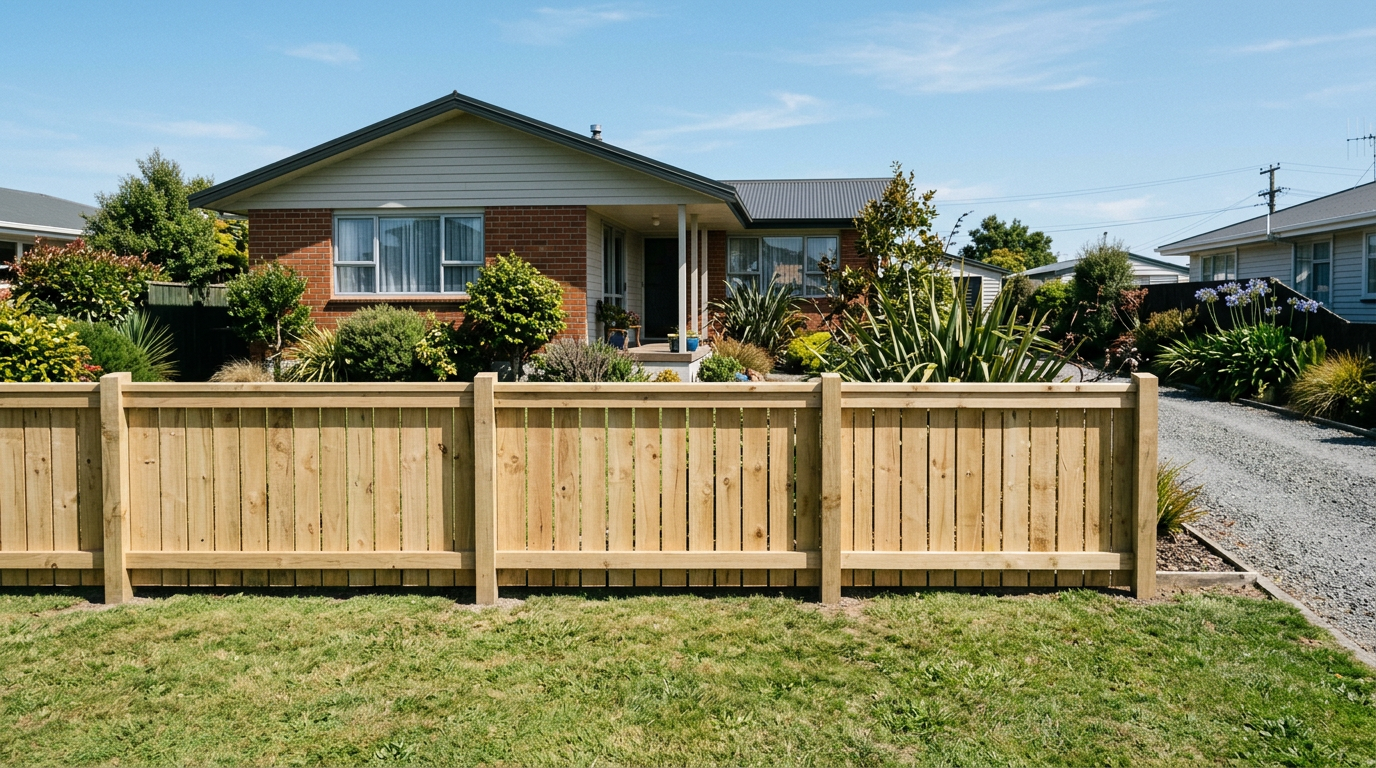
Yes, you can use star pickets instead of timber posts for many types of fencing in New Zealand — but whether they're the right choice depends on your fence type, height, purpose, and local council rules. Star pickets are a practical, cost-effective option for some applications, but they're not a universal substitute for timber posts.
What Is a Star Picket?
A star picket (also called a waratah or Y-post) is a steel post with a star-shaped cross-section, typically hot-dip galvanised for corrosion resistance. They're driven directly into the ground using a post driver — no concrete or digging required in most soils. Common lengths in NZ range from around 900 mm to 1800 mm, with the portion above ground depending on how deep you drive them.
Where Star Pickets Work Well
Star pickets are well-suited to a number of fencing applications:
- Rural and lifestyle block fencing — electric fencing, temporary stock fencing, and multi-wire or high-tensile wire fences are classic uses. Star pickets excel here.
- Temporary fencing — construction sites, event barriers, and temporary paddock divisions.
- Garden and vegetable plot fencing — lightweight wire or mesh fences at low heights.
- Erosion control and tree guards — where a rigid post isn't critical.
- Intermediate posts between strainer posts** — in wire fencing, star pickets are commonly used as line posts with timber or concrete strainer posts at corners and ends.
Where Timber (or Concrete) Posts Are Usually Better
There are situations where star pickets are not appropriate or not permitted:
- Boundary fences over 1.5 m high — taller fences require more structural rigidity than a star picket can reliably provide, especially in windy NZ conditions.
- Pool fencing — pool barriers in NZ must comply with NZS 8500:2006 and the NZ Building Code clause F9. Pool fencing requires robust, rigid posts that meet specific strength and climbability requirements. Star pickets are generally not suitable and you should always check with your local council and a licensed fencer.
- Retaining fence combinations — where a fence also acts as a retaining structure, engineered timber or concrete posts are required.
- Urban boundary fences — most urban timber paling, Colorbond, or lapped-and-capped fences need the rigidity and fixing capacity that only a solid timber or concrete post provides.
- Gates and corners — these high-load points always need substantial strainer or timber posts, not star pickets.
Key Structural Limitations
Star pickets rely on soil friction for their holding strength — they have no footing. In soft, sandy, or waterlogged soils, they can lean or pull out under load. Timber posts set in concrete have far greater lateral resistance, which matters for taller or panel-style fences exposed to wind.
In New Zealand's varied climate — from the wet West Coast to the dry Canterbury plains and the wind-exposed Cook Strait corridor — soil type and wind loading are real considerations. BRANZ provides guidance on wind zones and structural requirements for fencing and outbuildings.
Do You Need a Building Consent?
Most residential boundary fences under 2.5 m high are exempt from building consent under Schedule 1 of the Building Act 2004, but this depends on your specific situation, local district plan rules, and whether the fence is near a boundary, road, or pool. Always confirm with your local council before starting — rules vary by region and some fences (especially pool barriers) always require consent and inspection.
For more on consent exemptions, visit MBIE Building Performance.
Neighbour and Legal Considerations
If the fence is a boundary fence, the Fencing Act 1978 applies. Both neighbours may share costs for a "sufficient fence," and what counts as sufficient can depend on the fence's purpose and location. A star-picket-and-wire fence may be considered sufficient for a rural boundary but not for an urban residential one. It's worth having a conversation with your neighbour before you start.
Practical Tips If You Use Star Pickets
- Drive them deep enough — as a general guide, at least one-third of the total post length should be in the ground, though this varies with soil type and fence height.
- Use a proper post driver — a manual or tractor-mounted driver gives a cleaner, straighter result than improvising.
- Check for services first — before driving any post, call Dial Before You Dig (0800 248 344) to check for underground pipes and cables.
- Use timber strainer posts at corners and ends — star pickets alone cannot handle the tension loads at these points in wire fencing.
- Choose hot-dip galvanised pickets for longevity, especially in coastal or high-rainfall areas.
When to Call a Professional
For pool fencing, retaining structures, or any fence requiring a building consent, you should engage a qualified fencer or Licensed Building Practitioner (LBP). Pool fencing in particular involves restricted building work that must be carried out or supervised by an LBP — see Licensed Building Practitioners for details. A professional fencer will also know your local council's rules and can advise on the right post type for your soil and wind conditions. You can find experienced local fencers on tradedirectory.co.nz.
Safety note: Always check for underground services before driving any post. Contact Dial Before You Dig before you start.





