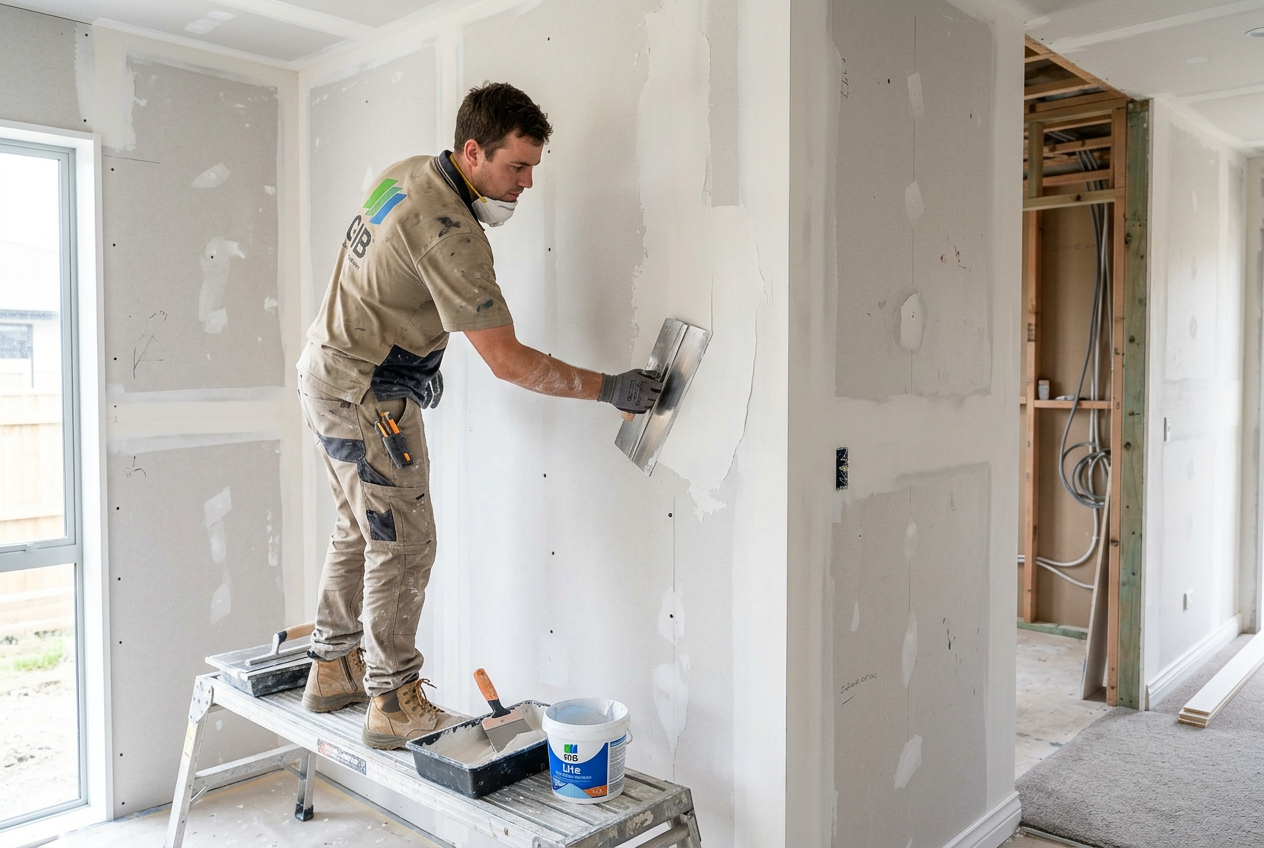
Household fillers like Spakfilla are handy for small nicks and holes, but they're not suitable for stopping GIB board joins. For taped joins and screw dimples on plasterboard, you need a purpose-made stopping compound — and here's why that matters for your finished walls.
What Is "Stopping" and Why Does It Matter?
Stopping (also called taping and stopping, or jointing) is the multi-step process of embedding paper or fibreglass tape over GIB board joins, then applying stopping compound in successive coats to create a flat, seamless surface ready for paint. Done correctly, it's virtually invisible. Done with the wrong product, you'll see cracking, shrinkage, and ridging within months — sometimes weeks.
The GIB site publishes detailed technical literature on correct stopping systems for their plasterboard products, and following manufacturer guidelines is important for both performance and warranty purposes.
Why Spakfilla Isn't Right for the Job
Spakfilla and similar all-purpose household fillers are designed for small, isolated repairs — filling a nail hole, patching a minor dent, or touching up a small gouge in an already-painted wall. They are typically:
- High-shrinkage products — they shrink significantly as they dry, which causes cracking over wider joins
- Not flexible enough — boards move slightly with temperature and humidity changes; household fillers can't accommodate this movement
- Not designed for use with tape — embedding paper tape requires a compound with the right consistency and bonding properties
- Too fast-drying — this limits your working time and makes feathering out wide joins very difficult
Using Spakfilla over a taped join might look acceptable initially, but cracking and ridging are almost inevitable, especially in NZ conditions where humidity and temperature swings are common.
What Products Should You Use?
For stopping GIB board joins, you need a purpose-made plasterboard stopping compound. There are two main types:
| Type | Best Use | Notes |
|---|---|---|
| Setting-type compound (powder, mixed with water) | First coat / embedding tape | Sets by chemical reaction, very low shrinkage, strong bond |
| Drying-type compound (pre-mixed) | Second and finish coats | Easier to sand, good for feathering out |
Well-known NZ-available brands include Ardex and Mapei, both of which offer plasterboard jointing and stopping systems. GIB also recommends specific compatible compounds — check their technical data sheets for guidance. You'll find suitable products at Bunnings, Mitre 10, and PlaceMakers.
The Correct Stopping Process (Overview)
A proper GIB board stopping job typically involves:
- Tape coat — apply stopping compound and embed paper or fibreglass mesh tape over all joins and internal angles
- Fill coat — once dry, apply a wider second coat to begin levelling
- Finish coat — a thin, wide skim coat feathered well beyond the join for a flat finish
- Sanding — light sanding between coats and a final sand before painting
Each coat must be fully dry before the next is applied. Rushing this process — or using the wrong product — is the most common cause of visible joins after painting.
NZ Building Code Considerations
Internal wall linings in NZ must comply with the NZ Building Code, and plasterboard installations should follow the manufacturer's installation and finishing guidelines. BRANZ also provides guidance on best practice for internal linings. If your GIB work is part of a larger project requiring building consent, the finishing standard may be subject to inspection — another reason to use the correct materials and method.
When Spakfilla Is Acceptable
Household filler absolutely has its place. It's fine for:
- Filling small screw holes in already-stopped and painted walls
- Patching minor surface damage on painted plasterboard
- Touching up small cracks in painted surfaces (though recurring cracks may signal a structural issue worth investigating)
For anything larger than about 50mm, or anywhere near a join or tape line, switch to a proper stopping compound.
When to Call a Professional
Stopping GIB board joins is a skill that takes practice. Achieving a truly flat, invisible finish — especially at Level 4 or Level 5 finish standards required under some specifications — is genuinely difficult for a first-timer. Visible joins, ridging, and shadowing under raking light are common DIY pitfalls.
If you're stopping a large area, a new build, a renovation requiring consent, or walls that will be painted in a sheen higher than low-sheen (which shows every imperfection), it's well worth engaging a qualified plasterer. You can find experienced local plasterers on tradedirectory.co.nz who can deliver a professional finish and save you the frustration of redoing the work.
Note: Stopping and plastering work is not restricted electrical or plumbing work, so homeowners can legally do it themselves — but quality is the key consideration.

 Master Painters NZ member








